A Million Babies and What It Cost to Save Them
with Jane Chen
Co-founder of Embrace Global
Hosted by
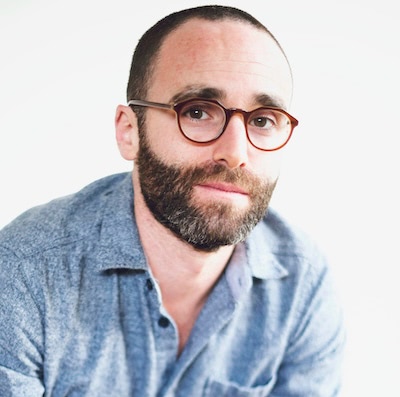
CEO, Unreasonable Group
About This Episode
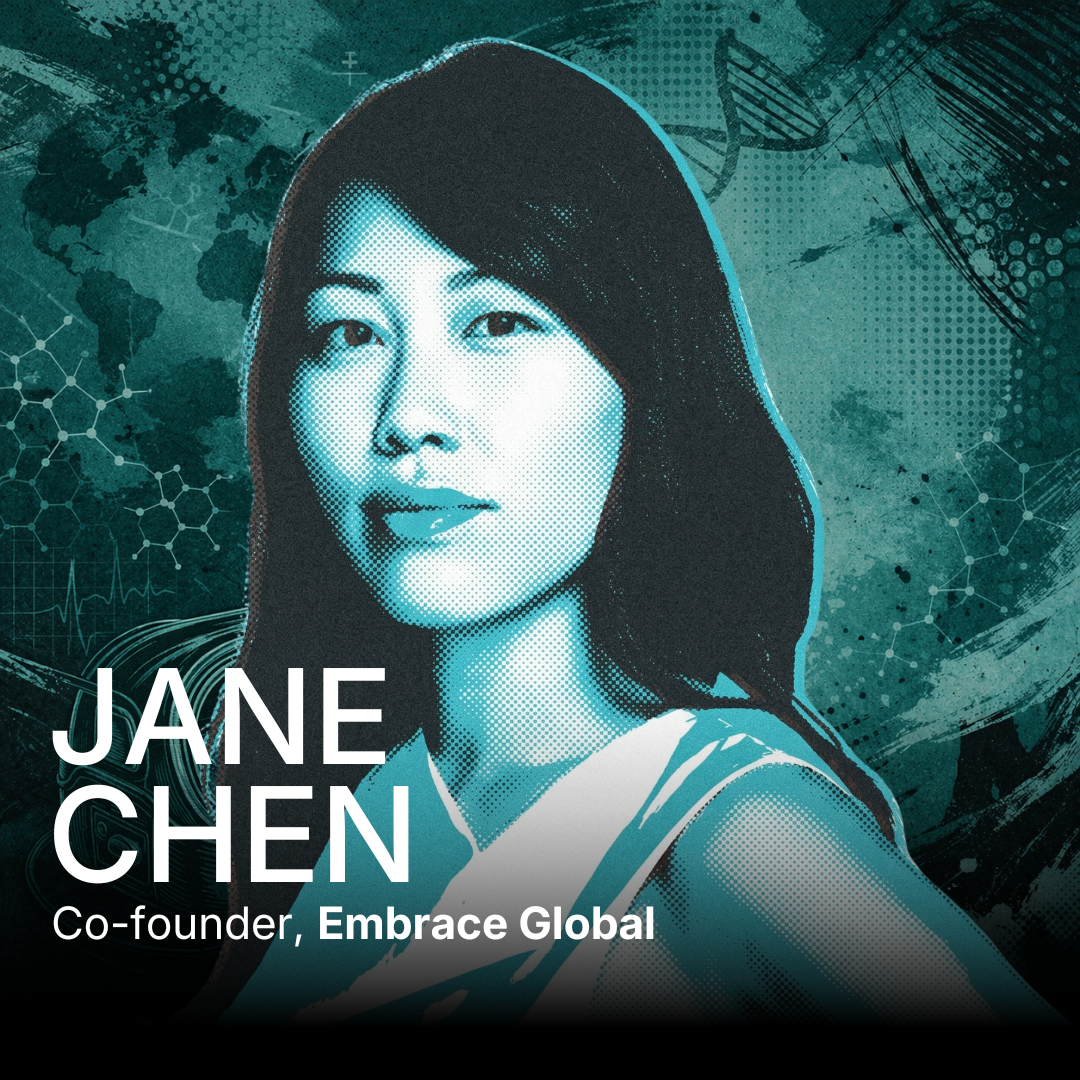
Featured Guest
Jane Chen
Co-founder of Embrace GlobalJane Chen is the co-founder of Embrace Global, the organization behind a portable infant incubator that has helped save over one million babies' lives in humanitarian crisis zones worldwide. Launched as a student project at Stanford in 2007, Jane moved to India for four years to build the company and bring it to market. She is a TED Fellow, Young Global Leader at the World Economic Forum, and Schwab Social Entrepreneur of the Year. Her memoir, "Like a Wave We Break," was published in 2025. She joined the Unreasonable Fellowship through the Girl Effect Accelerator in 2013.
Key Takeaways
Embrace built a portable incubator that maintains 98 degrees for six hours on a 30-minute charge. It has saved over one million babies across crisis zones including Ukraine, Sudan, Turkey, and Syria.
Jane moved to India at 25 and worked 12-15 hour days for four years. She made one friend. She didn't realize until much later she was running from childhood trauma, not just toward saving babies.
A major deal collapsed one week before signing. Embrace had seven days of cash left. Mark Benioff responded with one line: "I will fund your company alone. Aloha."
A second deal was fully signed but the acquiring company shut down before the wire transferred. Jane hit rock bottom. Panic attacks, depression, couldn't get through a meal.
Her healing breakthrough came through Internal Family Systems therapy: her drive to save powerless children came from feeling powerless in a violent home as a child.
Nathan was a two-pound baby abandoned in China, saved by an Embrace incubator. Now 14, he flew to Hawaii and went surfing with Jane. "Love is everything."
Chapters
Full Transcript
Daniel Epstein (00:01)
I'm about to share a conversation with one of our fellows, Jane Marie Chen, who first joined us actually back in 2013 at the Girl Effect Accelerator that we ran with the Nike Foundation. That initiative was focused on supporting adolescent girls living on less than $2.50 a day, and Jane and her co-founder joined us. The company that she was running then is called Embrace. And if we fast forward to today, Embrace has literally saved the lives of over a million at need infants who otherwise would have died because they didn't have access to an incubator that could keep them alive to keep them at a stable temperature and in a healthy state. And that's exactly what Jane and her team created. But our conversation today is going to, yes, weave into a little bit of the story behind Embrace, how Jane launched the company, the difficulties, the challenges, the wins, the setbacks, the lessons. But we're also going to explore her story. Jane recently published a book. She's now a best selling author, in addition to an incredible entrepreneur. That book is called "Like a Wave We Break". And it is her own memoir on the challenges of the rollercoaster of entrepreneurship, in particular when you're trying to solve an incredibly sticky and meaningful societal challenge. Jane has been recognized and won almost every accolade. She's a multiple-time TED speaker. She is, of course, an Unreasonable Fellow. She's a Schwab Social Entrepreneur of the Year with the World Economic Forum. She's a TED Fellow. She's a Young Global Leader. She's been featured in the New York Times and Times Magazine and CNN and ABC and Newsweek, so on and so forth. She has been seen as a powerhouse of an entrepreneur, but I think much more importantly, she is an incredibly graceful and grounded person. There's much to learn from her and her journey. So without further ado, I hope you enjoy our conversation. Well, Jane, we've been trying to schedule this conversation for a while. It's entirely my fault that it's taken a bit. And I want to begin by saying I am so grateful and humbled to have the chance to reconnect with you in this way. So thank you for taking this time.
Jane Chen (2:27)
Oh, thank you. It's such an honor.
Daniel Epstein (2:30)
Well, I think the honor is mine because now I am actually a fanboy of Jane Chen. When we first pulled you into the Unreasonable universe, into the Fellowship, I think in 2014 with the Girl Effect Accelerator, and at that point in time I was a fanboy, certainly in the sense of the work that you and the team and Rahul were leading with Embrace and what you were doing to help save infant lives around the world. We will talk about that a little bit. But today, I am a newly found fanboy because of the new book that you wrote, your memoir, Like a Wave We Break. And to me, it was one of the most truthful, authentic, sincere, real vulnerable books that I've read about the struggles and the light, the shadow, the darkness, and the hope and the healing of your journey. And it's such a human expression of that journey that it resonated with, you know, all parts of myself and I'm sure other readers. So thank you for putting that out there. It means a lot to me to have been able to witness your story in that way.
Jane Chen (3:47)
Well, thank you. Thank you for saying that and for just having been a part of my journey for so long.
Daniel Epstein (3:54)
It's definitely fun. I'll say too. So, actually, I want to start with, I'm so curious, writing a memoir, you went into that; obviously, you were deep on your journey already, so I'm sure there are aspects that you knew you wanted to write. But what did you learn about yourself that maybe surprised you the most through the process of telling your story?
Jane Chen (4:23)
I mean, so much. You know, this is my first book and so my first endeavor at doing a project like this. And I found the process of writing so beautiful and so cathartic. I think I was surprised by that. I don't know if that's something I found out about myself, but I just found it to be really healing, the writing of itself. And I think it's because writing, well, forces you to really go into, like, the visceral aspects of an experience, back to being in that moment and the sights and the smells and everything. And so you're pulled back into a moment. And some of that was really beautiful in this journey. Some of it was very painful. I'm talking about some very difficult things.
Daniel Epstein (5:14)
Yeah.
Jane Chen (5:14)
And so there's that side of it and then on the other side, memoir writing forces you to zoom out to the 30,000 foot level and to start to see how did all these pieces of my story connect? And one of the things that I really wanted to do was to go into the background of my family's history.
Daniel Epstein (5:37)
Yeah.
Jane Chen (5:38)
Which means I'm a first generation Taiwanese American immigrant. And that meant going into the history of Taiwan and Japan, Japanese, understanding, like what was the historical context and the political context that my parents came from that led to the way I was brought up, you know, to who I am today? And so that was surprising to me, was how deep I went into that and the understanding and the compassion that I have for my family, and myself as a result of that.
Daniel Epstein (6:09)
Yeah, I'm so curious. Oftentimes, when connecting with founders, you know, we talk about the why behind the company, and in this case, Embrace Global. You know, you've helped save, you and the team have helped save over a million infant lives. And we will talk about that, I promise. But you know, what's interesting is oftentimes when asking founders about the why, they immediately talk about like the global issue that they're trying to solve. And oftentimes, there's a much deeper why behind the why. I'm curious if you could articulate after having, you know, excavated your own story, both so close up and then from that zoomed-out perspective, if, you know, like really, you know, the why behind dedicating 20 years of your life to Embrace Global.
Jane Chen (6:59)
That's such a great question because I don't think I really knew the answer to that for the first 10 years of my journey.
Daniel Epstein (7:08)
Wow.
Jane Chen (7:08)
And I remember people would ask me this all the time, like, why did you move to India? You know, I graduated from Stanford Business School. I could have gone into a high paying finance job, but I started this social enterprise. It was very very difficult. As you know, I spent four of those years living in India. And throughout the process, people would continuously ask me that, like, why? Yeah, well, I want to save babies.
Daniel Epstein (7:31)
And nobody could disagree with that.
Jane Chen (7:34)
Yeah, I did. I had this fire, this fuel that I, I knew I wanted to do this work. I knew I wanted to make an impact. But the deeper reason, I didn't know. It was not conscious to me. I felt it, but I didn't know.
Daniel Epstein (7:48)
Yeah.
Jane Chen (7:49)
And it wasn't until Embrace shut down ten years in, and we can get into that later.
Daniel Epstein (7:55)
Yeah.
Jane Chen (7:56)
But I went on this healing journey. I felt so devastated, just broken. I'd poured my heart and soul into this mission for a decade, and I decided I needed to leave everything behind and go find myself again. And so I went on a healing journey. I traveled the world, you know, trying every healing modality I could get my hands on.
Daniel Epstein (8:19)
Such as?
Jane Chen (8:20)
Such as everything from, you know, psychedelics to frog poisoning. I burned holes in my leg. I tried every kind of somatic therapy, hypnosis, you know, everything. Every health, self help seminar, I could think of or find and through that process, I was really forced to confront some really difficult things from my upbringing, you know, namely that I had grown up with, a lot of violence in my home. And for so long, I just swept it under the rug. And I thought that happened in my past. It doesn't affect me now. I want to move on. Right? But the process really helped me. This healing process helped me understand that it was feeling so powerless throughout my childhood, that's what had driven me to help the most powerless people in the world.
Daniel Epstein (9:17)
Yeah, the most powerless children.
Jane Chen (9:19)
Yeah, yeah. The most powerless children. And it was like I couldn't help myself. And so I wanted to help others. And it both gave me this intense drive to do that work. Right? So that fire was real. But it also led me to extreme burnout and to working in such unhealthy ways. And I see this a lot with social entrepreneurs. Right? With becoming like a martyr for the cause.
Daniel Epstein (9:50)
For the cause. Yeah.
Jane Chen (9:51)
Yeah. And I think part of it was because I believed so much in our work. But also, my whole worth, my whole self-worth was wrapped up in the mission. And I had been raised to believe that my worth really depended on what I achieved also. And so that was kind of mixed in there just to the point where, like, my work was, I could not separate it from my identity.
Daniel Epstein (10:20)
Totally right. Yeah. Wow. It reminds me of one of the best pieces of perspective I got probably around the time we met, maybe 15 years ago or so. One of our mentors was really clear. He said, work and worth have nothing to do with each other. Separate them, like, separate them. And in that context, he was talking to me about, like, teammates. Make certain that your team knows that their work has nothing to do with their worth. But it's so true for ourselves, I think, especially entrepreneurs who have, you know, are put in the limelight. Like I was looking right before our conversation. I'm just going to list some of these off, Jane, because there's more. But you've been featured in the New York Times, Time Magazine, CNN, ABC, Newsweek, a lot of other global media outlets, Forbes Impact 30, Young Global Leaders by the World Economic Forum. You're a TED Fellow. You're, of course, an Unreasonable Fellow, recipient of the Economist Innovation Award, Fast Companies Innovation Award, recognized by Schwab, Social Entrepreneur of the Year by the World Economic Forum. Like, the list goes on and on and on. And so the world, right, is telling you what you're doing in terms of the change you want to have in the world is worth something that is, I mean, Obama, I think; did he hand you an award in person, I remember in the book, or?
Jane Chen (11:44)
Yeah. Yeah.
Daniel Epstein (11:46)
That didn't even make the list here. So, you know, all of that's happening. It was really good advice to never to believe the headlines, but it wasn't even if you believe them. It was that validation that was saying, this means you're worth this. And how, you know, what perspective, maybe if you could go back to Jane Chen, who is getting every award under the sun for the work that you and the team are doing with Embrace, what would you want to tell her?
Jane Chen (12:18)
Oh, my gosh. So I love this question. I would tell her, and this is what I tell people now, that you are worth more than the sum of your achievements.
Daniel Epstein (12:28)
Yeah. Amen.
Jane Chen (12:29)
Right? And you are worth more than your external successes or failures. And that I think, yes, it was great to have all those accolades and everything, but also it made the pressure even more intense, such that, you know, when things crashed and when we just shut down the company, that failure felt even worse in a way because I had been in the public eye and I was known as, like, the incubator lady. All of that.
Daniel Epstein (13:04)
The fall was a further, harder fall, in essence.
Jane Chen (13:07)
Yeah. And it was heartbreaking. And I felt I had never been in a worse place in my life. Severe panic attacks. I was depressed. I couldn't sleep. I was going through a really, really hard time. And it's because my whole sense of worth and identity was so wrapped up. You know, and I think this is an especially pertinent topic right now in the age of AI, as AI takes over more and more of our jobs.
Daniel Epstein (13:39)
Work. Yep.
Jane Chen (13:40)
Right.
Daniel Epstein (13:40)
A lot of people's identity. I, used to be the one who did this, and now this thing can do it instantly.
Jane Chen (13:45)
Right.
Daniel Epstein (13:45)
Yeah.
Jane Chen (13:46)
Yes. So who are you without your work, without your title, without your purpose? And that's what I had to find out, is who I was beyond all of that. Right? And one of the things I often say now is that we are not defined by our, you know, external successes or failures as much as we are our values. That's success.
Daniel Epstein (14:13)
Amen.
Jane Chen (14:14)
Right? So are you living with love every day? Are you giving to others? Are you growing? These are the things we can control. Right? You can't control your external circumstances as much as you think you can.
Daniel Epstein (14:29)
You could. Yeah. Yeah. It's one big, beautiful illusion. Eventually, we'll catch up to you.
Jane Chen (14:35)
Exactly, exactly. and so when, when our whole sense of worth is dictated by the external, our identity becomes so fragile and our worthiness rises and falls with each success or failure. Right? But when our worth is about our values and the things we can control, that leads to a much healthier mental state. Right? And so with Embrace, and I know we'll talk about Embrace later, but you know, it's like regardless of whether I succeeded or failed, and really what is success or failure, it's exist arbitrary metric that we put out there?
Daniel Epstein (15:11)
Yes.
Jane Chen (15:12)
Like, regardless of what happened with Embrace, what I can say and feel really proud of, is I put my whole heart and all my love into that mission. And that's the thing I feel most proud of.
Daniel Epstein (15:28)
Very well said. Entrepreneurs especially, I think, and I'm speaking to myself now too, like my coach, I have an amazing executive coach, Robert Gass. And 10 years into working with him, he was like, I finally figured out your problem. I was like, please do tell me, please do tell me. He said, oh, it's like you have a control problem. You think you control the future. No, no, exactly. I was like, Robert, bullshit, I was like, you're like, I'm the most, go with the flow, easy-going, bright side of the situation. You can hit me with a million punches, I'll sleep on the street tonight. I don't mind. I was like, what are you talking about? And he's like, no, no, no, no. He's like, you actually believe you control the future. And he's like, let me tell you why. I think he was talking to a mirror of his younger self as well, which is why he could see me, I think so clearly. But he said two reasons why. He said, one, nothing's happened in your life that shows you you have no control. I haven't had a hugely traumatic event yet.
Jane Chen (16:30)
Right.
Daniel Epstein (16:30)
Like, my family's still alive. I haven't been diagnosed with cancer. You know, like all the things that will happen at some point because heartbreak is a guarantee of life. The really big ones haven't really happened to me yet. Right? And he goes, and the second reason you think you control the future is you built a career on it. It's like you went out into the world and you said, we're going to build this crazy thing called Unreasonable, whatever this is, and nobody believed you. And then it happened. And he goes, and society rewards that pattern more than anything else. I tell this story often because it was one of the more profound moments I had. But he had me take out my journal. This is like 10 years into working together. He's never done it before, never done it since, where he said, write down what I say. And I'm like, okay, as a good student, like, I'm gonna do it. And this is like an hour into the conversation. And I finally surrendered to, maybe I have a control problem. And so he goes, first line on the journal, he writes. He says, I don't need to give up control. And I'm like, oh, this is incredible. So I write, I don't need to give up control. He goes, next line. Because I never had it. I'm like shit. And then the next line, he said, my life's work is to learn to give up the illusion of control. And it's, yeah, it's such a gift, but it's a constant dance in the world of trying to run an organization that's setting future goals and saying, hey, we want to achieve this in the future because I think the only way to not give up, or to give up the illusion of control of the future is just to love the present. Kind of to your point, but I'm curious, in your understanding currently of this idea of control. You said there's all these things we don't control. And then you talked about values, like, what is it that you feel like you do have quote, unquote, control over? If that's the right word.
Jane Chen (18:27)
Yeah, I think it's all of those things. Right? It's our intention.
Daniel Epstein (18:33)
Yeah.
Jane Chen (18:34)
Right? That's what you do have control over. Your effort, you have control over that. I think personal growth is just like, so core to my life that I get to learn. You have control over that. You get to use these opportunities to learn and grow. and then this whole idea of like, and really what social entrepreneurship is about is that intention to make impact and that desire to help. And so those are the things that we can control. It's all of our values and the way we show up day to day. Right? And when we really focus on that, then of course, outcomes are important. Of course it's important to set goals. But, you know, whether we achieve those or not, look what happened during COVID, a global pandemic. What happened to our goals.
Daniel Epstein (19:29)
Yeah.
Jane Chen (19:29)
And many people fell into like, deep depression or despair. Right? We had to learn, like, what happens when these circumstances occur that are completely outside of our control. And then the other thing that really teaches me this, honestly, is surfing. Because when you're on the ocean, as you know, you can't control the waves. You can't control whether a wave comes or not. You can choose how you ride the wave.
Daniel Epstein (19:56)
Amen. That's right.
Jane Chen (19:58)
But you can't control the wave itself. And so the ocean has just been another powerful teacher; teaching me what it means to surrender. And this is something I've had to learn, really, again and again. It's a reminder, because I'm, like, as an overachiever, and I want to, like, achieve these outcomes and try to control all that. But leading up to the launch of my book, a lot of friends who were authors were kind of giving me advice and trying to be helpful, but kind of saying, like, well, you need to do this and sell X number of books to be a bestseller and try to get this list and that list.
Daniel Epstein (20:34)
Thanks. It's the same thing. It could be the same chase. It could be the exact same chase.
Jane Chen (20:37)
It could be the same chase. And I was, like, feeling so, like, overwhelmed. And so a dear friend came out to Hawaii to do a little ceremony with me, like, the month before my book launched. And at that point, I had one copy of the book only.
Daniel Epstein (20:52)
Wow.
Jane Chen (20:53)
And I threw it in the ocean. And it was this, like, beautiful act of surrender that, you know, I put my heart and soul into writing this book. And now, yeah, that's the thing. And now the outcome is not in my my control. And I did it because I really believed it could help others. Right? So that intention is so clear to me, and my effort is so clear to me. Those are all things that I'm in control of. The outcome, I can't control. And so I watched as, you know, I threw it in and the waves actually started carrying the book. I was like, you know what? The waves will take this message to
Daniel Epstein (21:34)
where it needs to go. And if in that scenario, because I'm always curious with authors in that sense. My wife's writing a memoir, as we speak, too. I am curious for you if nobody read that book. Right? Because you just said, my hope, you know, it can help others. But was the value in and of itself of just writing it, like, if nobody ever read it?
Jane Chen (22:03)
Yeah.
Daniel Epstein (22:03)
Would you still feel like. Yeah.
Jane Chen (22:06)
Yeah. And I encourage people all the time to do this. Anyone who's even thinking about writing a memoir, say, just do it, even if no one else reads it.
Daniel Epstein (22:14)
Yeah.
Jane Chen (22:14)
There's such a gift in the Process of writing itself. Yeah, that I found deeply healing. I would say writing the book was one of the most important parts of my healing journey.
Daniel Epstein (22:27)
How cool is that? Right? I mean, it's all the cliches, but they're all true as we're slowly getting a little bit older. Like, everything everyone said was true. It's the journey, not the destination. Right? It's like, enjoy the dance. Like, we don't. Yeah, we don't listen to a song to like, try to get to the end as fast as possible. Like, listen to the, you know, the entire rhythm. It feels to me what one of the mentors in our community, Todd Park, he said this. And it resonates with what you're sharing or I'm reminded of it. So the two things he feels like he controls is the intent he brings to the moment and the response he has to the moment as it comes back to him. Which is very much what you said about the wave. You can go out there with the intent of, you know, I'm just going to love this day no matter what happens. And you very well might get rocked. And the enjoyment of that is going to come from how you internally respond to whatever it is.
Jane Chen (23:30)
Yeah.
Daniel Epstein (23:31)
So you've mentioned it. So we are going to talk about Embrace a little bit. We're going to embrace Embrace. Because you said, you know, 10 years ago, it failed in some ways. You said it closed down then. You wanted this healing journey. And at the same rate, I know it's, you know, more recent news that, you did achieve this really significant goal of over a million infant lives being saved by the technology. So before we go into that story, can you describe to anybody who's not familiar with Embrace Global, you know, the problem other than the really deep why now we'll go back to the, like, more surface but meaningful why, why it was created, you know, a little bit how. And you know, what it's done in the world.
Jane Chen (24:15)
Yeah, yeah. So the background of the problem we're trying to address here is 15 million preterm and underweight babies are born every year around the world. Almost 3 million babies die within the first 28 days of their life. And so one of the biggest problems these babies face is staying warm or regulating their own body temperature. So that's the primary function of an incubator. But incubators are expensive. They cost $20,000 and upwards. They are difficult to operate. They require constant electricity, which is a challenge in many parts of the world.
Daniel Epstein (24:52)
Yeah.
Jane Chen (24:53)
and so what Embrace created was a portable incubator which looks nothing like an incubator. It looks like a little sleeping bag for a baby.
Daniel Epstein (25:01)
It's very cute.
Jane Chen (25:02)
The core technology is. Yes, it's very cute. And uses a technology called a phase change material. So this is a wax-like substance that when melted maintains 98 degrees for up to six hours at a stretch.
Daniel Epstein (25:18)
The perfect temperature.
Jane Chen (25:20)
Exactly. So this is what these babies need to be kept at in order to survive. It stays exactly at 98 degrees for six hours and up to six hours and then you can reheat it, over and over and over again.
Daniel Epstein (25:33)
Just in boiling water or?
Jane Chen (25:35)
We provide a heating unit that goes along with that. Yeah, the heating unit does require about a 30 minute charge. But what we found in most parts of the world and many areas that we work in is that there is intermittent access to electricity and so there's enough for that 30 minute charge. And then you know, you get, you get six hours of stable temperature from that. and so it's a very, very simple technology. We developed it as a student team at Stanford back in 2007 was when we first conceived the idea. And then 2008 I graduated and the team of four of us moved to India which at the time was home to 40% of all the world's premature and low birth weight babies.
Daniel Epstein (26:22)
Wow. 40, four zero. That's wild.
Jane Chen (26:24)
Yes, yes. So one out of every three babies, and I think the stats have improved since then, but one out of every three babies at that time, born in India was born either premature or underweight. And there's just a massive problem there. And most of those babies were being born in these village areas where there were just no incubators accessible. So that's the technology, that's the problem we set out to solve. The team of four of us moved to India so we could be like right with our customers and you know, be where the problem was. And it was a really intense journey.
Daniel Epstein (27:04)
Yeah.
Jane Chen (27:07)
I know. I saw Rahul, my co-founder, recently and we were kind of laughing about this, you know, that we took on such a hard thing in that we're creating not only a medical device, but a medical device for babies.
Daniel Epstein (27:22)
Yeah.
Jane Chen (27:23)
And then we're doing this in one of the most difficult environments to work in.
Daniel Epstein (27:28)
And for the most vulnerable babies.
Jane Chen (27:30)
For the most vulnerable babies and trying to get this to some of the poorest people in the world. Right? So it's kind of like you take a traditional, let's say Silicon Valley startup and I think what we're trying to do here is like 100x harder.
Daniel Epstein (27:45)
Yeah.
Jane Chen (27:46)
In a way. And so we got to India and just we had to be very, you know, bright-eyed and bushy-tailed and naive. But once we got out there, it was like, okay, wow, we got to do clinical studies, we have to figure out manufacturing, we have to figure out how do we distribute this, right? And ended up having to work very closely with the government. But it was one setback after the next and work was incredibly rewarding. We saved hundreds of thousands of babies over that period. You know, it was deeply, deeply rewarding. And it was so much harder than any of us had ever anticipated. And at that point I was so focused on getting us to a finish line that I just, you know, worked, as I said, to extreme burnout. I didn't take any weekends off. I worked 12 to 15-hour days. I think I made one friend the whole time.
Daniel Epstein (28:45)
In 10 years?
Jane Chen (28:47)
Yeah, I lived there for four years.
Daniel Epstein (28:49)
Okay, four years. Four years. Okay.
Jane Chen (28:51)
I made one friend and yeah, I just didn't have a life at all, you know. So yeah, it was tough. And a part of the challenge was like, how do we figure out the right business model? We started as a nonprofit, as you know, we spun out a for profit arm a couple years and that's when we were at the Girl Effect Accelerator. And so figuring out the right business model so it could be financially sustainable, that was another piece of the challenge.
Daniel Epstein (29:20)
Yeah.
Jane Chen (29:20)
But long story short, just 10 years in, we had faced so many setbacks, we ran out of funding and we had to shut down the company.
Daniel Epstein (29:30)
And in the book you talk about this, but I I think it's worth illuminating. You were also, there were so many outs that were like so close and you were so close to like a very significant, meaningful acquisition. Can you just talk a little bit about that? Because I also think it's really easy, you know, as entrepreneurs to get to almost count the wins before they happen. And there's a huge lesson in that story too.
Jane Chen (29:57)
Yeah, this happened to us a few times. I'll talk about two big moments. One was pretty soon after we launched the product, we realized the economics of this are not going to work out for us as a tiny company to manufacture and distribute a single product on our own. We need the help of a global distributor. And so we struck up a deal with a major multinational medical device company. They were going to become our global distributors, our exclusive global distributors, and put in the next $5 million into the company.
Daniel Epstein (30:33)
Yeah. Amazing.
Jane Chen (30:34)
Yeah. So this was, like, the dream deal, right?
Daniel Epstein (30:37)
The perfect opportunity.
Jane Chen (30:38)
Yeah. Yes. Perfect for everyone. To me, that was the finish line because then Embrace would have this, like, huge partnership. Our future would be secure. And so I worked on this deal night and day for like nine months. We finished all the paperwork; we're almost done with the paperwork. About a week away from signing, and then we discovered that the healthcare CEO of this company, um, stepped down.
Daniel Epstein (31:08)
A week away from finishing the deal.
Jane Chen (31:10)
Yeah. And she was the main advocate for our deal. And a few weeks after we found out that news, they called us up. They pulled the plug on everything. So, the whole distribution deal, the financing, everything, like, we had just bet on that, right? I had taken out two bridge loans to get us to that finish line.
Daniel Epstein (31:31)
Yeah.
Jane Chen (31:32)
And at that point, we had about seven days of cash left in the bank.
Daniel Epstein (31:36)
Seven days.
Jane Chen (31:38)
Yeah.
Daniel Epstein (31:38)
Wow.
Jane Chen (31:39)
Yeah. And like, we'd racked up all these legal fees. You know, the deal itself just took so much longer to, like, finally execute than we had anticipated. So that's where we're at. And that was like, the first, you know, huge moment of devastation for me. We all thought we were gonna have to shut down the company at that point. We got incredibly lucky. I had met, at the World Economic Forum conference in Davos in Switzerland about nine, maybe nine, six or nine months prior to that, I had sat next to Mark Benioff at a meditation retreat.
Daniel Epstein (32:13)
As one does. Yeah. Yeah.
Jane Chen (32:18)
There were maybe, like, you know, nine people out of 3,000 who showed up.
Daniel Epstein (32:22)
Who showed up for that. Wow, no way. Yeah, that says something.
Jane Chen (32:26)
was a morning meditation, and we happened to sit next to each other. And so afterwards we just chatted. And I told him about the work that Embrace does. He told me he had a personal experience with a premature baby and was about to gift $25 million to the Gates Foundation.
Daniel Epstein (32:42)
Wow.
Jane Chen (32:42)
To create a global program on premature birth.
Daniel Epstein (32:45)
Wow.
Jane Chen (32:46)
Yeah. So both of us were, like, in awe. The serendipity of, like, sitting next to each other. And so when this happened, I think this was, like, I don't know, day four or five, I emailed Mark and I just told him everything that had happened, you know, and the state that we were in.
Daniel Epstein (33:06)
And you have, like, four days left to survive.
Jane Chen (33:10)
Yeah. I was like calling every friend from business school, like, everybody just, like, asking for any amount of investment so we could keep going for another day.
Daniel Epstein (33:21)
Yeah.
Jane Chen (33:22)
So Mark responded. Maybe 24, 48 hours later. And I'll never forget his response. He was like, dear Jane, I will fund your company.
Daniel Epstein (33:31)
What?
Jane Chen (33:34)
That's it. It was one sentence.
Daniel Epstein (33:36)
That's bananas. Okay. Did you believe it? Like, how did that feel when you saw that?
Jane Chen (33:41)
I mean, I was like, holy shit. It was so crazy, Daniel, because I went from, like, the high of thinking we had completed this major deal to the absolute lowest point of, like, oh, my gosh, we're gonna have to shut down the company back to this high of like, oh, this investor put us back on track, you know? And so Mark came in, he saved the day, and we another chance. Yeah. So it's just like the ups and downs of entrepreneurship. of.
Daniel Epstein (34:10)
That is bananas. That's just a crazy story. But everybody talks about this journey of entrepreneurship. The analogy people oftentimes use as a roller coaster. You have these huge highs and these huge lows. And I was just feeling into that, realizing that you know, the trick to a good roller coaster is you know, you're like, safe. So it's actually fun. No matter how fast or, like, backwards or, you know, all those things. And I think part of it is it's almost like, you know, it's a game. Like, so you don't take it so seriously and you can actually enjoy the downs and the highs. Like, I don't know quite the question here, but I imagine in that moment where you were, the low was not fun. It was absolutely devastating. And that, like, the high was, like, probably this, like, level of dopamine elation that's also healthy. It's probably through the roof. Like, how, you know, if you could kind of go back to that version of Jane, like, even before you knew the high was that Mark was going to come in, you know, and so on. What would you say to her? Because there are so many stories.
Jane Chen (35:24)
Ah.
Daniel Epstein (35:25)
And yours, you know, goes there too, where you don't get the high again. You know, the low becomes, quote, unquote, the reality. But in that moment, what would you want to go back and tell her if you could?
Jane Chen (35:39)
Oh, gosh. I think exactly what we had said earlier. I would just say, regardless of whether this succeeds or fails, you're gonna be okay.
Daniel Epstein (35:49)
Yeah. So then you can just weather it. Yeah.
Jane Chen (35:53)
Yes. Because this doesn't dictate your worth. And again, my worth was so wrapped up in it. Everything was wrapped up in it. And so I took everything so seriously.
Daniel Epstein (36:05)
Yeah, yeah, yeah. It was not a roller coaster in the sense of like, hey, we're paying to have fun.
Jane Chen (36:11)
Yeah, yeah, yeah, yeah, yeah, yeah, yeah. No, it wasn't fun. And I, you know, I really stopped having fun, like a couple of years into it. Yeah. Because it was like, so everything I took so seriously. And frankly, Daniel, I was burned out by four years in. Those years living in India, I was smoked at the end of that. I moved back to the U.S., we had actually found a new CEO at the time, because I really wanted to step back. I knew I wanted to take a break.
Daniel Epstein (36:40)
That was another, like, false summit. Right? Like, where, again, you kind of felt like, oh, this is now taken care of. This will be great. I've done my work.
Jane Chen (36:48)
Yes, yes, yes. And I knew I needed to take a break, but this all happened. The CEO left. We no longer had a global distributor. Yes, we had a lifeline, but we no longer had a solid business plan moving forward, right?
Daniel Epstein (37:02)
Still incredibly hard. Yeah.
Jane Chen (37:04)
Yeah. So he stepped down, and the board asked me to step back into the role. And so now back in this role that I didn't want to be in. And I haven't had a chance to take, like, a proper break. And by a proper break, I needed to take, like, a couple months. I needed to take a sabbatical.
Daniel Epstein (37:19)
Yeah.
Jane Chen (37:19)
Like, those years were so tough on my nervous system that I just needed to do that, and I never got the chance to. And so I came back into the role, and that was the beginning, I would say, of a series of really tough challenges, that ultimately led to the closure of the company because we didn't have a business strategy. So we thought, okay, well, how can we create a sustainable business model? And at the time that I met was when we launched our, yeah, consumer product arm. And that did well for a while, And then there was a manufacturing error that led to us having to do a recall. You know, we're back to having to raise money. We're back to having challenges. And then ultimately, what happened was there was an acquisition opportunity. So there's a company that came in, they were very interested in our consumer products line. They made an acquisition offer, and this time around, you know, there was, like, a lot of things leading up to this, but this time around, the ultimate thing that happened was we signed all the paperwork.
Daniel Epstein (38:29)
Not again. Now you signed the paperwork.
Jane Chen (38:32)
Now we're signed. Every document has been signed. And this time, just waiting for the wire transfer. Okay. And when the wire transfer doesn't come through, and long story short, we find out that the acquiring firm is shutting down.
Daniel Epstein (38:52)
Oh my God. That's so brutal.
Jane Chen (38:57)
So here, you know, so now we're 10 years in, and I'm like, I've played all my cards. I've done everything I can. There's no way forward, and I'm exhausted. And truth be told, there was a big part of me that didn't want to be doing it anymore at that point. I'd made so many sacrifices, and I just, like, but this happened, and, like, I had no, you know, I had no choice.
Daniel Epstein (39:23)
Your hand got forced?
Jane Chen (39:24)
Yeah, yeah, my hand got forced. And I hit rock bottom. Yeah, I just fell into, like, a really, really dark place. And someone was asking me, like, what it felt like. And I remember having these panic attacks, and the only way I could describe it is, like, feeling like I was falling off a cliff constantly. Like, I was on the edge of falling off a cliff, and it was like I couldn't get through a meal without feeling like that, I couldn't read a book without feeling like that. Like, very simple things became very hard for me. I had no idea that my mind was capable of becoming that fragile, right? I knew I was tired and burned out, but up until that point, there was still, like, almost this sense of invincibility. Like, I can push through it. I can get through it. And that was my attitude. And frankly, at that point in my life, that's what I thought resilience was. It was grit.
Daniel Epstein (40:27)
Just toughen up. Yeah. Ignore it. You can deal with it. You'll be fine.
Jane Chen (40:32)
Yep. Just push harder. Just keep going. And it wasn't until just having, like, a complete mental and physical breakdown that I started to understand that's not actually what resilience is, you know? And having gone through this healing journey now, what I tell people is resilience is actually about self-compassion.
Daniel Epstein (40:56)
Yeah.
Jane Chen (40:57)
And the courage to be kind to ourselves in the face of immense struggle or huge setbacks like this. And there's this incredible body of research now that shows that self-compassion actually doesn't make us complacent. It makes us more courageous because we can take risks and fail and know.
Daniel Epstein (41:20)
And not be a failure.
Jane Chen (41:22)
Yes. Exactly. And not be a failure. And so it allows us to recover more quickly and take more courageous risks and just, I think, lead healthier lives. And so in retrospect, that closure of the company led to me going on this healing journey. And I'm so, so grateful because ultimately, that is the best thing that could have ever happened to me. And I could have never seen that If you told Jane of 2018,
Daniel Epstein (41:55)
This is gonna be the best thing that ever happened to you,
Jane Chen (41:58)
There is no way I would have ever, ever, ever believed you.
Daniel Epstein (42:02)
Did anybody try to tell you that? Did you have like a sage? No, no, no. You did not have that. No elder in that sense.
Jane Chen (42:10)
No, no, no, no. I remember. I mean, I was like, yeah, I wrote like a goodbye letter to Embrace. I burned it in my garage. I scattered the ashes in the ocean. Like, I really needed to, like, part ways and say my goodbye and all that. But no, no, nothing anyone could have told me would make me believe, like, this is going to be the best thing that ever happened to you. And it was.
Daniel Epstein (42:34)
Yet, here we are.
Jane Chen (42:36)
Yeah. And it was.
Daniel Epstein (42:37)
Which is so wild. Do you believe in coincidences?
Jane Chen (42:42)
I mean, I've had some incredible coincidences, including, like, the story of how Embrace ultimately got saved. So I think everything ultimately happens for a reason.
Daniel Epstein (42:54)
For a reason. Yeah. Yeah, yeah, yeah, yeah, yeah, yeah. That belief, if you really embody that belief, can allow you to take the blows with a deeper sense of like, I know this is happening out of a greater love. Yeah.
Jane Chen (43:09)
Yes, yes, yes, yes. Now, I believe that now because I, you know, looking back at all the things that have happened in my life, now I understand why it did. But certainly in that moment, yeah, I would have. Yeah.
Daniel Epstein (43:24)
So then, let's just talk. We'll separate from Embrace, maybe for the rest of the conversation, but you just said, you know, part of what gave you this knowing, it sounds like for you, a personal knowing that there aren't coincidences is another coincidence happened that actually led to the rebirth of Embrace. I would love to, you know, walk through that story.
Jane Chen (43:49)
Yeah. So I decided I am going on this healing journey. I buy a one way ticket to Indonesia. I'm like, I'm leaving everything. Yes. As one does. Everyone who's read "Eat Pray, Love." That's where you go. And so I packed up a surfboard, a suitcase. I bought my ticket to Indonesia. Well, like three days before leaving, I turned on Netflix and I stumbled across this film called I'm Not Your Guru.
Daniel Epstein (44:18)
It was a great film.
Jane Chen (44:19)
Yes, great film. And it was about Tony Robbins. And so up until that point, I knew who Tony Robbins was, but I didn't really know about his work. I'd never intended seminars. And so I watched this film and I was so moved. I was just like, crying, beginning to end, you know, And it's about his event Date With Destiny. It happens at the end of every year. He does it once a year.
Daniel Epstein (44:44)
Yeah.
Jane Chen (44:45)
And at the end of watching, I wiped away my tears. I got out my notebook and I wrote "go to Date With Destiny" at the top of my notebook.
Daniel Epstein (44:53)
Wow.
Jane Chen (44:53)
And I wrote that as, like, the number one thing on my bucket list.
Daniel Epstein (44:57)
You put it at the top?
Jane Chen (44:58)
Yes.
Daniel Epstein (44:59)
That's wild.
Jane Chen (45:00)
Even above, you know, go to Indonesia. I had that, and then I forgot about it. I didn't apply to go. I didn't, like, reach out or anything. Three weeks later, I'm standing at the airport in Indonesia. I get a phone call randomly from this man named Jonathan. And Jonathan says to me, I work with Tony Robbins. Tony found out about our company, about Embrace. He'd like to make an investment, and he'd like to invite you to Date With Destiny.
Daniel Epstein (45:32)
But you just shut down the company in essence, right? Wow. Wild.
Jane Chen (45:36)
I just shut down the company. And he was like, tony wants to invest. And so they invited me to go to date with Destiny as Tony's guest, and my jaw just dropped. I mean, talk about coincidence. It was like, nuts, you know?
Daniel Epstein (45:51)
Did you in that moment, the younger Jane, did you chalk that up? Were you just like, wow, this is a crazy coincidence, or did you have this feeling of whoa, maybe there's like, something bigger that's happening here? Like, how did you relate to that? The scientist or the mystic?
Jane Chen (46:06)
Yeah. I mean, it was like a crazy coincidence. Yeah, it was wild. And at that point, I was just being, like, shocked. I remember, like, you know, telling the people around me about it, but I still didn't understand how it was all going to come together. or like.
Daniel Epstein (46:20)
Of course.
Jane Chen (46:21)
And in fact, I was, like, kind of worried because I didn't tell them in that moment. I was, like, too embarrassed to tell him that the company had shut down.
Daniel Epstein (46:29)
Yeah. Oh, so you went without him knowing.
Jane Chen (46:31)
We had another conversation before I went, and then I explained everything and I told him, you know, the whole story.
Daniel Epstein (46:38)
Yeah.
Jane Chen (46:38)
And so I was like, yeah. I didn't know what it was going to be about, but I ultimately did meet Tony. I met Jonathan. I told them everything, you know, from beginning to end, what had happened, the history. And they loved Embrace. They loved the mission. And they were like, we can't let this fail.
Daniel Epstein (46:59)
Wow.
Jane Chen (47:00)
And so they ended up helping to orchestrate a deal to acquire Embrace. And they ultimately saved the company.
Daniel Epstein (47:09)
Yeah.
Jane Chen (47:09)
Which was remarkable. And then subsequently, we actually turned it back into a nonprofit which was definitely the right choice. Actually, after the acquisition happened, Covid started shortly thereafter. Again, coming back to, you can't control anything, all of our plans to, kind of restart the business, find a new CEO, all of that were thwarted. And so we ended up reforming the nonprofit and really focusing on the humanitarian aspect of the organization, which was a relief in many ways. And since then, most of Embrace's work has focused on getting our incubators for free to humanitarian crises zones.
Daniel Epstein (47:52)
Wow.
Jane Chen (47:52)
Yeah. Places like Ukraine. We're working, a lot in Sudan right now, Turkey, Syria, like all sorts of places. So that's been amazing. And we finally reached, a million babies as of last year, which took almost 20 years, but we got there.
Daniel Epstein (48:10)
But it's a million babies.
Jane Chen (48:17)
It's so special. And I had this really special experience in Hawaii last year. One of the first babies our incubator helped save was a 2 pound baby.
Daniel Epstein (48:31)
Two pounds.
Jane Chen (48:33)
Yeah.
Daniel Epstein (48:33)
Wow.
Jane Chen (48:34)
Less than two pounds. He was abandoned on a street in China.
Daniel Epstein (48:37)
Wow.
Jane Chen (48:38)
And we had donated some incubators to an orphanage in Beijing. So they found this baby, brought him in, kept him in our incubator for weeks, and he survived. So seven months later, I visited the Orange orphanage. I held this little boy in my arms. It was so, so special. And a few months after that, he was adopted by a family in Chicago. And so Nathan is now 14.
Daniel Epstein (49:08)
He's 14! That is so wild.
Jane Chen (49:12)
And at the beginning of last year, he and his family came out here to Honolulu to visit me. And so, I took him surfing. We were catching waves together and I'm sitting there in the ocean and I'm looking at this 14-year-old boy and just remembering that moment of holding him.
Daniel Epstein (49:38)
Wow.
Jane Chen (49:38)
In the orphanage in Beijing, not knowing like what was tomorrow gonna look like for him? What was the future going to hold for this little child? And then now, fast forward 14 years, I'm in the ocean with him, in Honolulu, catching waves with him. Like it was the most special, surreal experience. And it just really is like so much the essence to me of what Embrace has been all about.
Daniel Epstein (50:10)
I felt in my whole body chills thinking about that moment, that full circle moment when you're out, you know, beyond the break with him, with Nathan. If that moment were a teacher, what do you think it wanted to teach you?
Jane Chen (50:29)
Oh, I love that question. The first thing that came to mind was like love is everything, you know, the love I felt from him from the moment I met him. The love that not just I, but all of us at Embrace put into, you know, the incubators. Like all of that love culminated in that moment and that's all that matters, you know?
Daniel Epstein (51:00)
Yeah. Yeah. I'm curious, you know, people who are listening to this conversation, I'm sure a lot of people resonate with your story and you know, that feeling of attaching identity to work or to outcomes or to achievement or quote, unquote, success, as defined by others in that sense or culture, whatever that might be. Probably a lot of people are like, wow, I relate to that. I want to go on a healing journey. I want to feel what Jane just said, which is everything is love. And you know, you went on this huge healing journey and I'm sure a lot of people go to you Jane, what worked? What tactics? What thing unlocked? And so on. And I'm just curious how you respond, you know, people want you to write a blog post that says four ways to heal yourself and I did it. And I'd be curious how you respond to those types of conversations, what perspective you can share.
Jane Chen (51:59)
Yeah, well, first I'm going to caveat this by saying, I don't think there's ever a one-size-fits-all solution. And it's why I wrote a memoir and not a self help book. Because I did not want to be prescriptive.
Daniel Epstein (52:13)
Exactly.
Jane Chen (52:14)
I just wanted to show my journey and share. Hey, here's what's worked for me. And, you know, please take from this what's helpful to you. So that's the, you know, the, the nature of this book. But I will tell you the things that I thought were most helpful. Just a couple of highlights. One, the importance of slowing down. And this goes back to what you and I were talking about at the beginning of this conversation. But, you know, I think we live in this world, it's just go, go, go, go, go, right? And we have these goals and these pursuits, and we rarely kind of slow down enough to just feel what we're feeling, whatever that might be. I worked with this wonderful leadership coach, Diana Chapman, and she would ask me through the years, are you willing to feel your heartbreak?
Daniel Epstein (53:10)
What a question.
Jane Chen (53:13)
Yeah. And to be honest, I didn't know what that meant for years. I don't think I truly understood what that meant. And then I started to get it, you know, and in some ways, I was, like, kind of forced there because I was in such a low place.
Daniel Epstein (53:30)
What does it mean? Yeah, okay, you're about to go there.
Jane Chen (53:32)
Yeah. To me, it means just allowing yourself to sit with your pain.
Daniel Epstein (53:39)
Yeah. To not run from it. To allow it.
Jane Chen (53:41)
Right? But we live in an escapist society, so when we experience feelings that are uncomfortable, whether it's pain, heartbreak, anxiety, fear, all of it, what do we do? We go get a glass of wine. We numb out. We turn to social media.
Daniel Epstein (53:59)
We go on a run, it could be even productive. Right?
Jane Chen (54:02)
Yes. I go for a surf, right? But we'll do whatever it takes to not face it. Which means when you do that, you don't ever process it.
Daniel Epstein (54:15)
It's always there and becomes your shadow.
Jane Chen (54:18)
That's exactly it. It becomes your shadow, and then it shows up in your life in all these sneaky ways because you haven't processed it. So that's the first thing. It sounds simple, but what I encourage people is like, take a moment to just slow down enough to be with your feelings, to sit with them. Right? And I love what you're doing with the vision quest or even with, like, the silent meditation, these, like, pauses where we get to do that, that's the most important thing. The second thing I'll talk about is the science of trauma. And I think this is really important because for most of my life, I didn't understand what trauma was. And I know in some ways, trauma is a word that, like, a lot of people are allergic to because it's overused. but it wasn't until I read the Body Keeps the Score that I started to understand what it is. And for most of my life, I thought trauma was a thing that happened in your past, so you just keep it there, right? And you move on.
Daniel Epstein (55:24)
Well said.
Jane Chen (55:27)
Yeah.
Daniel Epstein (55:27)
That was then. This is now.
Jane Chen (55:29)
Yeah, yeah, yeah. So I remember I see a therapist from time to time. They want to go into my past and I'm like, why? Why are we talking about that?
Daniel Epstein (55:36)
It's all therapy is, Jane.
Jane Chen (55:38)
I know, I know, I know. But I didn't understand that. And so what this book illuminated for me is trauma isn't just about the past. Trauma actually rewires your brain and your nervous system such that you're bringing the past into the present.
Daniel Epstein (56:01)
Yeah. In every moment. Yeah.
Jane Chen (56:03)
In every moment. And it shapes every part of your life. And so it's really important to be aware of it, to name it, so you know how to address it. Right? The other thing about trauma, just from, like, a neuroscience perspective, is that trauma is stored in our limbic system. That's the part of our brain responsible for feeling and for connecting. It's not stored in our thinking brain, our neocortex. Right? And so for me, talk therapy never worked because that's our intellect.
Daniel Epstein (56:41)
That was thinking.
Jane Chen (56:42)
Yes. And so it's really important to feel and to learn how to feel. And one of my survival mechanisms had been learning how to disconnect from my feelings, which is why I worked to extreme burnout. I ignored all the signs my body was giving me. I refused to actually sit with my feelings, and it led me to a really bad, bad place. And so what this means in terms of healing is not just sitting with feelings, but working within modalities that get to kind of these deeper levels of consciousness. And one of the most helpful things for me was a practice called parts work or internal family systems. Are you familiar with this?
Daniel Epstein (57:28)
I haven't done it, but I'm definitely familiar.
Jane Chen (57:31)
Okay. So for those who are unfamiliar with that, just quick, quick, quick note about it. The premise of it is that we all consist of a multitude of parts. So you, Daniel, might have a part of you that is a perfectionist, a part that is a control freak, the part that is really hypercritical. The part that is like, the overachiever, the people pleaser. And then there are parts that carry more painful emotions like shame or rejection, abandonment, loneliness. And the whole practice is about recognizing each of these parts of ourselves. And rather than shaming any part of these parts or like judging or banishing, we come to appreciate and have compassion for all of our parts and the roles that these parts are playing in our lives. And I found this just so, so, so deeply helpful because I started to learn self-compassion for the first time and I started to see that, oh, this part of me that is like trying so hard and working so hard again to the point of burnout, it's trying to protect the part of me who feels like I'm not enough.
Daniel Epstein (58:54)
Yeah.
Jane Chen (58:54)
You know, and there's this young part of me from my upbringing that just I never felt like I was enough. No matter how many of those accolades I got or how many babies I saved, there's a deep part of me that felt unworthy. And so one of the most profound parts of my healing experience was really building a relationship with the seven-year-old part of myself and ultimately being able to say to that little girl, you know, you are enough and you are loved.
Daniel Epstein (59:31)
Yeah.
Jane Chen (59:33)
And it has nothing to do with your external successes or failures. And I think that that is the most important relationship that we have in the world is a relationship with ourselves because that shapes every other relationship in our lives.
Daniel Epstein (59:54)
Yeah. Well said.
Jane Chen (59:56)
So that's what I see now is like, what would the world look like if each of us felt safe and loved? Like if every child felt safe and loved. And that goes to the inner child in each of us, you know, and we live in this world today where I see some very wounded people leading this country.
Daniel Epstein (1:00:16)
Definitely. Yeah. A lot of these men are trying to get their dads to love them.
Jane Chen (1:00:22)
Yeah, right.
Daniel Epstein (1:00:25)
That's tough. Yeah.
Jane Chen (1:00:26)
Yeah, it's tough. And so what happens when you lead from a place of woundedness? You're going to lead from fear and control and ego. Whereas when you lead from a healed place, then you can truly lead with love and compassion and purpose
Daniel Epstein (1:00:45)
And trust.
Jane Chen (1:00:46)
And trust. Yes, trust. And so that is the work that I think is so important. And what I'm spending my time on these days, is doing leadership coaching and development and and helping people lead from that place because ultimately, I think that creates the ripple effect that truly begins to like change our society in any way.
Daniel Epstein (1:01:15)
Yeah. Like that seems like that's the game, like that we're actually playing, like that's the real, real. You know, I was slow to this realization. 100 million people said it before me. You just said it. But maybe five years ago, I was like, oh, wow, we actually really, or I'll speak for me. I was like, wow, I actually really make all of my decisions from a place of either fear or love. And more accurately, it's like, oh, hang on. Actually, I'm making all my decisions from a place of love or the fear of not being loved. It is all love. To get back to your point, having the ability to respond to something, that's a decision. So something hard happens in life, something great happens, like, whatever it is, an external thing, it's like how we respond. And I've been playing a lot with, you know, trying to listen to my body as, as an instrument that can help guide. Oh, if you go that way, is that from the fear of not being loved or is that from the place of love? Because it's not always easy to discern. So I'm curious for, like, you in your day to day, what does it look like to discern, you know, if you are making a decision or having a response from a place of love or the fear of not being loved?
Jane Chen (1:02:32)
Love. Oh, that's a really good question. Well, I really love what you're saying because one of the things I've also been working on is somatic awareness, right? And your body knows. And so when I'm tuning into a decision, if I'm feeling kind of some contraction around it or, you know, I feel like tightness in my shoulders or knot in my stomach, then I have to, like, pause and ask, okay, why is that there? What am I afraid of? Where is this coming from? Versus, and this is one of the things I've learned through my leadership coach is what is a whole body "yes"?
Daniel Epstein (1:03:13)
Those are the best.
Jane Chen (1:03:15)
Yes, yes. And often those are decisions that are coming from love. But I find it's like when your head, your heart, and your gut are in full alignment, right? And you know you want to be doing something. That's how I felt about writing my book, really. Then, like that's what guides my decisions these days. Anything that doesn't feel like that, I have to pause and ask myself, okay, why am I feeling as I am? Does that mean I want to move forward with this or not? So I think that somatic awareness is really, really important. And then really building in those moments of pause.
Daniel Epstein (1:03:56)
Yeah. So that you can listen. Sometimes it's so quiet. Yeah.
Jane Chen (1:04:01)
Sometimes it's so quiet, it's just like a little, it's a whisper or a pinch. Being able to kind of hone into that and tune into that and honor it. Right? And then being able to admit to ourselves that fear is present right now, or anger is present. Whatever that feeling is, when we can be honest with ourselves that those emotions are there, then we can kind of see, okay, I'm making decisions as a result of this. But when we're just kind of like moving so quickly that there's no time to even tune into that, then I think you're more at risk of making decisions from the wrong place.
Daniel Epstein (1:04:46)
That's so well said. That really resonates. Thank you for that. I was having a conversation at a friend's house. You might know Jeff Orlowski. He's a mentor in the community as well. He's an amazing guy, filmmaker, so on and so forth. Anyways, we were talking about flow state or that was what the table was talking about. And I was so disinterested in actually the conversation. And I told Jeff afterwards, like, I have no interest in that because the analogy, which is interesting, that is oftentimes used and this is my own interpretation of it, was surfing and they were like, oh, well, when you get the perfect moment on the perfect wave with the perfect like paddle and you get up and then you have to be perfectly present because there's no option. And that didn't resonate with me because I was like, well, that's saying that I can only be in a flow state when everything external is perfect. Like, and it's very limited in like my day to day. That feels kind of controlling in some ways and kind of masculine in some ways too. And I was like, I don't know why, it doesn't resonate. And my friend Jeff, he was like, well that's because maybe you're starting to be aware of a bigger truth. And I was like, please do tell me. He said, you know, maybe we're actually always in flow state, and the question is, are you fighting against the current or not? And I just so love that orientation because you know, in a similar way I find like, yeah, if like my body's really tense or tight, it's like preparing for battle or whatever that is when you really tune in. Then clearly it's going against this bigger current. But sometimes, to your point, the current is so subtle. My wife taught me this. She was like, sometimes you have to literally stop and just be, and maybe for a year. Like, this may not be 10 minutes.
Jane Chen (1:06:45)
Yeah.
Daniel Epstein (1:06:45)
You know.
Jane Chen (1:06:46)
Yes.
Daniel Epstein (1:06:47)
And to be in real stillness because the current can be so subtle that's trying to pull you that you have to be perfectly still to be able to even feel it. And I hear the reminder of, you know, inviting stillness in like day-to-day decisions. When it isn't a whole body "yes," go to pause. Go to stillness to then really hear, you know, where it's pulling you. It's a good reminder for me. So thank you for that.
Jane Chen (1:07:17)
Yeah. And here's the other thing I'll say about that. It doesn't mean that you know, all of this is not to say that you're just like happy all the time. You know, that's not what I'm saying. I think it's so important, coming back to this idea of like, feeling pain, to just acknowledge and accept and be with more difficult emotions. Like anger and sadness and fear. Right? And again, I think we just like live in this world, we want to feel good all the time but it is important to pay attention to those because there's so much wisdom in our emotions. Right?
Daniel Epstein (1:07:58)
Yeah.
Jane Chen (1:07:58)
Amen.
Daniel Epstein (1:08:00)
Yeah.
Jane Chen (1:08:00)
Right? And so fear tells us to watch out. Be careful. Anger tells us stop, to set a boundary. Sadness tells us that something needs to be let go of. Right? And so how do we honor the wisdom of our emotions?
Daniel Epstein (1:08:22)
Well said. Very, very well said, Jane. I love that. Yeah, that really resonates. Well, when we first spent time together, at the Girl Effect Accelerator in 2013, at that time, like entrepreneurs getting coaches, at least in the US was becoming like a trend and people were like, you should have a coach. And I went out, I met with three potential coaches. One of them asked me to be their coach. One of them told me I didn't need a coach. And the other one I had no resonance with. And I was basically like, what the fuck? What is a coach? And then I met Robert Gass, who has been, you know, an elder and an older brother and a lifeline and a coach and a teacher and a mentor and all of these things. And for me it was so rare because Robert had, you know, led a movement. At one point in time, he had also been the CEO of a company with 500 employees. He's been married for more than 50 years, has a family. So he had lived and embodied all of these things that I related to instead of, not to harp against it, but being just like a professional coach. And I think it's so rare that you're now stepping into this with the lived experience that you have. It's so uncommon for an entrepreneur who has achieved as much as you have, but learned the hard way, as much as you have, to then be able to pay that gift forward and show up for other entrepreneurs, who may be saying like, holy shit, now listening to this or reading your book, like, I need help. And what a gift it is for you to be offering that. Like, if somebody does want to work with Jane Chen, they need to walk the journey with you, how do they get in touch? What's the best way to do that?
Jane Chen (1:10:13)
Oh, thank you for asking. Yeah, I'm so excited about stepping into this next part of my career. And it just brings me immense joy to work with people in this capacity. And I really believe that coaching is just about helping people reconnect with their inner knowingness, you know, because I think we all have that. So, coming back to our intuition, right? How do we get back there? And my job as a coach is not to tell you what to do, but to help you reconnect with your own answers. And so, I'm just so excited to do this work. And for people who are interested in working with me, my website is janemariechen.com. I'm doing both individual coaching, but also group coaching and so that groups of like executive teams all the way up to groups of like 60 to 80 people. And it's my philosophy on coaching. It's also like bringing together all the things I've learned, both kind of like practical tools and frameworks, but also the things that I've learned from my healing journey to help people, as I said earlier, kind of develop that self-compassion and to get back to like the core of who they are so that they are in that state of flow. They are in that whole body "yes" state. And that they're looking at resilience in a different kind of way, in a way that's not about, as I said, like grit and endurance, but the care that we need to put in ourselves such that we can make sustainable impact over the long run, you know, and so many of us in this work
Daniel Epstein (1:11:58)
Stay in the game and then we're enjoying it.
Jane Chen (1:12:01)
Yes, exactly, exactly. So many of us, and I see this with so many of my peers in this work, in the social entrepreneurship world that the work is so challenging, and as beautiful as it is, it's so hard as well. And so there's a lot of burnout. And I think it's so important that we care for ourselves such that that impact we make is sustainable and that we get to do it for the rest of our lives.
Daniel Epstein (1:12:34)
Very well said. And if somebody is tuning into this conversation and there's a wow, Embrace sounds incredible. And knowing that now it's a philanthropic organization, you know, saving infant lives that are really in need on the front lines and they want to become a part of that solution, how can somebody team up with Embrace Global?
Jane Chen (1:12:59)
Yeah, so Embrace as a nonprofit, for those who might want to make a contribution or volunteer and it's embraceglobal.org. We brought an amazing CEO in last year. So, so happy to get to pass the torch to someone who's going to lead Embrace to the next level. And the work is continuing and we're continuing to make, you know, just incredible impact around the world. So, love for people to get involved with that. And then, yeah, for anyone who might be interested in picking up a copy of the book, it's called Like a Wave We Break, and it's available on Amazon or you can get it in any major bookstore.
Daniel Epstein (1:13:44)
And it's really, really, really well written. It's a really, really good book. Like A Wave We Break. If people want to work with you, either individually or in a group capacity, it's janemariechen.com and embraceglobal.org do I get that right? Okay, embraceglobal.org to be a part of the cause. Jane, it's been such a gift to be on this journey with you for more than a decade, and to, you know, hear your story almost mirrored back to yourself, but then be able to really see you through that. And I will absolutely refer anyone who's, you know, interested in going this journey, of course, to you. But I just want to say thank you not just for what you do and what you've done, but way more importantly for who you are and how you're showing up now. To see you in this present moment is a real gift. So thank you for the time and thank you for being you.
Jane Chen (1:14:44)
Thank you for the opportunity and it was so lovely to spend this time with you. Thank you, Daniel.
Never Miss an Episode
Subscribe to Unreasonable Stories and join thousands of listeners learning from the world's most impactful entrepreneurs.