Renewable Energy That Saves India's Factories 40% on Their Power Bill
with Saif Dhorajiwala
Co-founder of Fourth Partner Energy
Hosted by
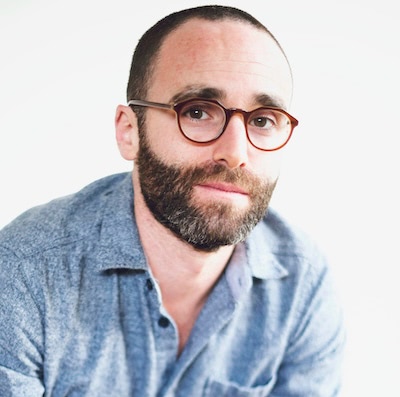
CEO, Unreasonable Group
About This Episode
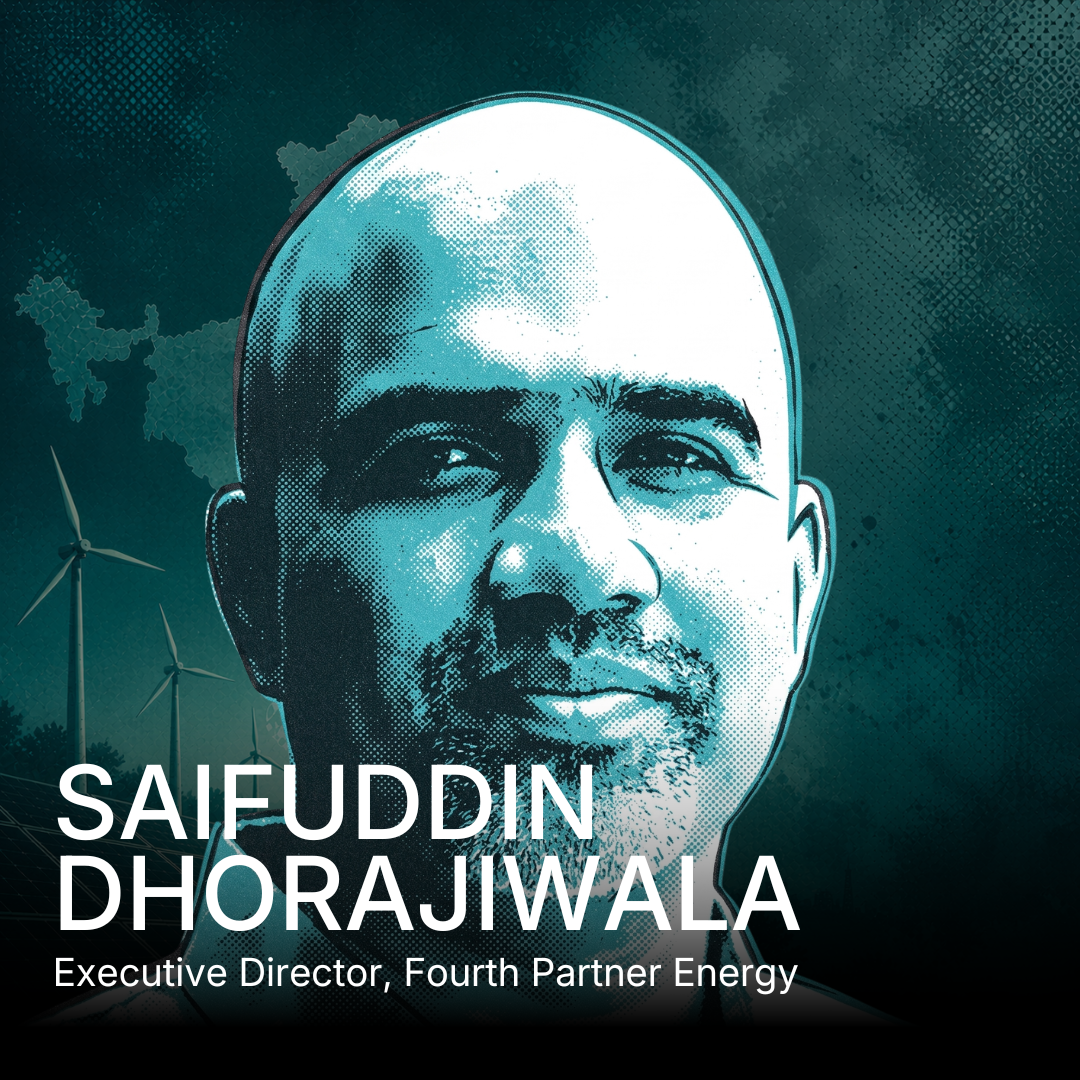
Featured Guest
Saif Dhorajiwala
Co-founder of Fourth Partner EnergySaif Dhorajiwala is the co-founder of Fourth Partner Energy, one of India's largest renewable energy developers. Founded in 2010, the company serves over 400 commercial and industrial clients across 23 states in India, building a gigawatt of solar and wind energy a year with zero upfront cost to clients. Fourth Partner has raised $475 million. Saif joined the Unreasonable Fellowship through the Unreasonable Impact Asia Pacific & Middle East program in 2018, run in partnership with Barclays.
Key Takeaways
Fourth Partner Energy finances, builds, and operates renewable energy for India's factories. Clients save 30 to 40% on their power bills and pay nothing upfront to switch.
The company operates across 23 of India's 29 states and is building a gigawatt of renewable energy a year. That is the equivalent of planting 70 million trees annually.
Their largest single facility has 91 wind turbines and over a thousand acres of solar panels. It powers factories from south India to the Himalayas via a 90-kilometre transmission line.
Saif grew up in a 250-square-foot apartment in Mumbai with his parents and grandmother. He cycled seven to eight kilometres to school and worked at his father's hardware shop in the evenings.
Every employee at Fourth Partner owns stock, including the administrative staff. There are no job titles, no closed offices, and the first 10 employees are still with the company after 15 years.
Saif joined the Unreasonable Fellowship through the Unreasonable Impact Asia Pacific & Middle East program in 2018, run in partnership with Barclays. Fourth Partner has raised $475 million from investors including TPG Rise, the World Bank's IFC, and Norway's Norfund.
When the company couldn't make payroll in the early years, Saif and his co-founder borrowed from family to cover salaries. Their employees saw it and said: keep the money, we will take it next month.
Chapters
Full Transcript
Daniel Epstein (0:00)
Saif [2:10]: Likewise, Daniel. Thank you. It's always a pleasure speaking with you.
Daniel Epstein (2:13)
Saif [2:40]: So I think a bit of just genesis of Fourth Partner will kind of coincide with the kind of problem statement as well. As recent as it seems, we are 15 years old now, started in 2010, with a couple of friends. Yes, a very naughty teenager. And 2010, you know, go back in history. India, if you see, has been developing, and it's a vast country, it's a very densely populated country. And you know, the per capita incomes are still quite low. While traveling around, so I used to be in private equity earlier, investing in smaller companies, and thanks to my work, I had a chance to you know, travel around the interiors in India and at the same time, was fortunate enough to see, you know, countries like Germany etc, Spain and all of that. And saw that you know, the last mile, you know, there was no power, you know, the guys, in the rural areas or in the agriculture area, there was just no power available. And that was primarily due to two reasons. One was that the aggregate power generation was limited because we were pretty much solely reliant on coal. And that had its own limitations. India doesn't have very clean coal, so we used to import a lot of it. And obviously the coal logistics, you know, the wastage, et cetera, et cetera. And the second was that the distribution network was not very robust so the wires didn't reach the last mile or if there was a rural town, it was too expensive to take break wires there. And then I saw during my travels internationally what places like Germany, et cetera, had done even at that point in time, you know, where even though the power was not a deficit they had a lot of rooftop solar coming in and everybody was installing that just to go green and you know, there were subsidies, etc. As it happened, my partner, Vivek, and I had already decided that, you know, we want to test ourselves as men and you know, see if we really have it in us. We had worked for other people before and you know, wanted to test ourselves and said look, if we want to be entrepreneurs, now is the time because we were in our early 20s and you know, life still had a little bit of zest in us. So we had already decided to leave our rather comfortable jobs and said look, there seems to uh, be a need here and the need is a how do we solve the last mile power problems in India? And when we saw internationally it was a wonderful solution because it's a unique energy source. If you put solar panels you can put it modularly in small batches and the moment it is exposed to the sun it starts producing energy. And we said wow, I mean this looks very, very promising. Having said that, I think the technology was not as advanced then. The prices were very, very high, and therefore we started small. We started by building small solar power plants for interior India where there were rural schools etc. Etc. And solving that last mile power problem. Fast forward three or four years, we were still pretty small. Our growth was there. We were growing 100% year on year but on a very low base. And then we felt that look, if you have to solve this problem on scale, there is something which has got to give. But by that time the technology costs had come down. China had become a big manufacturing hub. And suddenly we felt that you know, it was rather affordable to scale up this solution. But the large scale consumers were essentially the commercial and industrial clients, right? And if you solve their energy problems then there is enough energy which is being generated to get to rural India as well. So we said look, meanwhile we can continue to do what we're doing and it's great impact. If we really have to scale this fast, there are two issues to be solved. A, you have to go to larger-scale scale power generation and two is this is a very capital intensive play, so people kind of hesitate. It's not core business. So if you have a Unilever who's producing soaps, they want to invest their money in making soaps rather than, putting it in our power plant.
Daniel Epstein (7:38)
Saif [7:38]: So we said we got to change this model and make it into a leasing kind of model or an operating cost model. So we said now we got to put our money where our mouth is. Let's go out there in the market and raise private capital and start building assets on our own and then kind of do long-term power purchase agreements. So about five years into the journey, pivot changed a little bit. Although the theme was the same that solved the last mile energy problems for a developing country like India, but we tried to kind of accelerate the scale, a bit. So, yeah, I think green comes, second, I would think. I think energy should be a fundamental right, you know, for people. And that is what we are trying till this day, trying to solve that.
Daniel Epstein (8:30)
Saif [8:44]: Yeah, yeah, yeah. So, we have about 400 large-ish clients. We work now primarily with commercial and industrial clients, CNI, like we call them.
Daniel Epstein (8:57)
Saif [8:59]: Unilever or the large cement companies or the chemical companies, pharmaceutical companies. I mean energy is all of them. End of the day, everybody needs energy. It's just different scales. And we power their factories, right? What we also did is that while we started initially with solar and which was primarily on site, which is either on their roof or within the premises. Luckily in India, the regulation allows you to set up, like in the US, set up plants off-site, where land Yeah, it's not very expensive or it's not a very valuable resource. It's mostly, you know, wasteland. And then wheel the power into the factories, you know. So that kind of took us a notch higher, faster into the scale. And then, about three years back, we also decided that, you know, along with solar, we'll also put wind turbines because solar and wind tend to be complementary. And then you're able to kind of, your evacuation infrastructure or your interconnections, you're able to sweat that asset much better. So, in terms of just the capacities, we are at a current operating capacity of about a gigawatt and a half. That is fully operational.
Daniel Epstein (10:18)
Saif [10:19]: And as we speak, we are building another gigawatt which is under construction. So in the next six to eight months, we'll be about two and a half gigawatts. That's the operational capacity. This is a mix of wind and solar. And we are also adding battery storage into the mix. Now if you need benchmark in terms of just the numbers, our balance sheet would, at the current capacity, would be about 10,000 crores, which is about, the dollar changes every day, but this is just over a billion.
Daniel Epstein (10:51)
Saif [10:54]: If you include the pipeline as well, we'll almost double by next year. So that's the pace at which we're growing.
Daniel Epstein (11:01)
Saif [11:09]: Yeah, that's the attempt, yes. If you see the way the landscape has changed, renewable energy is no longer a luxury, right? It's become a necessity. The boardroom discussions are around not that whether we should do it or no, but how much, you know, and people want more and more replacement, guys, wanting to do 100% net zero, you know, just take off everything which is not clean. And luckily in India, the clients save a lot, you know.
Daniel Epstein (11:40)
Saif [11:42]: 30, 40%. It's bad for the business if they don't do it, right? We've been fortunate in that sense that the regulations have allowed that. India is a big country. There's land available. Of course, doing it the right way takes time, but those resources are available.
Daniel Epstein (12:01)
Saif [12:07]: I would think a billion and a half now.
Daniel Epstein (12:08)
Saif [12:12]: Yeah. And we are one of the countries which is still growing. The population is still growing. So, yeah.
Daniel Epstein (12:19)
Saif [13:07]: Right, right. It's a little bit of financial modeling. I mean, it's not modeling. It's like running a bank. You know, you have a capital asset and then you amortize it over a period of time. There are two or three things which kind of drive these things, right? One is really efficient project execution. So if your capital cost is minimized then the tariff you can charge is lower. And therefore we've kind of done the hard yards and built our own in-house team. So we have close to 500 people now.
Daniel Epstein (13:41)
Saif [13:42]: And right from conceptualizing the project to identifying the land and building the plant, it's all done in-house. So we are really, really frugal on that. And therefore the CapEx is kind of minimized. We would have one of the lowest CapExes in the industry. The second is, of course, the cost of capital, right? Because ultimately, you put the capital and then you take it back over a period of 20, 25 years and there we've done well in fact we've raised equity and debt capital which is very, very competitive. So just to give you a sense on our cap table, we have, you know, about TPG Rise but then since then we have the Norfund which is a Norwegian sovereign fund. We have IFC which is the World Bank Group. We have ADB which is Asian Development Bank, DEG which is the KFW German DFI. So we've got a bunch of like-minded investors, impact investors, if you may say so, who are commercial investors, but they understand this space, and they have a long holding period. So we're able to offer fairly competitive rates in that sense. And then, there is a little bit of solutioning as well. You know, you match the demand and supply in the right manner and therefore kind of make the costs come down. So if you put all these parameters together, you really make it competitive and compelling for your customers. And the other idea is to have a widespread solution. So most of our large clients have facilities across India, right? And we are one of the very few, in fact, probably the only one who has the widest footprint in India. If you look at the states we are in 23 states in India out of the 29. And, of course, internationally also on the back of our customers, we're now in Indonesia, Vietnam, Sri Lanka, Bangladesh. So we've expanded our footprint internationally as well.
Daniel Epstein (15:40)
Saif [16:00]: Absolutely no financing from them. There is a statutory requirement for them to pay, but it's a very minuscule number which is kind of a no-brainer for them. But otherwise they don't have to worry about anything. They sign a contract with us, we take about six to nine months to set up the facilities, and they get power. It's absolutely seamless. They don't need to make any changes at their end. You know, something's happening. Unless it's an on-site plant. If it's off-site, they don't even know where the energy is coming from. This is just like magic, you know. And they get their utility bill, and whatever energy is supplied from us, that gets deducted. That amount they pay us which is at a huge discount. And the balance comes from the utility. We still not, I mean, the goal is to reach 100%. Because it's a variable source, you have to be dependent on the element. We've managed to reach about 70, 75%. Now we are bringing in the batteries so that should hopefully take us to 90, 95%. You still have to pray to the gods that, you know, the wind and the sun shines.
Daniel Epstein (17:07)
Saif [17:10]: That's right.
Daniel Epstein (17:10)
Saif [17:11]: But we are very close to net zero, more or less. Yeah.
Daniel Epstein (17:16)
Saif [17:26]: Yeah.
Daniel Epstein (17:26)
Saif [17:45]: In serving the commercial industrial, there are two segments. There is one segment which builds and just sells to the utility.
Daniel Epstein (17:52)
Saif [17:52]: It's just an execution game. Ours is a more solution-based game.
Daniel Epstein (17:57)
Saif [17:57]: We are among the largest. I mean, we have three or four players who are in the same range, you know, give or take 50, 100 megawatts here or there. But we are all at the same kind of level.
Daniel Epstein (18:10)
Saif [18:18]: Yeah.
Daniel Epstein (18:19)
Saif [18:42]: Yeah, that was dream land. Yeah, I mean, I think, he, of course, was he was introduced by the TPG Rise Fund, whom he was advising on a much larger scale. But he was very gracious and probably the smallest company he was ever associated with. But amazing insights. Yeah. We got really inspired by him, his energy. I mean, we celebrated his 75th birthday in Delhi. He was with us. We got a cake for him.
Daniel Epstein (19:08)
Saif [19:09]: It was amazing how despite being a career politician, he had such a good smell about business as well. And he gave us some really impactful inputs, which we are implementing. I think going from on-site to off-site is something he said, look guys, if you want to solve this problem at scale,
Daniel Epstein (19:27)
Saif [19:28]: you guys need to go off site. Forget, you know, doing so many small projects. Just build the large scale projects and solve the problem at scale. So thanks to him. Yes. Yeah, he was inspiring.
Daniel Epstein (19:43)
Saif [19:57]: I would say the average size is about 100 megawatts, which just to give you a sense, that needs about 300 to 350 acres of land. So it's fairly large. You can see it on Google Maps.
Daniel Epstein (20:12)
Saif [20:15]: But now, the biggest one we did, which we've just commissioned, is a single facility of 560 megawatts, which is wind and solar combined at a single location. It's massive. It's got a 90-kilometer transmission line, it's got 91 wind turbines, it's got more than a thousand acres of solar panels. And believe it or not, just four clients are taking in that entire capacity. Yeah.
Daniel Epstein (20:48)
Saif [20:52]: No, they don't. They hit the closest substation. And this one is a unique one because we are feeding it into the national grid and it goes all over India. So even though there are four clients, they have multiple facilities across India. Right. And look, there are some, the beauty of this is that there are people, if you see the Himalayas, right? You can't build, it's not very easy to build wind turbines or solar panels on mountains there, right? The beauty of such a network is that we transmit it right from south of India into the Himalayas. The factories there get their power from that.
Daniel Epstein (21:33)
Saif [22:05]: Look, end of the day, there are two or three things I would say. One is, of course, the real estate, right? You need to have that kind of aggregated land. And land is a very sensitive subject throughout the world, I would say. You know what's happening around a certain, you know, icy piece of land. I would say, doing it the right way is the hardest part, right? I mean giving fair compensation, making sure that disputes, like people have three brothers owning the same parcel of land, right? And they're all quarreling over who gets what money. So sitting them down, it's not our job, right? We could say, guys, figure it out for yourselves and come back to us when you have resolved it. But going there and you know, sitting with them, resolving their issues, doing it in the right, within the right ESG kind of compliant manner, making sure that no indigenous people are displaced, you know, making sure that you know, if there is some dwelling there, we give them a similar accommodation somewhere else. Giving them jobs after they have moved out of their land, things like that. So that's, I won't say it's hard. It's nice to do it that way, but it takes time. You have to be patient. It needs a lot of patience. The second is that there is a bit of an interface with the utilities there because we are injecting it into the grid.
Daniel Epstein (23:49)
Saif [23:50]: And over a period of time, it's natural that we are taking away their best customers. So they are not the happiest there.
Daniel Epstein (23:57)
Saif [24:03]: So time and again there are different ways and means, which they find to slow us down. And again doing it in the right manner to keep attitude, make sure that the guy goes there every day and sits at the office and makes sure that the papers are moving and the files are moving. So that's the second one. And I think the third one is taking this entire challenge and then going to people sitting in D.C. or Oslo and explaining the entire model to them and giving them the confidence that guys back us, we will make you the returns. You know, sophisticated investors, they've been there, done that. But you know, the CNI model is a little different where you sign up with clients as you build. It's not a government project where you get one order, there is financial closure and then you just have to build. It's a lot more nuanced and for them to kind of understand and come along with you and back you as against another utility platform which has more visibility, and then raising project finance around that. So a lot of education happens with extended stakeholders, you know.
Daniel Epstein (25:19)
Saif [25:22]: 475 million, is what we've already raised and drawn, and it's a raw material so we are always on the road. That's my job title, right? Go and raise capital.
Daniel Epstein (25:36)
Saif [25:53]: I'm quite smart.
Daniel Epstein (25:57)
Saif [26:00]: It takes a lot of patience even at this stage. You know, when you're running a treadmill with in a capital intensive industry, it kind of tends to get stressful when you are at the end of you know, that investment cycle and the next size has to come in. So it needs a lot of patience. The good thing I've found is that having a co-founder and a friend as a co-founder has been absolutely invaluable.
Daniel Epstein (26:28)
Saif [26:29]: One is up, the other is down and vice versa. So that partnership has worked really well. But I think the biggest learning through this journey is that people is everything. You can't do it on your own. You have to trust people, you have to let them run the race and you can't manage everything by yourself. So having the right people by your side is absolutely important and I think that solves a lot of problems.
Daniel Epstein (26:57)
Saif [27:07]: Yeah. So interestingly, we were three of us who started this, two of us continue. One was more a financial investor, and he managed to get an exit. And then we said that the energy around the firm has to be around every other stakeholder we partner with. So customers, suppliers, our shareholders, investors, our employees, everybody should be the fourth partner. And that is how, you know, we will progress in our journey. And that's been the journey so far. It's been about everybody else. I mean, I've told you this before, Daniel, but every single person in the firm owns stock. And everybody is an owner here. So there is no hierarchy. We don't have designations in our company at all. So there's no CEO. There is no COO. There's no general manager.
Daniel Epstein (28:00)
Saif [28:02]: There is a structure, there is a reporting structure.
Daniel Epstein (28:04)
Saif [28:06]: There is structure but there's no designation. So no titles at all.
Daniel Epstein (28:10)
Saif [28:11]: Our offices are open. There are no cabins. So, yeah.
Daniel Epstein (28:16)
Saif [28:26]: We like to have fun while solving the world's problems. So, yeah. Employee number one is still with us, you know. First 10 employees are all still with us.
Daniel Epstein (28:34)
Saif [28:59]: They're all fourth partners.
Daniel Epstein (29:01)
Saif [29:09]: I think, it's just love and passion. Yeah. I think they just, we all are an extended family. They eat, sleep, drink, fourth partner. They work twice as hard as any of us founders do. They feel the pride, they feel the pain, all of that, I think. So it's not equity ownership, but it is ownership. Right? They own. They own what they're doing. And I think there's a lot of trust amongst each other. We would trust our lives with them and vice versa.
Daniel Epstein (29:44)
Saif [30:23]: Look, it's also a little person dependent. There are different people who operate very differently. It is about finding the ones which have the same value system. And I think we've been lucky in that sense to have found a bunch of people who value the same thing, you know. And it works both ways, right? It has to be a two-way. The moment I stop trusting, they will stop trusting me and vice versa. So I think and then once you have that base built of mutual trust, it kind of feeds into each other, right? The guy, his name is Srinivas, when I give him as much freedom, he ends up giving it to his team, right? And his team gives it that network effect kind of and that's how culture is built, right? So if you lay the foundation right, right up front and if that is the value you value and you make sure that the others are like-minded, then I think it just multiplies from there on and then it becomes very easy because you can't be watching your back. It's a very hard industry, right? It's end of the day it's infrastructure building in the remotest of areas in 45 degrees Celsius, in 5 degrees cold. So it has to come from within. It has to be more than money which kind of motivates you. Otherwise, you know, there are jobs where people can sit in office and earn twice the salary. But there has to be something more than just the incentives which drive people. And I think because of the network effect we've managed to have an ecosystem which kind of fosters trust within the system.
Daniel Epstein (32:13)
Saif [32:49]: Oh, believe me, it still happens every day.
Daniel Epstein (32:54)
Saif [32:55]: Look, we started with very limited means, right? We put in our own money. We had run out of money in a couple of years. We were scrambling. We were still figuring out what to do. And there have been months where there was not enough money to pay the salaries. And then my partner and I sometimes we got our own personal resources from family and friends and extended that to the ecosystem.
Daniel Epstein (33:28)
Saif [33:39]: They saw that, and they said, look, we are fine this month. Just keep the money. We'll take it next month. We have enough going right now. Now, luckily, doesn't happen anymore. But those were the early foundations, you know, and those stories have been in different pockets been related down the line. And that's why we were very keen that everybody also has a stock ownership in the firm. You know, everybody right from the administrative person who actually, the staff who brings you tea when you go has stock in the company because it's less about the money, but more about feeling that, you know, there is ownership. Daniel, very glad to say that tomorrow, if Vivek and I step down and move out, this baby will continue. The journey will continue. You know, there will be people who will take on the mantle and run it even better than probably what we are doing. So we are, in that sense really proud of something which we built. The idea was always, of course, financially doing well is important. We're not running a, you know, a not-for-profit here. It's a very commercially driven, profitable organization. But the idea always was to test ourselves and become holistic entrepreneurs rather than just add shareholder value. It's more about adding stakeholder value and not just shareholder value.
Daniel Epstein (35:10)
Saif [35:47]: Yeah, yeah. I remember early days, that's how we used to sell it. Now there are too many zeros in it to count. But yeah, 1 kilowatt is about 70 odd trees. And so, you know, 1 gigawatt is 10 to the power of 9. I mean 10 to the power 6. Yeah, yeah, 70 million trees. So that's a mini forest you're talking about.
Daniel Epstein (36:09)
Saif [36:56]: No, you're right. It's a very good point. And I think, I look at them as essentially synonymous, you know, with each other. Look, in that sense, I'm not particularly very religious. More or less agnostic. But of course believe in the power of a higher being and being good and a good human being. But have it or not, both Vivek and me come from very different backgrounds as such. I mean, he's a, if you know the Indian kind of religious, this thing, he's a Hindu, I'm a Muslim-born. But we have the same faith in that sense that if you do good, it all comes around. You know, it's a, the universe is a kind of a, it's a karmic wheel. And in any form and shape, if you've done well, eventually, you will get what you deserve, right? And I think that at every step there have been temptations, you know, to take shortcuts.
Daniel Epstein (38:01)
Saif [38:02]: The guy is taking too long. Maybe we, you know, take him out for a drink. But, you know, we've resisted that temptation because doing the right thing is equally important as it makes the whole ecosystem robust. Like I said, the trust feeds into trust. Distrust also feeds into distrust, right? I mean, that
Daniel Epstein (38:21)
Saif [38:26]: You can't set a bad example ever. We are very, very conscious of what example we set for the larger organization.
Daniel Epstein (38:34)
Saif [39:01]: I think it must be the upbringing. Look, both of us, very humble backgrounds and at every stage where we felt that, you know, things are so tough, there would be something which would come and make life easier and you know, we would go a step, beyond. I mean we would, in our wildest dreams never imagined that we would be running an organization with 500 families associated with us at this kind of scale and doing what. So I feel what else could it be, right? I mean, it has to be a karmic cycle which has brought you to this level. And it is always good to give back. So, of course as, as kids, I mean when you grow up, you obviously look at your parents and the ecosystem around you, and they were happy in whatever limited means they had. They were never greedy or asked for more and just happy in the limited means.
Daniel Epstein (39:59)
Saif [40:09]: Interesting one. So I grew up in Bombay, of course. uh,
Daniel Epstein (40:14)
Saif [40:14]: Small town. Of course, big town. But if you're good at imagining spaces, there was me, my parents, my grandmom, and I had an uncle and an aunt who didn't have kids and used to often visit from another city and live with us most of the time in a 250-square-foot apartment, right?
Daniel Epstein (40:38)
Saif [40:41]: Yeah. I went to school. It was a Jesuit-run school, St. Xavier's, in Bombay. But the education was close to free, the entire schooling.
Daniel Epstein (40:53)
Saif [40:53]: And then, college also. I did my engineering after that which was highly subsidized by the government. I did my chemical engineering. It was a very good school. But luckily, I mean, I had the grades to get into that school. So most of my undergrad education was almost free. But I also grew up with, my father didn't have the best of health, right? And he was the only earning member in the family. So he used to run a small shop where he used to sell building materials, you know, hardware stuff.
Daniel Epstein (41:31)
Saif [41:32]: Handles and screws and things like that. So I had to often back him up at the shop. So from school I would finish school and then evening, go to the shop, sit there, do whatever needed to be done, and then come back and study in the evening and things like that. But even in all of that, they always encouraged me that, you know, you should get yourself an education and, you know, try and get out of this. So I used to cycle my way to school, which was about seven, eight kilometers, away.
Daniel Epstein (42:05)
Saif [42:07]: Mumbai traffic is
Daniel Epstein (42:08)
Saif [42:12]: Again, like I said, never felt that we didn't have anything or the need Never felt the lack of anything. We were just happy. One good thing was that there wasn't Instagram or Facebook at that point in time. You never know what the rest of the world was. And you were always happy. I had a great set of friends, you know, did all kinds of stuff.
Daniel Epstein (42:40)
Saif [42:50]: But then, yeah. After that, I kind of went my own way. Got a job, you know, went for management education, joined the Tata Group after that and then.
Daniel Epstein (43:03)
Saif [43:06]: Yes. Yeah. They still live in Bombay. They've been institutionalized there. They refuse to move in with us, but yeah.
Daniel Epstein (43:15)
Saif [43:19]: They are big fans. I think they're really proud. They're really proud. They're happy. They wish they could be more involved, but given their age. But I think, more than anything else, they are happy to see the whole family come together in the sense, the Fourth Partner family. So I invite them for most of the company, you know, get-togethers and whenever we're having a celebration, etc, and a lot of people come. In India, there's a tradition of touching feet, you know, your elders, you kind of touch their feet and take blessings. So a lot of people, youngsters come and touch their feet and they're really overwhelmed with the kind of love they get in the extended Fourth Partner family. I think you should come for one of our annual, so you'll get a real sense.
Daniel Epstein (44:16)
Saif [44:18]: I'll send you an invite.
Daniel Epstein (44:19)
Saif [45:01]: Don't get disappointed to hear a no. There'll be a lot of no's. And one yes is all you need, actually. So it's also important to you being able to say no.
Daniel Epstein (45:14)
Saif [45:16]: Getting the right people on the ship, just feeling that right chemistry with the, I mean, sometimes you may not have that liberty, but getting the wrong people on your side is worse than not getting anybody at all, right? So I think spend time with who you're raising money with and see if they treat you like equals. I think that's most important because the moment you feel that there is a hierarchy in the relationship, you will lose all the motivation. They will treat you very differently, I think. So, we've had situations where after three, four, five months of everything coming together, we've just not felt right about something and we walked away. And I think in hindsight, those have been very good decisions.
Daniel Epstein (46:03)
Saif [46:05]: Because the same institutions have invested somewhere else and those companies no longer exist.
Daniel Epstein (46:11)
Saif [46:49]: Yeah, no, absolutely. I think it's very important to set that and sense that, you know, early on.
Daniel Epstein (46:56)
Saif [47:22]: Yeah, I think I've told you this before. I work only two days a week because I have a great team and they do all the heavy lifting.
Daniel Epstein (47:29)
Saif [47:30]: On a serious note, I think once you have a certain trust in the team um, and a good team, what they want to see is that you are there when the shit hits the fan, you know, that you are there to hold it all together, you know, and then the occasions where they come back to you reduces progressively. You probably have to do it seven days a week when you are earlier in the cycle. That kind of reduces because they know, they're not afraid to make mistakes and once they learn from their mistakes, the number of mistakes go down. So I think that's more important and that's what our role is. We do more of a mentoring role. Of course, in a fundraising cycle, the investors always want to see the founders' face and therefore we are there whenever it's needed. But there also, it's more about telling the story right. And then getting them to see what exists on the ground, so we don't kind of burn ourselves out. And also it's a management style, right? Right. Again comes from the point of trust that you don't want to be helicoptering around people and making sure that, watching each of their steps. You let them go and fly and then figure it out and make sure that you're there behind. So that kind of frees up a lot of your time. That also helps in kind of succession, eventually. Like I said, tomorrow, if both of us move out, that the firm will still continue. And at a certain stage in life you also want, you know, there is family, there are friends, there are other interests which you want to do. We've now personally started investing in a few startups ourselves. So mentoring them, you know, through the journey, etc. Etc. So I think life need not be unidimensional.
Daniel Epstein (49:20)
Saif [49:20]: You know, your firm is your heart and soul. But there are other pockets also which need your time. So I think we've tried to kind of distribute it.
Daniel Epstein (49:29)
Saif [49:49]: I would say, if you put yourself as a father and you will soon be there, is to kind of take the child into the swimming pool and just help it float, but not hold it very tight, you know, so that they don't drown. So it's a balance, I think, which one needs to strike, where you give your wisdom, your experiences, you share, but at the same time, let people run their own kind of, journeys. I think that's a very fine balance. And obviously in terms of just the physical help, give them your contacts or you give them your processes or you know, things like that. But I think striking a very fine balance between telling them what you think is right and sharing your experiences, but at the same time, let them learn from their mistakes and let them have their own journeys. It's very, very important.
Daniel Epstein (50:50)
Saif [51:06]: That's right. Absolutely.
Daniel Epstein (51:07)
Saif [51:38]: I think a, we want our clients to go net zero. Absolutely. 100%. Whatever it needs to be done in terms of technology, in terms of investment, all of that. So I think we see ourselves as a green utility where we just take up all your energy needs and take you fully green. That's on the business side, and on the overall finance side, I think we are ripe to go public hopefully in the next 12, 18, at the most, 24 months. We would like to be a public company. And then obviously over the next two, three years after that, both of us would want to take a step back and get the next, you know, successor, whether it is internal or external, and get them to run the race. I think that would be about 20 years from when we started. I think it's good enough And obviously one also realizes that at a certain stage you need managers and not entrepreneurs. You know, there are people who are able to do a much better job than you are doing. And I think it is only right that we pass on the mantle and let them, you know, run the rest. There are wonderful professionals who can grow this much better than we have done so far. So I think that realization is there already. Obviously, the public markets would like to see the founders take this on to the next step. But then I think there's a very clear path where Vivek and I both want to step aside and do other things.
Daniel Epstein (53:22)
Saif [53:53]: I think we should be at about 20. 15 to 20. Yeah. At least. There's a consolidation also in the industry, right, which is happening. So we are looking at certain assets to just take over and run them more efficiently. But ultimately, there will be four or five guys who will prevail in the market. So I think 20 gigawatts is not difficult at all.
Daniel Epstein (54:20)
Saif [54:37]: That's right.
Daniel Epstein (54:39)
Saif [55:21]: Yeah. Yeah, no, all doors are open, Daniel. We've always been happy to talk about our story if it helps someone, if it inspires someone, it's always wonderful. But we are always open to serving whatever need one may have. We're obviously raising capital all the time so one can participate. Alongside that, our check sizes tend to be slightly larger now, so that kind of is limiting. But if someone wants to just, you know, if they're sitting in the US and wants advice that, look, I have this rooftop, I need to put solar we obviously won't come there and install it, but if you want to see what is the best system you want to put, you know, how should they evaluate something like that. We are just a phone call away. So, happy to engage in any form and shape. If someone wants to come and see our facilities, meet our clients, happy to host kind of, you know, a delegation, if you will. We do a lot of, alongside where our plants are, we do a lot of social activities as well. um, our. uh, We build small schools, we've built primary healthcare centers, you know. There is an initiative where, it's called Power at One, where we set up power, small solar plants, from the CSR funds which you have, and do it for rural schools and primary healthcare centers so that they can get free power or at one rupee they can get power. So that's a whole initiative which is run within the company. So there is a lot of things which, happy to showcase to whoever wants to have a look.
Daniel Epstein (57:13)
Saif [57:23]: No, no, just send me an email and we'll do the needful. Yeah, absolutely. Sometimes I miss it if there are family weddings. But I'm always on my phone or on the laptop, and I'll make it happen.
Daniel Epstein (57:38)
Saif [57:42]: No. Fourth Partner dot co. Yeah. Yeah.
Daniel Epstein (57:44)
Saif [57:45]: [email protected]. Yeah.
Daniel Epstein (57:48)
Saif [57:49]: You have my number as well. I'm happy to receive a text.
Daniel Epstein (57:52)
Saif [58:45]: Thank you.
Daniel Epstein (58:46)
Saif [58:55]: No, thank you. And likewise, Daniel. Always, always a pleasure. And I have seen you also since probably the early days of Unreasonable and what a phenomenal, phenomenal organization you have built. So equally, congratulations. And it's always good to match notes. And I hope we could meet a lot more than we do, but we'll change that soon.
Daniel Epstein (59:19)
Saif [59:24]: Absolutely. We will do that soon. Lovely. And say hi to Will and Ross and all of them, the old timers who are all hanging around still.
Daniel Epstein (59:35)
Saif [59:40]: Thank you. Thank you. Super, super.
Daniel Epstein (59:42)
Saif [59:43]: Say hi to your brothers and dad as well.
Daniel Epstein (59:45)
Saif [59:50]: Take care, buddy. Have a nice day. Cheers.
Never Miss an Episode
Subscribe to Unreasonable Stories and join thousands of listeners learning from the world's most impactful entrepreneurs.