Wimbledon Players Shower in Solar-Heated Water. Here's Who Built It.
with Christophe Williams
Founder & CEO of Naked Energy
Hosted by
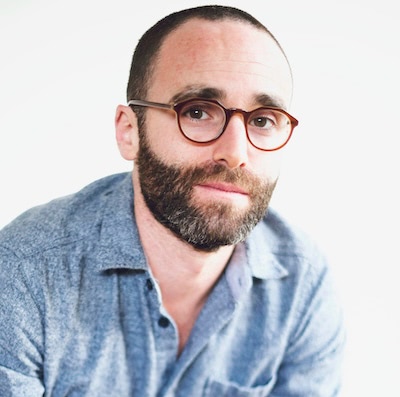
CEO, Unreasonable Group
About This Episode
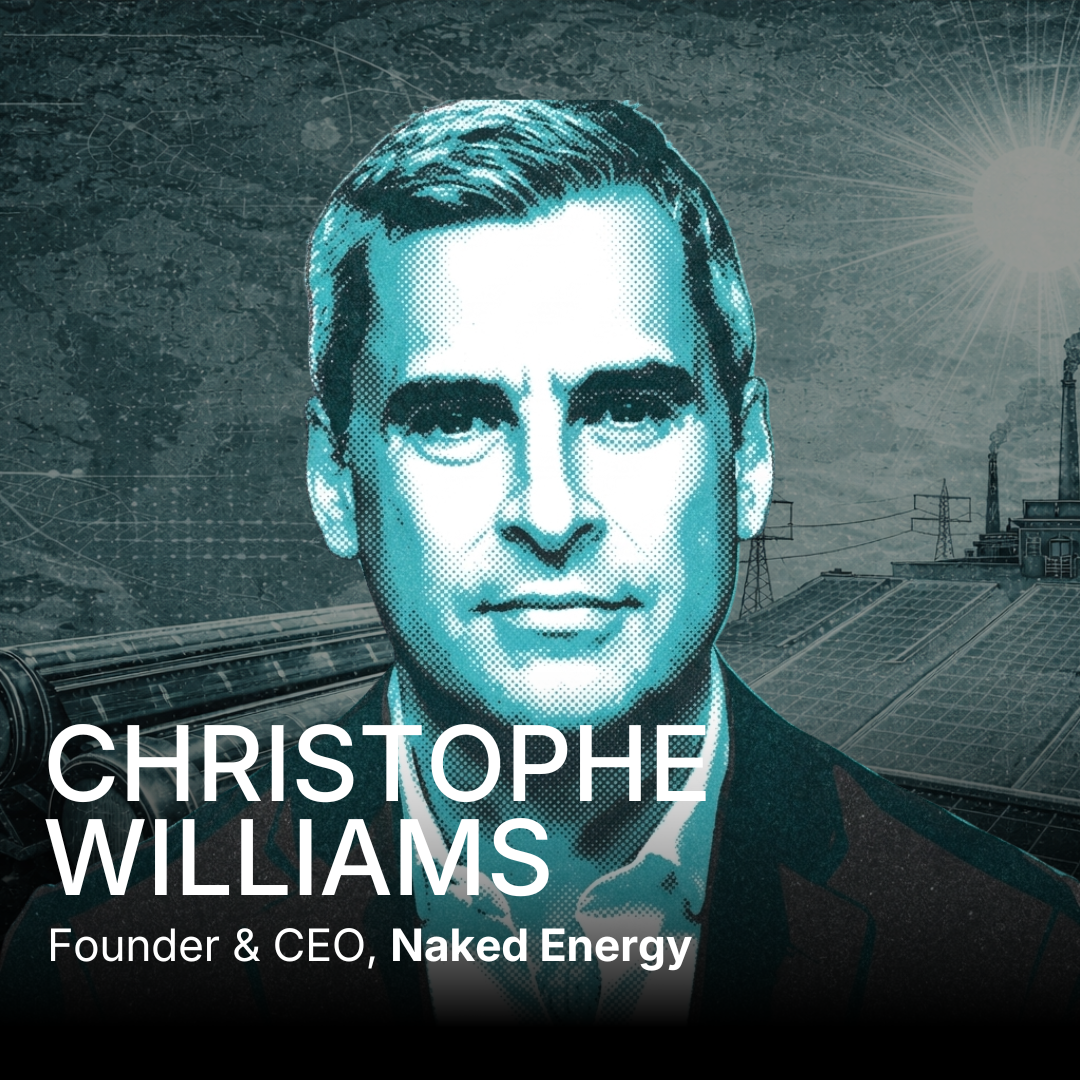
Featured Guest
Christophe Williams
Founder & CEO of Naked EnergyChristophe Williams is the founder and CEO of Naked Energy, a British solar technology company whose patented tubular collectors generate both heat and electricity simultaneously. Before clean tech, Christophe spent 15 years as a film editor in advertising. The company has raised over 30 million pounds, and its technology is installed on buildings including Wimbledon's All England Club. Investors include E.ON and Barclays. Christophe joined the Unreasonable Fellowship through the Unreasonable Impact program, run in partnership with Barclays.
Key Takeaways
Heat accounts for more than half of all energy consumed on the planet and 40% of global emissions. The vast majority still comes from burning fossil fuels. Christophe calls it the warm elephant in the room.
Naked Energy's solar collectors convert up to 80% of the sun's energy into hot water, compared to 20% for traditional PV panels. The hybrid product generates both heat and electricity from the same rooftop.
A 4 megawatt industrial system integrated with Naked Energy can save over half a million pounds per year in operating costs. Over 25 years, the cumulative savings add up to more than 10 million euros.
Christophe was a film editor for 15 years, cutting music videos for Diana Ross and editing a Joy Division documentary. He sold his house, took his kids out of private school, and went all in on clean energy.
His grandfather was a physicist who worked on wave power and flywheel storage in the 1970s. He told Christophe as a child: if we put all known fossil fuels into a calendar year, we've only got minutes left.
Barclays Climate Ventures invested in Naked Energy and helped land the Wimbledon project. Players at the All England Club now shower in solar-heated water generated by Naked Energy collectors on the roof.
Christophe asked himself one question before leaving his career: could I live with myself if I don't give this a go? The answer was no. He walked out on everything. Thirty million pounds later, the company is still here.
Chapters
Full Transcript
Daniel Epstein (0:00)
Christophe [0:18]: Thank you. A real pleasure to be here. And yes, Daniel, finally to see you as well, even though virtually. It's lovely to chat with you.
Daniel Epstein (0:25)
Christophe [0:45]: Fantastic. I'm so pleased you started there. Oh, it's funny, you know, I wanted to call the company something that was different. When I, as you probably know, I transitioned from a creative industry background in advertising to clean tech. And so this is my second career in a completely different industry. And at that time I looked around and there were a lot of really boring names, and it was pretty sterile and corporate and quite forgettable. There was, you know, first this and one that. You know, I can't name the brands but, you know, I think that's disrespectful. But there were brands that were pretty forgettable, and also at the time we weren't just focused on one technology. We had marine technology, wind technology and solar. And so it wasn't kind of like a one trick pony that we were going to focus on one technology. So I wanted it to be broad and so Naked felt clean, it felt pure, it felt literally the opposite of burning something like fossil fuel or hydrocarbon-based and really it's the ethos of the company. It's about transparency, it's about trying to do things in a honest, clean, and humble way. And so Naked Energy just felt really right. And yeah, it does raise an eyebrow when you go to a trade fair or something. They say "Naked Energy". And yeah, the eyebrow goes up and they tend to remember you. So, I think it's worked so far.
Daniel Epstein (2:26)
Christophe [3:01]: Yeah, it's a really good question. I mean, when I first met the other inventors, there's three of us, there's three names on the patents that we have and Naked Energy, really the essence of the company is about IP. We've generated a load of patents and it's about trying to enrich that and commercialize that. And when I met the other kind of inventors, they opened my eye to the big heat problem. I often call it the warm elephant in the room, or maybe the cold elephant because heat is the big problem globally, right? And it's very seldom talked about. We're doing incredibly well on power and power decarbonization. But heat is more than half of all the energy we use on the planet. That's for hot water, it's for space heating, and it's process heating industry. So it's huge. And, when I met these guys and sorry, yeah, just to say it's not just huge, it's responsible for 40% of all the global emissions.
Daniel Epstein (4:05)
Christophe [4:09]: Yeah. So the vast majority of heat demand now still comes from fossil fuels. So we aren't going to get to net zero and we're not going to get to carbon zero if we don't decarbonize heat. And it's tough. It's really tough to do because it's gas boilers, it's furnaces. You need to generate heat where it's needed. And this is why I'm kind of getting onto the why. So the first why was like, wow, it's a massive demand. It's the biggest. What I think is one of the biggest problems facing the energy transition is the decarbonization of heat. And so we looked at the options and technologies and the co-founders were looking at solar thermal technology, and I became enamored with solar hot water, solar thermal. It was such a pure and simple technology. You know, you stand in a cold winter's day outside in the sun. You still feel that heat in the sun. Right. You feel it hitting your skin. And that's exactly what solar thermal does. Whether it's freezing cold outside or whether it's a really hot summer's day. You're taking the majority of the energy that comes from the sun in the form of heat, and we're converting it to zero carbon heat for space heating, hot water and process heat. So it's a wonderful technology. However, when they were designing it, we looked at one of the big constraints with solar is about energy density. A lot of these buildings that I mentioned and end customers that are using hot water, space heating and process heat, they would need roofs that are three to four times the size that they've got to be able to make a meaningful dent in their utility bill. So we set about trying to design a technology that was really like at the cutting edge of efficiency in terms of the collector itself. And our products are tubular, solar. So we don't call them panels, we call them collectors. And we've designed very, very efficient pure thermal technology that can do 120 degrees C hot water. And we've also designed a collector that can deliver hot water and electricity simultaneously. So the hybrid technology and that's kind of the really globally unique offer that we have. And so we developed the core technology but then we also designed it in a very elegant and compact format so that it would be very energy dense on the roof. So a customer that has a fixed amount of space, be it roof or land, can get more energy extracted from that roof space. And so really that was the core concept. It was like we looked at what was available and we thought we could really design something that is really efficient, looks beautiful and delivers greater financial and carbon savings for that huge market that is in needing of decarbonization.
Daniel Epstein (7:14)
Christophe [7:26]: The types of buildings have one common theme, which is that they need hot water all year round, even in the summer. Right? They need a lot of water. So these mainly at the moment are yes, hospitality is a really good industry because they need hundreds of cubic meters of hot water every day. And they're either burning gas or they're driving a heat pump using electricity. And so either way, one is quite carbon intensive, and the other one is the operating costs can be quite expensive because you're going from gas to relatively expensive electricity. So it's hotels, it's also the healthcare sector, so it's hospitals, and manufacturing industry. Think of food and beverage industries, where they need a lot of hot water for sanitization, sterilization, cleaning in place. And that's 24/7. They need heat and it's low temperature. It's when I say you kind of have low temperature, which is below 100, then you have medium temperature, that sort of 100 to 200, then you have very high temperature which is above that, up to many hundreds of degrees C. We're around 100, 100 and below, temperature. So that's the vast majority of a lot of these applications just need a high temperature hot water. And that takes a meaningful chunk of their bill and helps them decarbonize at the same time.
Daniel Epstein (8:58)
Christophe [9:27]: Yeah, that's a really good question. And sometimes it's very easy to get very techy.
Daniel Epstein (9:32)
Christophe [9:34]: It's also, it's really so simple. Like I mentioned, you know.
Daniel Epstein (9:39)
Christophe [9:40]: You put a dark object in front of the sun, it gets hot. You know, you think about your car, right? When you come back in the summer and you touch the top of your car, it's incredibly hot, right? If you have a dark car, right? Maybe, you know, not even a dark car, but you get inside your car, it's absolutely boiling, right?
Daniel Epstein (10:00)
Christophe [10:00]: And that's a similar idea to our solar technology. What we have is the tubular design. And what we do is inside the tubes, we extract the air. And what that means is, we create a vacuum inside the tube. And if you're familiar with a thermos flask, you know, when you put hot water in, it stays hot for many hours. And if you put cold water in, it stays cold. And that's because it's thermally protected. It has this sort of insulation layer around it. And vacuum is one of the very best ways of thermally insulating heat. And so as I mentioned earlier on, the vast majority of the energy from the sun is actually warmth.
Daniel Epstein (10:47)
Christophe [10:47]: These collectors are really designed to take the long wave, which is the heat from the sun. It goes onto a dark absorber, which is inside a vacuum tube which traps the heat. And then water is then circulated from
Daniel Epstein (11:04)
Christophe [11:05]: It's pumped through it. Exactly. So you have these collectors in on the roof or on the ground and water, and it can be deionized water or it can have a water mix with say glycol, if you're in a cold climate, so it doesn't freeze, stops it freezing. You have, in the building, you'll have a large tank, hot water tank. And that's the beauty of solar thermal as well as every single system, whether it's, you know, a domestic system for a single family home or whether it's a one megawatt system for an industrial plant, all has hot water tanks. And these hot water tanks can go from 50 liters up to 500,000 liters. You know, they can be enormous tanks. And what happens is that water then is stored from the sun. So you pump the water, that heat goes into the tank. And that tank is like a preheat system to either your gas boiler or your heat pump. Really in basic terms is when the building says, hey, I need 60 degree hot water. And you've got 10 degree C water coming from your main's cold water. Instead of your gas boiler having to heat it from 40 to 60, it's got a nice hot buffer tank sitting at 60 degrees C. Warm from the sun, zero carbon energy sitting in the cylinder. And the gas boiler goes, hey, I don't need to work. I can just take the energy from here which has been warmed up nicely during the day. And also you can use it in the evening when the sun is gone because it just sits there and stores the energy, which is beautiful.
Daniel Epstein (12:38)
Christophe [12:40]: And you don't need to store it just for a day, you can store it for weeks.
Daniel Epstein (12:42)
Christophe [12:43]: And actually, long duration storage, where it's going in Europe and they've been doing it for a long time in Denmark and in Germany and Austria, is you can store it in the ground for many months. And I just love this because it's using summer solar energy when it's abundant
Daniel Epstein (13:00)
Christophe [13:01]: in the winter when there's not as much solar energy, but you're still using that energy and it means that you're taking the load off the grid, it means you need less gas, you need less electricity. Yeah, so that's the basic principle of solar thermal, is that you take the heat, you capture it into an absorber, you warm the fluid that circulated and goes into the building. With our hybrid product, what we've done is we've integrated very efficient silicon cells onto the absorber, which is also a dark surface. And so we've engineered it and designed it to get hot so that you're generating hot water at 60, 70 degrees Celsius, which is what you need for sanitary hot water in hotels and hospitals.
Daniel Epstein (13:45)
Christophe [13:46]: But at the same time, it's converting sunlight into power and then the residual energy is then going into the absorber where the water is heated and that goes into the building. So for the same footprint, you're getting heat and power, which is really good for customers that have, say, a limited roof space.
Daniel Epstein (14:06)
Christophe [14:06]: And they don't want to put two separate products down or go to two separate suppliers, two separate designers to design the system. You have one uniform generic technology that produces heat and power on your roof and that can all get consumed in the building. And so really? Yeah, in simple terms, that's how the product works.
Daniel Epstein (14:26)
Christophe [14:43]: Yeah, it's a great question. So there's a lot of variables to work out the payback. And the key variable is how much sunshine do you have? Because it is a solar technology.
Daniel Epstein (14:54)
Christophe [14:57]: So, we are a British solar technology company, as you can imagine, very international focus.
Daniel Epstein (15:03)
Christophe [15:05]: And so, yeah, the payback, will be shorter in Spain than it is in the UK, but so you need sunshine. It also depends on the cost of energy that you're displacing. And again, that varies in different markets.
Daniel Epstein (15:20)
Christophe [15:21]: And you know, because gas prices are changing, power prices are changing, so it really depends on what the customer is using as their primary energy. And then also it depends if there's some local incentives available, which there is a lot for solar thermal and other forms of renewable energy. But typically, the paybacks can range from four years to eight years, depending on the location. And what's also interesting is when you look at solar thermal, if you have a hot water demand, which every building that has a human in it is going to have running water, right? Because you need plumbing, you will have a heat demand. Solar thermal, what it does is it has a compared to, say, you know, a PV system. You talked about conventional solar. Because if you say solar energy, the first thing that someone thinks of is a Chinese solar panel, right? It's the traditional PV panel that you put on the roof. They are very low cost now. They're efficient, they convert about 20% of the sun's energy into electricity. So the thermal, if installed and designed correctly, can convert up to 80% of the sun's energy into hot water.
Daniel Epstein (16:33)
Christophe [16:34]: Yeah, so it's very efficient. It's really, really efficient. But what that means is because the efficiency is greater, you're getting more yield from that square foot, square meter of space, available space, right? And that array, you've gone through a lot of fixed costs to install that. The designer, the installer, the commissioning team, operations team. So you want to make sure that that 15, 20 year investment gets the maximum yield. So the reason I say this is because when you think about those paybacks, payback is one important metric. But another really important metric which works really importantly for solar thermal is the absolute savings you get over the lifetime of the system.
Daniel Epstein (17:22)
Christophe [17:24]: So PV, the CapEx is lower, you have a similar internal rate of return, but the absolute savings aren't as great as a solar thermal, if you have a hot water demand, that is you've got to have a big heat demand. And not only that, with solar thermal, you are directly reducing onsite emissions. So that's scope one emissions. Reducing the burning of gas and PV displaces scope two emissions, which is grid emissions. So for corporates and customers that are really motivated to decarbonize their emissions on site and scope one emissions is very tough, then solar thermal is a fantastic solution to adopt. And we've also been on this journey for a while and what's really interesting now is that the way we position it, and this is what I'm talking about in Germany tomorrow at the Heat Conference, is not to think of it as PV or solar thermal. It should be hand-in-hand, in fact the way that we look at solar thermal is we are integrating them. Every system we've done has been integrated with heat pumps.
Daniel Epstein (18:40)
Christophe [18:42]: And heat pumps are absolutely a key element of electrification of heat. Right. And it's a fantastic technology, great efficiency. But heat pumps in themselves are not a renewable energy technology. Right? They need power to then compress gases to then generate heat. They're a fabulous technology. But you're swapping from gas to electricity. And what we've discovered and found is that by integrating solar thermal into a heat pump, you design and deliver a better renewable heat solution for the customer. Because what it's doing is, remember those tanks that I talked about that every system has hot water tanks? Well, the heat pump needs those tanks as well. And what solar thermal does is it acts as another heat source. So you can get it from the air, you can get heat from water, or you can get it from the sun and solar thermal. And what that means is the heat pump just needs to work less. So in the winter, instead of taking cold air around about 2 to 3 or 4 degrees and compressing up to the required temperature, you can take heat from solar thermal in the winter from 20 to 40 degrees Celsius. And then in the winter, it can take heat in from solar thermal at 60 to 80 degrees Celsius. So the heat pump, seasonal COP is greatly improved, which means it uses less power. Right. And by using less power, the customer has a lower operating cost and the ROI of the whole system, rather than just looking at the rooftop system, is improved. And so that's how we're really positioning it with industrial and commercial clients are saying, look, this is an optimized solar assisted heat pump solution that we really think helps customers electrify but also reduce their operating costs rather than keeping them fixed, at the same time. So it's a really exciting kind of combination of technologies.
Daniel Epstein (20:48)
Christophe [21:00]: So if you look at a 4 megawatt industrial scale industrial client, they're going to electrify their system, and typically, they'd use like a cascade heat pump design which has an air source heat pump preheating one storage to a water source heat pump to deliver 80 degree hot water to a client, right? Or their industrial processes. By adding Virtu, our technology, as a heat source, they can save, over 20 years, half a million pounds a year.
Daniel Epstein (21:32)
Christophe [21:32]: Each year on their operating costs.
Daniel Epstein (21:34)
Christophe [21:35]: So the accumulative savings over 25 years is more than 10 million euros. So it's, you know, those kind of figures are how much businesses can electrify and also save at the same time.
Daniel Epstein (21:48)
Christophe [22:22]: Yeah, you hit the nail on the head there, Daniel. It's really, really unusual career transition. I don't think, I mean, I still kind of pinch myself and think, you know, what is a film editor, doing?
Daniel Epstein (22:34)
Christophe [22:37]: I used to be a film editor, yeah, for TV commercials. That's how I started my career. I went to a really good school. I was lucky. I had a good education. A lot of my peers went off into university to study, law or finance and accounting. But I went to Saint Martin's Art School. I was very arty at school. I really loved art and then got into the film business through family connections. And I started as a tea boy. And in those days it was really interesting. It was all analog. It was cutting film. I'm showing my age now, right?
Daniel Epstein (23:14)
Christophe [23:16]: So, it was celluloid film on things called Steenbecks. And you had the sound and the film and it was incredible experience. And one of the first projects I ever worked on was a wet, wet, wet music video. And the editor, I was a second assistant editor there. And you had to hold up the film and when they wanted to change the shot, they would lean over to the assistant and they go, oh, have you got the head trim or the tail trimmed of that shot? So you had to have everything ready and give it to them, and the alternative takes so they wouldn't lose their creative flow. So you're actually editing as they're editing, thinking, well, what are they going to want next? Or I would choose that. And whereas, you know, that's a discipline that kind of really changed through editing. And my father was an amazing film editor. He was a, you know, a great editor. And he went from engineering into film editing. It was quite fun. And so I was the understudy. And then, I sort of cut my teeth on music videos. I did music videos for Diana Ross, you know, Kiss, you know, some of these quite well famous bands. And then, I did a rockumentary where I was the assistant. But then I ended up finishing as the editor for Joy Division to New Order. It's a rockumentary. It's an amazing one. And the band came in, it had Quincy Jones in it.
Daniel Epstein (24:43)
Christophe [24:46]: It was an amazing experience and on film. And they ran massively over budget. And the editors were all panicking, going, what are we going to do? Because, you know, we don't have enough time. And this little kid in his early 20s put his hand up and said, hey, you know, if you buy this computer called an Avid, I could finish it all for you in a few days. They said, get this kid out of here. You know, he's crazy. We did, we digitized the whole thing, and we finished it. It was an amazing experience. But that's going from analog to digital, so I was lucky to take that wave. And then, yeah, my career just grew from there. I worked on campaigns with Dennis Hopper driving around, from Easy Rider and Steve McQueen driving around San Francisco from Bullet to Ford campaigns and got on the Guinness Book of Records for a commercial I did with Toshiba.
Daniel Epstein (25:39)
Christophe [25:41]: I have to say I was always trying to do things that were technically and visually very different. And I was very fortunate to work with some very visionary and creative people, you know, from agencies to different directors and copywriters and art directors. But, you know, and even in that time I worked on, and I guess this is the origin of what got me interested in clean energy because even when I was working in advertising, I worked on a global climate change campaign for the UK government COI and DEFRA. Actually, if you could see the emissions, right. We would do something about it. So we had cars and airplanes and buildings with like colorful gases coming out of it. And it was filling the sky and everyone's looking up, going, my God, this looks weird.
Daniel Epstein (26:33)
Christophe [26:36]: Made the emissions visible, right. People go, whoa. And the sky was like this massive, rainbow colored, wacky sky. And people go, oh, my God. But because it's invisible and it happens through droughts and famine and flooding and all these other things, we kind of, you know, it's not as visceral.
Daniel Epstein (26:53)
Christophe [26:53]: So I directed that campaign and then also water saving campaigns. But the reason why you know, sustainability and renewable energy has always been important to me, is my grandfather. And this is where it all started.
Daniel Epstein (27:08)
Christophe [27:11]: So my grandfather was an incredible scientist, Peter Blenheim Williams. He was the chief scientist for John Laing in the 1970s and mostly 80s, so it was like 20 years. He was their chief scientist doing alternative energy. It was called that.
Daniel Epstein (27:30)
Christophe [27:31]: Yeah.
Daniel Epstein (27:32)
Christophe [27:36]: Well, I'm going to give my age away.
Daniel Epstein (27:39)
Christophe [27:42]: Brace yourself. Serendipity has it that I was born on the original oil crisis. The year of the original oil crisis in 1973.
Daniel Epstein (27:52)
Christophe [27:52]: Right.
Daniel Epstein (27:53)
Christophe [27:53]: So that's when Saudi Arabia and OPEC went right, we're no longer distributing this oil. And my grandfather then was already working on alternative energy. He was working on wave power with Steven Salter, the most amazing scientist, which is float on the ocean and its movement would then generate power. He worked on flywheel technology, which was these enormous flywheels would spin at, you know, tens of thousands of rpm, and they would help transition one power station to another power station. So, you know, power storage even in that time. And he even built model train sets where a train would come into a station, setting off a series of flywheels, and then when it wanted to leave the station, the flywheel would push the train out of the station, recycling all this energy. It's so cold. You know, it's like, wow. And he built models to do that. So he was the most inspiring man. And when I was a little kid, he said to me something that stuck with me. He said, Christophe, you know, if we could put all the known fossil fuels into an annual calendar, we've only got a few minutes left.
Daniel Epstein (29:07)
Christophe [29:08]: I was like, what? There was definitely a light bulb flicker at that moment. I thought, well, that's interesting. And I probably didn't have the brains to sort of really compute about sort of, you know, the severity of that statement. But I guess I always, you know, had that itch to scratch. And then after, you know, over 15 years in the advertising industry, I was looking for something new. I thought, well, look, you know, I really want to try and do something that actually has global applicability because if I'm brutally honest, I had a wonderful time in the advertising industry. It was really good, and I worked on some amazing campaigns, but it probably isn't the most forthright kind of career. And I wanted to do something, being brutally honest, that isn't about me because when you're in a a creative role, you're the product. You keep winning business, just yourself. And it's a service that you are delivering and it's your creative ability. Whereas if you can create a technology or something that is actually, you know, scalable and can have a wider impact, that really appealed. And when I met the other inventors, that was a moment. But that didn't happen overnight. You know, it was like, okay, Naked Energy was a kind of transition. And, yeah, it was a scary transition, but one that I took the leap and it's been a roller coaster ever since.
Daniel Epstein (30:36)
Christophe [30:46]: Yeah.
Daniel Epstein (30:47)
Christophe [30:50]: Oh, it's probably all of those things.
Daniel Epstein (30:52)
Christophe [30:55]: A crises, I think. what's interesting about it is that, as I said, I wanted to do something that's scalable and maybe I reached a stage in my career within the advertising space where I wanted a new challenge. Even though we were working on fantastic work, and meeting the other inventors and the early scientists was hugely invigorating. I still pinch myself. You know, we're a small company still with 32 people in the business, and I'm surrounded by just absolute geniuses. I mean, some of the scientists, the engineers, the entrepreneurs, the financiers, they are just extraordinary people. Yeah. And I have imposter syndrome every single day, so it is extraordinary. But I guess the way I experienced it, to answer your question, it was kind of a happy accident. So the guys, co-inventors didn't want to do a startup, they weren't interested. They're much more senior than me, were going into retirement. Startup? No, they weren't interested. I said, look, why don't we put all the ideas into a new company? We'll call it an interesting name, but we need to make sure that every idea we have stays in the company. And that took me a couple of years at least to get that all agreed and figured out. Because if you know inventors, their latest idea is always the best idea, right? So it's kind of trying to capture that. Once the company was formed, I said to the guys, look, we'll start a company and put, all the IP in, and we'll try and raise some funds and see where we go. And I really had no idea how much it was going to take financially to go from a drawing on a piece of paper to a product beyond a building that a customer want and have faith to put on a building and actually invest in and trust. Right. That is a long journey which took longer than I had planned. And what happened? I applied to a competition. And that competition was with the big oil company, Shell.
Daniel Epstein (33:06)
Christophe [33:08]: They had this competition, national engineering competition, called the Springboard Competition. And the category is, it's small businesses with big ideas on climate change.
Daniel Epstein (33:19)
Christophe [33:20]: And we applied and I expected nothing from it. I thought, okay, well, see where that goes. And I never check in my junk mailbox. Never. Something drove me to go and have a look and I had a rummage and funny enough, there was this email from Shell saying, congratulations, you've been shortlisted. You need to come to Cambridge University present on XY date. You're one of nine finalists. It's like, oh my God, we've just been chosen, this national engineering competition. And lo and behold, we went, we pitched, and we won. We won the top prize, £40,000. It wasn't the suitcase of cash but what it did do is it introduced us to three business angels who said, we really like this idea. And they put money in, half a million pounds, into the business. And I thought, wow, half a million pounds, I'm going to be able to change the world. Let's make that happen.
Daniel Epstein (34:21)
Christophe [34:23]: That's all we need. Let's go, guys. And I had no idea, honestly, I can publicly confess and admit this. I thought we were going to be able to do all the engineering and develop supply chain and all of those good things. And I walked out on my career. I said, right, this is it. I am doing this because I asked myself a very simple question: could I live with myself if I don't give this a go? And the answer was clearly no. And so I walked out on all my clients and all my contacts, and I still have a letter from the partner at the company I was working with at the time, saying and it's hilarious, Christophe just boarded his rocket ship. We wish him luck. It's like, yeah, it was a rocket, but maybe it needed a bit more fuel in the rocket.
Daniel Epstein (35:11)
Christophe [35:12]: And that was it. That was how I experienced the start. And £30 million later, in terms of raising capital between equity and grant funding, we're still here. You know, we've been going for more than 10 years, and it's been a ride.
Daniel Epstein (35:27)
Christophe [36:09]: To be totally honest, it's been an incredibly rewarding journey. It's been much tougher than I had originally thought at the beginning. I think one of the key things as well is that we really stuck to our guns because we could have just gone, okay, let's just buy someone else's technology and sell that and let's do so. We probably would have done very well, but we really stuck to the belief that we have unique IP. Solar thermal has a role to play, and I call it the Cinderella of solar because it is so overlooked. It's a beautiful technology. Its beauty is in in not only how it looks, but how it works. It doesn't burn anything. It only needs a teensy-weensy bit of electricity to actually, you know, a thousandth compared to normal solutions. It's just to drive a pump, circulate fluids and there's no kind of dangerous chemistry or you don't have to extract stuff from dangerous places and burn stuff. It's such a beautiful technology, but it gets overlooked.
Daniel Epstein (37:11)
Christophe [37:11]: And so I think any company that is trying to develop hardware that is unique and maintains a unique IP and has real competitive advantages, and you can scale it, you can have the right investors, the right early customers, the right channel partners, the right business models, the right digital tools that go with it. Or, you know, it takes some, so it's been incredibly tough. And you mentioned patience and impatience. I have both of those. And you have to really, you're problem solving nearly every second of every day. And that is something. You either live for that or you don't. I think it toughens you up. It's character building. And I think it has been a much tougher journey, but there's been some unbelievably rewarding moments on the way. Even though I've described that, I still feel like we're just getting started. Yeah, the bit when you're commercializing. Right. You've done the hard yards of having the supply chain, unique technology and you've got really good reference customers, you've got some good backers, you know, the scaling, the commercialization. Because what's the point of doing all of this if you can't get it onto millions of rooftops? Right?
Daniel Epstein (38:30)
Christophe [38:30]: And that's the ultimate goal. So I feel like we're just getting going and it's an incredible journey and we've got amazing people that are either directly and indirectly working in the business.
Daniel Epstein (38:42)
Christophe [39:27]: Yeah, it's a really good question, Daniel. And I think, deep down myself, I'm a really competitive guy.
Daniel Epstein (39:35)
Christophe [39:36]: I want to win. And this is the only and the first startup I've ever done. Right.
Daniel Epstein (39:40)
Christophe [39:42]: And I am, you know, definitely tenacious, definitely persistent and I think as a CEO, founder, you've got to have really thick skin. It's not easy, it's really, really tough. And you're going to get told so many times that you know, you're not good enough, your product's not good enough, there's no market fit, you're never going to raise capital, you know, blah, blah, blah. It's incredibly demoralizing sometimes, that moment, but you just have a few victories here and there and suddenly it's like, wow, this is all so worth it. You know, I grew up doing a lot of team sport, played a lot of sport when I was younger. And I think that really teaches you, you know, to work as a team and keep working harder and refine things, and you'll get there. But yeah, I think family, as you mentioned, you know, like the midlife crisis, whatever it was, you know, in my 30s, I, I changed careers and did everything. And, you know, I've got an amazing family behind me. You know, my wife has been extraordinarily understanding. I went from a pretty successful career where I could have just stuck at it, and, you know, done okay in my life. But to walk out on that to then for long periods of time, you know, not have any income or any secure income and take your children out of private school, and sell your house, go into a smaller house, you can release equity so you can survive and put it into the business and put your life on the line and your family's life on the line for something that you really believe in, is tough. That's really tough. You know, and I understand sometimes when these young students are leaving, say, MIT or Stanford Imperial, or Cambridge, you know, they don't have all the dependencies. And so doing a startup is, hey, let's just roll the dice and have fun, right?
Daniel Epstein (41:36)
Christophe [41:38]: Exactly. Let's have fun. When you've got your family looking at you and they're looking at sort of, you know, and you're not trying to transmit it, but in your head you're going, right, am I going to be able to feed my family? You got to dig and you think really quite deeply. And now there's more people. You're thinking about their lives and their families and their responsibilities, and, you know, I think about the amazing team we have and how just so desperately want to keep them and keep them rewarded and sustained. So it takes a different dimension. So family absolutely has been really, really key. And my dog, I've got to give him credit. Yeah. It's like I have. He's in his 14th year now, so he's been around for most of the journey of Naked Energy. And he's a little Westie called Jordy. And I love him dearly. And you know, it's amazing. Sometimes when you're feeling like, wow, this is all too much, I just need a break, you know, he just looks at me, goes, hey, let's just go for a walk. And he's always ready for a walk and just go off into the woods and you just get into nature. You know, you destress, decompress, and he's just doing his stuff and you kind of think, it's very leveling, very grounding, and I love that. So he's been amazing. And to help me keep my marbles and, stay sane. So, yeah, family and pets.
Daniel Epstein (43:13)
Christophe [43:16]: Absolutely, absolutely. And then just finally I would say, you know, it's really important that you have, and this is probably going to sound a bit cliche, but a really good team at the beginning when you're starting a company. My co-founders at the time, brought solutions and challenges in equal measure. And I was very lucky at the very beginning. I had a really good co-founder who came from a finance background, corporate background. And I didn't have that because as you can imagine, my background was more creative. And so, you know, it was fundamental to have that sort of finance and corporate perspective. And so that really helped when we got things kicking off but definitely in capital raising. And it's been a very, very steep learning curve and I'm still learning. But yeah, that's really critical at the beginning. that's
Daniel Epstein (44:07)
Christophe [44:34]: So many things. To be honest, I think a lot of the things about running a business is common sense. And so I try not to look at people and think that's their title, you know. Oh, my title is, you know, chief executive officer It's like, well, we're trying to solve problems and we're trying to think, all right, what have we got to do next? And, and so I think it probably helps trying not to see myself in that role. And maybe that's why people, you know, I have, you know, quite a lot of empathy for people. And maybe, it's two ways because I don't ever try and pretend to be or know something that I don't know. Right. I think that's a really important lesson. You do a lot of things, you know, even the Unreasonable group, right? You know, you meet some amazing founders, you know, and through Barclays portfolio, CEOs, amazing. Also on the journey, you know, you see some CEOs that maybe are saying things they shouldn't be saying or they're trying to maybe cover,
Daniel Epstein (45:31)
Christophe [45:33]: Yeah. And so I've always tried to just be humble and that I am always learning and so that's a really important lesson. And then you mentioned patience. It's like everything takes longer. So you've got to really, really deal with patience, particularly if it's hardware and fixing things. And there was a really interesting moment which, maybe kind of addresses your question. There was a moment where I was impatient.
Daniel Epstein (46:02)
Christophe [46:03]: And I said to my CTO, I said, look, we've got our own equipment, we've got our own analysis and data on our technology, but we need independent data. Let's go to TÜV in Germany. Let's get independent tests, because, you know, we're about to raise some funds, and you know, that'd be so important. And he said to me, we're not ready. We're not ready. No, we're gonna go. We're gonna go. Let's do this. And we got not good data. Well, the data that was quite a bit short of what we had expected, what I expected. And my CTO, Adrian, he was just brilliant. He said, but you know what? I'm really pleased you pushed us to do this. It's good news, bad news. What do you mean? It's like he said, well, we know where we stand, and now we know what to do to fix that shortfall. And we did, went over and we said, okay, we know it was really humbling. And I remember going out for dinner with him that evening. I was crying into my beer, kind of just going, oh, my God, is this the end of the road? and it was one of those moments, and you kind of, you always fear that kind of black swan moment. And then what's going to happen? What's around the corner that's going to kill your business? And I thought that was one of those moments, and there'll be many others, but they keep going. And I think that's one of the other lessons.
Daniel Epstein (47:23)
Christophe [48:56]: So yeah, we're right in the fundraise right now. Right at the end of a very important one.
Daniel Epstein (49:03)
Christophe [49:03]: Thank you. So it's not all been inked just yet, but we're very advanced, and through due diligence on a very exciting deal. And yeah, so we're making profit on our products.
Daniel Epstein (49:17)
Christophe [49:17]: So, we're making a gross margin on our technology, but we're not profitable as a business yet.
Daniel Epstein (49:22)
Christophe [49:23]: And this round that we're doing gets us to that break even, gets us to that free cash flows. it's going to make a very big difference to our scale because as you know Daniel, you know, this kind of energy transition, you know, it's very hard to compete when you're small. Right. Yeah, extremely. Costs are high and we need volume, right? You have to get bigger to compete. So we've got a very exciting deal that's going to conclude. Hopefully, we can go public with it in a few weeks time and it's going to make a big difference to the costs and scale of our core product and particularly, you know, particularly in Europe, which is really important, trying to get some sort of resilience in the supply chain and you know, increase quality. Yeah, we have a deal right now which is going to help us get to break even pretty quickly. And we got some projects because what's also very exciting is traditionally we had focused on rooftop commercial, industrial. So we don't focus, unfortunately, you know, we get a lot of customers and it's frustrating.
Daniel Epstein (50:29)
Christophe [50:33]: And I'd like it on my house too.
Daniel Epstein (50:35)
Christophe [50:37]: I think the laws have just changed actually because I was looking at the other day and I spoke to one of my neighbors who used to be a counselor, just said oh yeah, I think just change the rules because our houses are period houses, and we live in a conservation area and they wouldn't allow any solar on the roof and I think they've just relaxed those laws. Anyway I'll definitely look at that because as a CEO of a solar company I need to have it on my roof. But we don't focus on single family homes. We tend to focus on, remember at the beginning those bigger heat load customers that need a lot of hot water all year round. But we're now really in an exciting mode where we're starting to look at large ground mount systems,
Daniel Epstein (51:19)
Christophe [51:20]: Megawatt scale for district heating, heat networks. It's a highly competitive space but it's really interesting because again they need that hot water all year round and it has storage and it really helps take communities and towns off gas, off grid as well. So that's an exciting area. And in our last investment round we had two very important investors. We had E.ON, the German utility company, lead the round and we had Barclays Climate Ventures also participate in the round and both have very interesting and strategic roles to play. E.ON are very interesting because they're operating in 16 different countries and they have a lot of industrial and commercial clients that are ideal customers that need to decarbonize heat and also E.ON, they own a lot of these assets as well. So a really exciting opportunity to accelerate the route to market. And with Barclays they are a strategic investor. They have helped accelerate introductions to some of their corporate clients that do banking with them. they were instrumental in helping us win and achieve the project we did with Wimbledon, All England Club. Yeah that's probably one of the most exciting and nerve wracking. Every time the TV was on during the last summer competition and you see that big drone footage going past number one core and you can see your product, oh my gosh, that's our product.
Daniel Epstein (52:59)
Christophe [53:02]: And the fact that you know players like Alcaraz is showering in solar hot water that your product has generated, it's just so cool.
Daniel Epstein (53:09)
Christophe [53:10]: So Barclays helped with that and also just very, very engaged on the board and you know really great team and highly motivated. Not just investing in startups, they generally want to help abate climate change, you know, abate carbon emissions. So they've been really, really good investors, off their own balance sheet. And I can't name the current investors that we're talking about today. It will be very newsworthy and very exciting when it's announced. It should make a big difference.
Daniel Epstein (53:42)
Christophe [54:26]: Yeah, that's a really good question. So we have these strategic sessions in the company and we get everybody together and we kind of think about what can we achieve? And I think Verne Harnish has this thing called BHAG, which is a big, hairy, audacious goals, which you're probably familiar with, right? And the BHAG for me certainly is that I see this is so scalable, even though it's hardware and it's not Naked Energy everywhere, right? Because we're never going to be this huge behemoth of a company because what
Daniel Epstein (55:00)
Christophe [55:05]: Exactly, exactly. And you know, you can increase volumes, of course. And you know, if you're of course still growing each year by 50, 100%, then actually it becomes a very big number, at the end of ten years. But where I was getting to was that our model is work through partnerships. It's very much a partnership model so that Naked Energy can identify strategic partners in key markets and have a global impact that way. And what we've done over the last year, and a half since we've closed the investment round, is to invest massively on our digital tools. And these are really clever tools that, for example, we used to use eight very complex spreadsheets to be able to size and calculate and deliver proposals for clients, right? And that's, you know, these have like, really complex climate models and tank size and flow rate calculators. You got to be a pretty clever engineer to do this thing right? But these spreadsheets were phenomenal. But what we've done, and we've partnered with Google, is we've developed this digital platform where we can take eight tools and all the complex data and analytics inside it onto a digital platform. And with their solar sunroof, Google's sunroof program, we can take any building in the world and within minutes, we can design, integrate and build beautiful integrated proposals for clients now that sizes the system, it shows the savings, the money, the carbon savings, and it builds it into the building and you can see the load profiles and the generation. It's beautiful. And that's called Clarity360. And we're launching that pretty soon, and our partners are working with it. That allows us to design stuff really quickly and use AI to optimize design and integrate into the building. And then we've got our monitoring platform, which is called clarity 24-7 which can monitor very closely, really measure the assets so you can see exactly the energy generated, carbon saved, you can, look at all the key vital statistics of a project. You know, its flow rate, system pressure, all these kind of things. And so you can run the O and M service and so these are kind of like wrapping around the hardware and that will enable us to scale. And so to answer your question, my ambition is that, if we can't address more than 1% of the world's heat demand, then what's the point of doing this? Because then you're not moving the needle, right? And global heat demand is 212 exajoules of energy. That's just like
Daniel Epstein (57:53)
Christophe [57:54]: An awful lot. Yeah. So we're talking about many terawatt hours of energy. And in Europe, there's over 10 million solar thermal systems installed, which has 185 gigawatt hours of storage capacity because as everyone, every system has storage as well. And that's all heat that's taken off the grid, right? It's amazing. So my ambition is that if we were to do 1%, we're talking millions and millions of buildings around the world that are generating energy onsite, they're consuming it onsite, they're less reliant on the grid, they're saving money, they're saving carbon. And also as countries and as businesses, we're less reliant on importing gas or hydrocarbons from, say, geopolitically unstable regions of the world and hopefully there'll be less wars in the world and there'll be less, you know, less suffering and you know, because the clean energy transition is an engineering transition. We have to, it's hardware and software. That's where I hope we are in 10 years. And I still have that dream.
Daniel Epstein (59:05)
Christophe [59:46]: That's a really good question. So I think before I answer that as well, you know, you asked me lots of really interesting questions in this chat, and I've loved it. You know, key point is, you were saying, no doubt you're going to do it. If it was all down to me, you know, and just will and passion and drive,
Daniel Epstein (60:08)
Christophe [60:12]: You need so many other things to happen and you need brilliant people because you can't do anything. Company, the word company, is a company of people. That's what company means, right? And so you need brilliant people to make it happen. And we, you know, we do. And my daughter's just joined the business.
Daniel Epstein (60:32)
Christophe [60:35]: Now like seven months ago, and so, my grandfather's a physicist, oh, he was a scientist. My father's an aeronautical mechanical engineer that then went into advertising. And then the brain skips my generation and my daughter's a physicist. One of my daughters and my other daughter's still studying, politics and international relations. And we need more women in science and we need more women in clean tech. So she joined and she does a role which is just extraordinary. She's doing incredible modeling and calculations, looking at sort of system design. And she bridges the sort of science and engineering team with the commercial team, with the sales team. It's really an amazing confluence of all those different functions. It's amazing. So, and she came from PwC, which is like, you know, she was there for a few years doing amazing work and had really good grounding and now sort of applying her skills in different ways. So it doesn't mean you can be a family member to give it. To answer your question, how do you do it?
Daniel Epstein (61:41)
Christophe [61:46]: We're doing this round at the moment so, and we've got a very exciting and ambitious plan, that if it goes well, we get up to about 150 people in the company.
Daniel Epstein (61:58)
Christophe [61:59]: That's where we get to, and so there's lots of roles for creative, you know, and that's one thing I really, you know, as a business want to focus because storytelling, yeah, 100%. It's like you know, before the role of editing and that is storytelling, right? And we need more of that in the energy transition to make it more interesting and people to become emotionally engaged and understand and not always make it a battle. So people from creative backgrounds and other scientists and finance, clever business models. You know, how could we do heat as a service rather than asking customers to pay for all the money upfront for 20 years of savings. There's so many different things that we can do. And then engineers for designing systems and building the systems and maintaining them. It's so much, the whole depth and breadth. It's very exciting. So, we are hopefully closing this round soon and yeah, we have an amazing head of people, Alex. She's been doing amazing things and we just want to get a really highly motivated, mission aligned people into the business to help us try and do what we're doing because it's tough and we need very motivated people. M
Daniel Epstein (1:03:13)
Christophe [64:12]: That's a brilliant question. Yeah, I mean I think, well, with Shell it was just a competition that we won. We've never worked with Shell. And with Barclays,
Daniel Epstein (64:21)
Christophe [64:23]: You're right, they're one of the largest banks in the world. And, you know, with E.ON they're one of the largest utilities, I think it's like a 45 billion market cap. I mean, they're enormous. So I think the way to go about it, I think is on a human level, again it's so important because at the end of the day they are just people, right? And you meet people in organizations and they have a different set of goals, a different set of KPIs. But you need to try and understand what it is that they're looking for. And the same goes for partnerships. We've got some amazing partnerships. You just gotta understand what does value, what does good look like for them, what is it that they're really looking for? So to try and really align with those big organizations. And you're right, sometimes I just think it's like agile, dynamic, unpredictable startup working with giant behemoth, you know, corporations and they just don't mix, right? They are very different entities. But they also can work really well together because giant organizations aren't necessarily that agile or creative sometimes and they look for that spark of genius from the startups and scale ups and those startups and scale ups don't have all the corporate governance and structures that the others have. So, they do complement. But what I would say is really important and still learning is that when you engage with these really big corporates, even if you've got executive buy-in, say the senior executives are buying in, think further down the line. So, okay, so for this to work, what does it mean? It means that actually you need the people who are doing the day to day, the boots on the ground, the operations teams. They've also got to buy into, you know, the dream and the practicalities of what you are trying to do. And so that's an important lesson because sometimes you know, you kind of go hey, no, we've got a great technology, it's just going to work. And then you got to think beyond that.
Daniel Epstein (1:06:31)
Christophe [67:45]: Daniel, I really appreciate it and the same to you. You've done amazing things at Unreasonable. It's a shame it's taken us this long to have a little fireside chat, as it were. Been in communication for so long. And I've huge admiration for what you've achieved with Unreasonable as well. And, yeah, hopefully we can keep doing, some great things together in the future as well. And I'm honored to be part of the, you know, the fellowship with you guys. So thank you.
Daniel Epstein (68:11)
Christophe [68:22]: Thank you. Same to you.
Never Miss an Episode
Subscribe to Unreasonable Stories and join thousands of listeners learning from the world's most impactful entrepreneurs.