Detecting Cancer at Stage Zero from a Simple Urine Test
with Ryuichi Onose
Co-founder & CEO of Craif
Hosted by
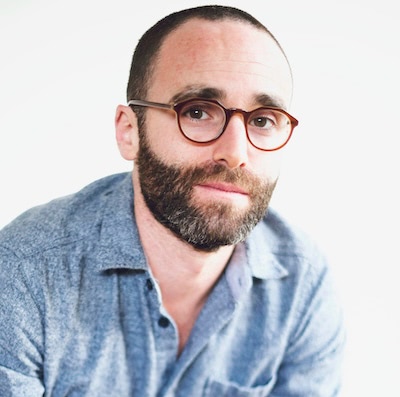
CEO, Unreasonable Group
About This Episode
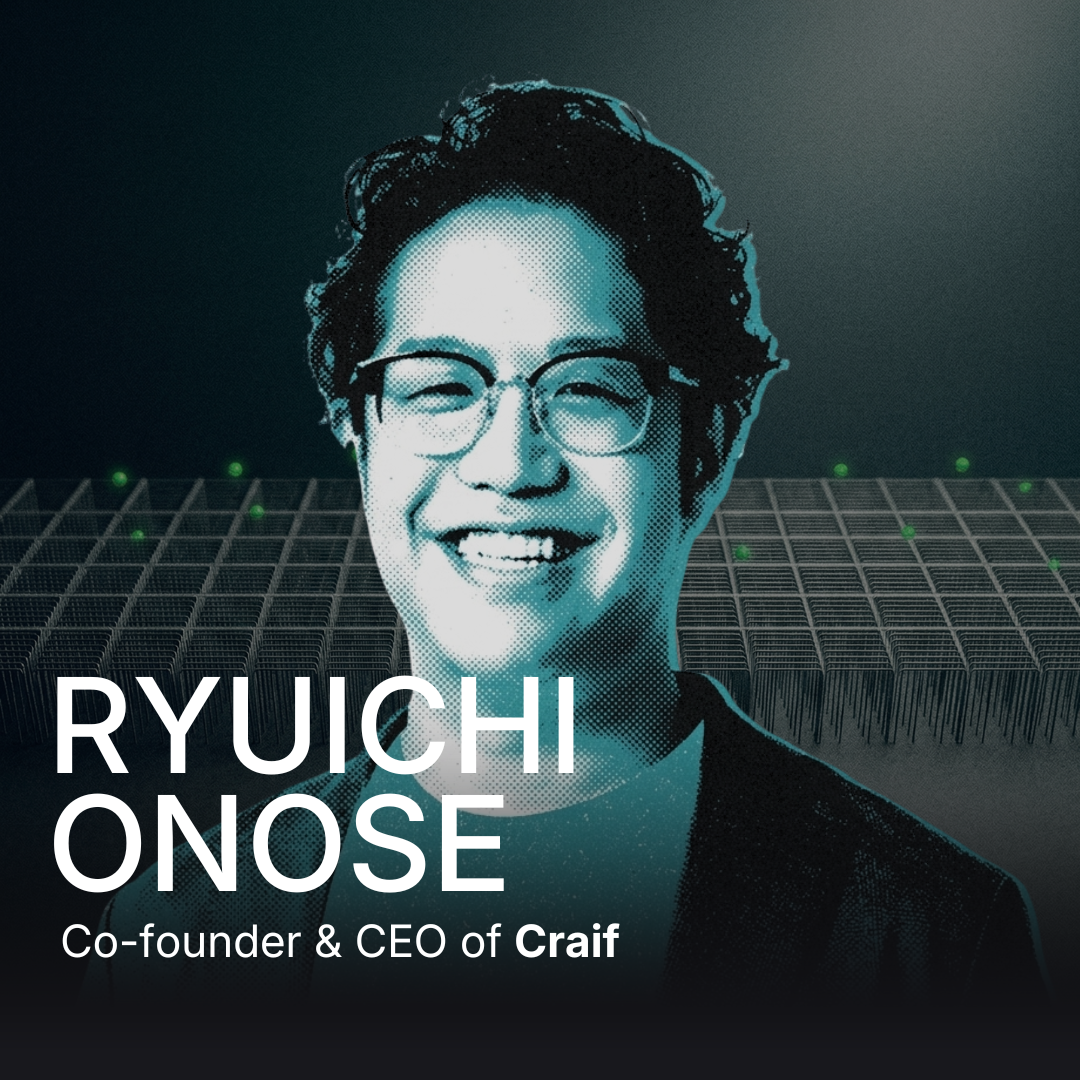
Featured Guest
Ryuichi Onose
Co-founder & CEO of CraifRyuichi Onose is the co-founder and CEO of Craif, the first company on earth to use urine-based microRNA analysis to detect cancer at stage zero. Founded in 2018 when Ryuichi was 26, the company has raised $60 million in total funding, sold over 50,000 tests, partnered with 2,000 hospitals and 4,600 pharmacies in Japan, and is now expanding into the United States. Revenue has grown over 300% for four consecutive years. Ryuichi joined the Unreasonable Fellowship through the Unreasonable Impact Asia Pacific & Middle East program in 2024, run in partnership with Barclays.
Key Takeaways
Urine is more accurate than blood for cancer detection. Craif's urine test detects stage 1-2 pancreatic cancer at 93% accuracy. Traditional blood markers sit at 37%. The kidney naturally filters cancer signals into urine, making it more reliable. No needle required.
They can catch cancer before it's even visible on scans. In a real-world study in Japan, Craif detected stage zero lung cancer from a urine sample. You can't see that on an X-ray. The patient was fully cured and is now traveling Japan with her family.
Ryuichi had no biotech background when he started this. He was 26, managing ships at Mitsubishi, running Airbnb side hustles at midnight. What pushed him was his grandmother dying of stage four colorectal cancer in three weeks.
The long-term goal is detection from your toilet. Craif hired an engineer from Toto. The idea is your toilet analyzes your urine, flags changes, and notifies your phone. An at-home beta launches this year.
The business is growing fast. 300% revenue growth four years in a row. $13M to a projected $33M this year. 50,000 tests sold, 2,000 hospitals, 4,600 drugstores in Japan. Now entering the US.
This is deeply personal for Ryuichi. First his grandmother, then his grandfather, then two weeks before this conversation, his father was diagnosed with prostate cancer. This is not abstract work for him.
The hardest part is not the science, it's getting people to take the test. Most people know prevention matters but don't act on it. Ryuichi's approach is to make it so easy and automated you don't have to think about it. That's why the toilet vision matters.
Chapters
Full Transcript
Daniel Epstein (00:00)
Welcome, welcome, welcome. My name is Daniel Epstein. I am the founder and CEO of the Unreasonable Group. And it is my distinct pleasure and privilege to be welcoming you to the first ever podcast that we are aptly naming Unreasonable Stories. This podcast is about uncovering the untold stories of Unreasonable people. Now, what do I mean by Unreasonable people? I mean individuals were setting out to define progress in our time. George Bernard Shaw, the Irish playwright, has a quote that resonates with all of us within the Unreasonable community when he said that the reasonable person adapts themselves to the world. The Unreasonable one persists in adapting the world to themselves. Therefore, all progress depends on the Unreasonable person. If George Bernard Shaw is right, if all progress depends on Unreasonable people, then we can't afford not to bet on Unreasonable individuals. And we also can't afford not to know their stories, not to understand the work that they are leading, and not to become a part of the solutions that they are wielding. And that is what this podcast is about. I am going to have intimate one on one conversations with entrepreneurs across our fellowship who have some of the top highest efficacy science based solutions on earth towards the ecological and societal challenges that we face. I'm going to be sharing conversations with executives at multinationals that are trying to bend the arc of their institutions towards a brighter future. I'm going to have conversations with investors and philanthropists with sovereign wealth funds, with foundations who are all trying to usher in a new era of investment towards a brighter future, towards defining progress in our time. So the first episode is going to be with a dear friend and an Unreasonable Fellow, Ryuichi, who is the co-founder and CEO of Craif, a Japanese based company that is helping us move from a sick care system to a health care system. They have a technology that is already in market in Japan, soon to be here, hopefully in the United States, globally that can analyze your urine and detect 10 of the most common cancers, lung cancer, colon cancer, breast cancer, rectal cancer, at not stage three or stage two, stage one and stage zero. This is a non invasive solution that takes us into a future of preventative medicine using artificial intelligence and machine learning, unlike any that I have personally come across. So we're going to get to hear and understand the story behind the technology. Yes, but also the story behind the individual. Why he co-founded this company. What's hardest about trying to bring this new solution into the world and into our everyday lives? How it is that we can become a part of the solution. I hope you enjoy this conversation as much as I believe I will. For context here and for full disclosure, I have personally invested into Craif. We did syndicate an investment round into the business. And it's a privilege to be a part of their cap table. That said, that is not influencing the conversation we are about to have. We brought Ryuichi into the Unreasonable Fellowship via our Unreasonable Impact program that we run in partnership with Barclays. He came in through the Asia-Pacific gathering in 2024. We've been fast friends since then. It's been a privilege to be able to witness the evolution of the company and participate in its growth. So without further ado, let's meet our friend, Ryuichi. Ryuichi, I am so grateful that you're taking the time to have this conversation and the chance to hang out with you is always a gift, so thank you brother, for making the time.
Ryuichi Onose (03:50)
Thank you, Daniel. I'm really excited.
Daniel Epstein (03:56)
You don't even know what we're going to talk about, but I'm excited too. It's good to be here. It's good to be here with you. We first met in Malaysia for the Unreasonable Impact, Asia-Pacific gathering I think in 2024. So it wasn't that long ago. It's only – It's been less than two years that I've known you, but I actually feel like I know you much better than that. And you know, it's been a huge privilege to have you in the fellowship, to have the chance to personally invest and syndicate into Craif, into your company. I and everybody who learns about what you do, I found is a huge believer. So I'd love to start just with that. Which is, what is Craif? What is it that you and your team are working towards and why does it matter?
Ryuichi Onose (04:42)
What we're working on is we're trying to build a world where everyone can live healthy. This sounds very – it doesn't sound special, but I think it's one of the most important thing for everyone. And I'm from Japan, I'm born there, I'm born and raised in Japan. And Japan is the most aging society in the world. And people are living longer than ever, which is a good thing, but at the same time struggling by diseases more than any time in history. So we want to solve this problem. We want people to live happily and energetic doing challenging what you want to do your whole life. So right now, the center of healthcare is these treatments with drugs, and these solve problems. But ultimately, I believe that prevention and early detection is the solution to create a society where everyone can live healthy. So I want to show the new health care a new society where everyone lives healthy. And we're starting with cancer. So we're working on early cancer detection using urine as a sample.
Daniel Epstein (06:01)
Amazing. It reminds me of an adage, and I might have first heard it from you, but it really resonates, which is how might we move from a sick care system to a healthcare system that is focused on health, focused on prevention? I think what's brilliant about what you're doing, as you said, we're starting with cancer, which is probably the one disease that almost everybody alive above the age of 30 has probably been impacted. Either them personally or someone they know or love has been really impacted by it. So if you're using urine to go after early detection of cancer, How does that work as compared to, of course I can go get my blood drawn right now and get that tested. What's the difference here?
Ryuichi Onose (06:30)
Yeah, so there's two important points. One is urine itself, and another point is the biomarker we are looking, which is called MicroRNA. It's miRNA and it's one species of, it's like one type of RNA. This is used for cellular communication. So it's like an email of a cell. And cancer cells are very aggressive. They rapidly grow, so they send a lot of emails. Compared to healthy cells, they secrete more than 10 times MicroRNA, compared to healthy cells. So we want to do early detection. And MicroRNA is a signal that is suited to detect early because cancer cells release it from early stages. Another point is urine. And people undervalue urine. Everybody in the world thinks that blood is the best body fluid for precise detection, this is actually false. Since we found it, we consistently compared blood and urine. Consistently, urine is better. Data is better. And we first actually when I met you, we didn't know what was happening yet. We thought that there's this impurities, so urine is working better. But what we found is that we just accepted the publication. The kidney is selectively releasing cancer cell signals to urine. One of the function of kidney is selecting what's important for the body and what's not important for the body. And what's not important is released to urine. So cancer cell signals are something bad for your body. So I'm guessing that there is a mechanism that, our body. Exactly. So using urine as a body fluid and MicroRNA as a biomarker, urine is enriched, the MicroRNA signals are enriched. So by detecting it, we can detect cancer in much more higher accuracy than the conventional method can do.
Daniel Epstein (08:38)
Got it. So probably higher accuracy and thereby, I'm assuming earlier, what stage cancers are you able to detect?
Ryuichi Onose (08:38)
We can detect from stage zero in the real world study. I think it's after, Unreasonable, we did a real world study in the northern area in Japan and we found stage zero lung cancer. You can't see in X ray.
Daniel Epstein (08:38)
It's not visible. Wow.
Ryuichi Onose (09:01)
By CT you can find it, but you need to look very carefully. And the doctor was surprised. A urine test can find stage zero lung cancer. Our assay is very powerful. Basically the accuracy is 90% for pancreatic cancer. For stage one and two, accuracy is 93%. So it's extremely high. Conventional method blood marker is 37% for stage one pancreatic cancer.
Daniel Epstein (09:27)
Get out of here. And this is all validated in studies that's been published?
Ryuichi Onose (09:27)
Yes, and it's published. Yes. Wow.
Daniel Epstein (09:27)
And what cancers are you detecting right now? You mentioned pancreatic, you mentioned lung.
Ryuichi Onose (09:27)
Yeah, we now detect 10 and we're expanding to 18. We have clinical trials. So like breast, ovarian, colorectal, all those, major cancers are covered.
Daniel Epstein (09:52)
This is wild, Ryuichi. I did not know about the stage zero either. It's incredible. And of course you haven't talked about the benefit, which is really obvious too, which is blood is invasive. I have to get it drawn. Urine I'm excreting, obviously, in that sense. I'm curious. The miRNA you described as a, as an email, between the cancer cells to communicate with one another. I think that's a really strong analogy. Do you know why? The cancer cells use it to communicate with each other or what it is they're communicating, what those signals are designed to do.
Ryuichi Onose (10:17)
Yeah, so, MicroRNA itself is also the healthy cells use it. So it's the basic function of our body. And for example, if you want nutrition, you need blood vessels to come so you could get blood, which is nutrition, right? But it doesn't come automatically. You need to send signals so that the vessels actually come to you. So cancer hack these functions. They use our function to conquer our body. And so for getting nutrition, also escape, immune surveillance escaping from our immune system. They send that, I'm not cancer cells, I'm not a bad cell. And they fake it.
Daniel Epstein (11:07)
They hacked the email of the healthy cells. They're sending out way more signals through MicroRNA to say, hey, I'm actually really great. And then in essence, your kidneys trying to process that say, no, this is actually bad. We need to try to get rid of these hacked emails, the spam. And basically you're finding it in our urine, which is incredible. Okay. A lot of this it's validated, it's published, still sounds a little bit like science fiction, but it is in market right now. So can you, talk about how many people have used Craif? I know in particular in Japan, and just what the results have been of the use.
Ryuichi Onose (11:49)
Yes. So it's available only in Japan right now. We have about 20 to 30,000 users. Over 50,000 tests are sold. A lot of people are now repeat users. They're taking a cancer test repeatedly. So basically we have publications for each cancer type validating the accuracy. And we also did the real world study, in the northern area in Japan and that's where we found the lung cancer. And we had positive predictive rate. Basically, the publication data is well in Japan. That's why we're expanding to the US and we need to generate evidence here. But the technology itself is quite robust there's of course, rooms to improve, but yeah.
Daniel Epstein (12:29)
A couple of things we didn't talk about. I have so many questions for you. So the accuracy is higher, It's non invasive, It's significantly higher actually. I shouldn't say higher. You said, blood tests were around 30% success rate in stage one detection of colon cancer. Yours was about 93% so orders of magnitude. What about costs? What's the differential between, a typical blood test and your urine test?
Ryuichi Onose (12:53)
Yeah, our test. we sell it In Japan, about a little over than $400 USD. Some of the conventional, like protein blood tests are, cheaper than this. But the latest technology using blood – The companies in the US sell it like a little less than $1,000 or more. So compared to that, our test is, there's – the country is different, so it's not Apple to Apple. But the cost is lower because it's urine test. And also a MicroRNA is a very short biomolecule, so compared to DNA, so we don't need a lot of reagents compared to DNA. So the cost is, lower compared to blood DNA tests.
Daniel Epstein (13:16)
Is there a difference in velocity in terms of speed or I guess quickness of testing that's associated with the ease of testing.
Ryuichi Onose (13:40)
Yeah, we get back to results about two weeks in Japan. We can make it one week if there's more sample coming in.
Daniel Epstein (13:40)
But yeah, it's okay. when you're selling this. Is it direct to consumer, Is it to insurance companies? I imagine they would theoretically love this because it's a lot better to pay for a $500 test than treatment of disease over multiple years. That can be thousands, hundreds of thousands, Millions. Yeah, who's buying this?
Ryuichi Onose (14:04)
Yes distribution channel is diverse. The largest channel is actually D2C. About 40% of our users are from our website. our original website, of course.
Daniel Epstein (14:04)
Because they just want to know. And they'll pay out of pocket, I would assume too.
Ryuichi Onose (14:27)
Yes. And the next big chunk is medical institutions, so clinics and hospitals. We now partner with 2,000 hospitals in Japan. The doctors, the physicians are providing the test too.
Daniel Epstein (14:27)
So they're in essence prescribing it, almost
Ryuichi Onose (14:27)
Yes. Yeah, okay Amazing. They recommend it to people with higher risk, familiar history, in health checkup. And also last year was a crazy year for the drugstore and pharmacies. We just started last year and now it's introduced to 4,600 stores.
Daniel Epstein (14:52)
Wow.
Ryuichi Onose (14:52)
In Japan now.
Daniel Epstein (14:52)
Amazing.
Ryuichi Onose (14:52)
So and it's gonna be more in 26. And also 500 companies introduced it as a beneficiary
Daniel Epstein (14:52)
To their employees.
Ryuichi Onose (15:15)
Employees. Yeah. And some insurance companies are providing to their users as a POC But the regulations are very strict, so it's hard to change the insurance price and all that. So it takes time. We need more real world evidence. But step by step we're proceeding.
Daniel Epstein (15:15)
But the demand is definitely there. When was the company officially incorporated?
Ryuichi Onose (15:15)
2018.
Daniel Epstein (15:37)
Okay, So 8 years.
Ryuichi Onose (15:37)
26. When I found it, yeah.
Daniel Epstein (15:37)
Okay. You were 26 years old.
Ryuichi Onose (15:37)
Yeah.
Daniel Epstein (15:37)
This is wild. Ryuichi. Okay, I am curious just a little bit. You and I have talked about this, but I want to hear an update. And if it's still in the vision, which is, of course, being Japanese for me. One thing, many things Japanese are known for, but one is that they have the best, smartest toilets in the world. We have a Toto Washlet at home. It's the best. And I'm just curious though, it feels like it has to be a part of what you're going towards, which is a future in which just by going to the bathroom, you're able to detect if you have cancer at stage zero. And I imagine other things, but can you just paint a little bit of the vision of where this is heading?
Ryuichi Onose (16:25)
Yeah, Daniel. That's a very important point. First of all, people aren't going to the hospital at the right time. So when you feel bad, that might be too late. And also, if you like annual health checkups, it's random, right? In Japan, it's mandatory for employees to do it. And usually the HR team pushes hard in December, you need to go, we need to comply the law. But that's not ideal. There is always a biological change, so we should periodically check that. And when that's wrong, you get a notification on your smartphone. And then we could do a more comprehensive test in the lab. So actually we're launching a beta version this year. It's not going to be introduced in the toilet yet, but it's going to be, at home test. That's going to – You don't even have to send the samples to the lab. It's going to be finished in your house. And this is amazing. We actually hired an engineer from Toto that was trying to create a startup. And we met and they're like, we should do it. We should do it in Craif. And he joined. Eventually, we want to implement it into Toto's toilet. So It's normal to have these assays in the toilet. But to start with, we're gonna launch at home test.
Daniel Epstein (17:47)
Okay, I have like five more questions and then we're gonna get into the deeper stuff here. But can you talk a little bit about, I can't believe you started this when you were 26 years old. You're 8 years into it, thousands of tests, multiple studies. It's validated. But on the business side, you're also growing substantially. Can you speak a little bit to the revenue growth maybe year over year, or just how the performance is of the company?
Ryuichi Onose (18:08)
Revenue growth is over 300% four years in a row. We sold about 13 million last year and this year we're expecting 33. So we want to go triple growth again.
Daniel Epstein (18:08)
Yeah. And how much capital have you raised to date?
Ryuichi Onose (18:08)
Only equity, about 30 million.
Daniel Epstein (18:08)
But you've also had non dilutive financing, I'm assuming government funding, research.
Ryuichi Onose (18:08)
Yeah, In total we raised like, 60 million yeah, In total.
Daniel Epstein (18:36)
Huge congrats on all of this. last question. That's kind of technical. Although actually I shouldn't say that because we might go deeper on it. How are you using AI Machine learning. You know, really bleeding edge technology that we're seeing explode everywhere in the process of analyzing the urine and the MicroRNA?
Ryuichi Onose (19:01)
The algorithm is AI itself. It's a machine learning algorithm. But we try to keep it simple, not complex, so we can understand if we made some mistake, what's wrong, to fix it. On the other hand, we're working on automation of our assay and think in like two years we can make it like fully automated with like no people involved. But in that area, AI and all those, the softwares are deeply involved in the process.
Daniel Epstein (19:28)
So in a couple years you'll be able to analyze the urine and distribute the results without any people in the lab needing to be a part of it. Is that what you're saying?
Ryuichi Onose (19:28)
Yes.
Daniel Epstein (19:44)
Hence the smart toilet will happen at some point. This is so cool. Like, truly smart toilet. Toilet will save your life. Amazing. Okay brother, now I want to just explore you a little bit more because I know your background is not in medicine, it's not in biotechnology, it's not in MicroRNA. I don't think It's in artificial intelligence and machine learning, I believe, and correct me if I'm wrong, but you were at, I think Mitsubishi before, is that right? So what the hell happened when you were 26 years old that gave you the permission to even start this business, let alone be CEO and run it until now? Where did this come from?
Ryuichi Onose (20:05)
It's a long story.
Daniel Epstein (20:05)
Let's go there. We got time.
Ryuichi Onose (20:05)
The starting point is when I was in America, it was 2000, 2005, I was in elementary school. And it's my first time living in –
Daniel Epstein (20:25)
What were you doing in elementary school in America.
Ryuichi Onose (20:25)
I was just. I actually, my favorite was science. I like studying back then and I was just doing, soccer and just having fun in America.
Daniel Epstein (20:25)
Oh, I mean, why did you come to the US?
Ryuichi Onose (20:45)
Yeah, it was my father's work.
Daniel Epstein (20:45)
Okay.
Ryuichi Onose (20:45)
Yeah, he was working in New York. So, I followed him. Back then made in Japan was a big thing and you know, it was my first time living in English country and I was trying to adapt and people were really respecting the technology of Japan. So I was kind of like proud as a kid and I really remember that strongly. And then when I started to work, and look at what's happening in the world. Japan's just nowhere in innovation. Large companies are doing okay, but they're not creating something new and solving big problems. So I was quite disappointed to see Japan's, it was like stagnated and I wanted to found a startup. So when I was in Mitsubishi in the second year, I felt a little depressed, kind of, like first time in my life, I felt life isn't fun. I just didn't like the – it's a great company. The big enterprise culture wasn't a good fit for me.
Daniel Epstein (21:51)
Yeah, I could see that. What were you doing at Mitsubishi? What was your role?
Ryuichi Onose (21:51)
Yeah, I was doing LNG ship, project management, the investment and project management.
Daniel Epstein (21:51)
That does sound a little boring for you. Yeah.
Ryuichi Onose (22:14)
And the LNG project was like a $20 billion project. There was like 70 people involved and I make no decisions. So like, it wasn't a good fit for me. And then, I was looking for something fun and Airbnb came to Japan and people said you can kind of like create like a hotel easy by just borrowing a room. So I started that business.
Daniel Epstein (22:14)
So with your own apartment building or how did that happen?
Ryuichi Onose (22:40)
I just borrow another building and weekly I go to IKEA, IKEA, get bedrooms and prepare. And then I just do the messages by myself and you the foreigners come and I just kind of had fun making buddy myself and you know, having interactions with them.
Daniel Epstein (22:40)
Yeah.
Ryuichi Onose (23:04)
Then I created my own company and I had like 50, 60 rooms and I was also collecting like unused furnitures and using them. I started all that.
Daniel Epstein (23:04)
And you're like 24, 25, 23. How old are you at this point?
Ryuichi Onose (23:04)
I think I was 24.
Daniel Epstein (23:04)
Okay, you're 24. You're still working at Mitsubishi though. You're still, you're doing this on the side.
Ryuichi Onose (23:24)
It was crazy. I came home at like 12:00am or 1:00am and then I started doing my work. So I was like working until like 4:00am every day. And then I started to get really, really tired and a little burned out. So I learned that I need to hire people and I started to hire people and kind of trying to run it. But when I was doing that I was fascinated by the concept of sharing economy. And it was really amazing to see, just one new company creating a new concept and like changing the economy. So I was really fascinated by startup itself and since I was in the energy sector, you know, the clean energy thing was, it wasn't as exciting as now, but some people are saying that a big shift is going to come and it actually came much faster than people were expecting. But and then I was starting to get interested in these clean energy and these technologies. So like I also got interested in deep tech. So deep tech and startup was kind of my was the thing I was really fascinated. And I wanted to not just make money but like build something meaningful. So I started to find a topic that I could really bet my whole life. And at that time, suddenly my grandmother was diagnosed, stage four colorectal cancer and she passed away in like three weeks.
Daniel Epstein (24:40)
I'm sorry.
Ryuichi Onose (24:40)
Yeah, that was shocking. And then three months later my grandfather was diagnosed lung cancer.
Daniel Epstein (24:40)
Oh, wow.
Ryuichi Onose (24:40)
Yeah, so like cancer hit my life and he was stage 2A. And in lung cancer you usually do some treatment. But my grandmother said we're not doing anything. She's kind of like anti-doctor Kind of.
Daniel Epstein (25:03)
Yeah, did not want to be in the hospital getting treatment.
Ryuichi Onose (25:03)
Yeah, So I was like, at least let's get a second opinion. But then I had such a hard time trying to get one so I was really frustrated and I tried. I was thinking about creating a solution like quick online, getting opinions more easily so people can make good decisions. Then I was looking for the solution and then I was thinking of creating that solution. And then I met Takao, my co-founder who has technology to solve early cancer, to detect cancer early.
Daniel Epstein (25:22)
Yeah.
Ryuichi Onose (25:22)
I was like, we should solve cancer in the first place.
Daniel Epstein (25:41)
Yeah, let's just solve it.
Ryuichi Onose (25:41)
Yeah, and we don't need a second opinion if we solve cancer. So here I am, for some reason in the biotech field. Yeah.
Daniel Epstein (25:41)
Makes perfect sense. Except how did Takao discover this technology? Where did the ability to analyze urine and find MicroRNA using machine learning. Where did that come from?
Ryuichi Onose (26:07)
So Takao is not a physician, he's a engineer. His expertise in engineering, that was the important point. So we look at MicroRNA and it's encapsulated a thing called exosomes. And human – We didn't know what this, what the function of the exosome was until like 2008. Around then, three researchers found out that this is an email of the cell. and one of them was Japanese. And the Japanese government funded him to create an early cancer detection assay using that with him. And he said that the bottleneck of creating an early cancer detection assay is enrichment of exosomes in MicroRNA. And he met Takao and he's a very talented young researcher and he said Can you build something? He's like okay. And you know everyone else was working on blood but Takao was like okay, let's try all the body fluid, blood, urine, saliva. And for some reason the urine went very, very well. So he just kept on going and he created this nanowire device to collect exosomes and MicroRNA from urine.
Daniel Epstein (27:01)
Mhm.
Ryuichi Onose (27:01)
And he published. It was end of 2017 when I was trying to create a second opinion platform. And then
Daniel Epstein (27:01)
And did you just find him online then like you were in the middle of the night or how'd you meet?
Ryuichi Onose (27:27)
I met an investor in this field and he wanted to fund Takao but in Japan there's no like serial entrepreneurs, professional CEOs.
Daniel Epstein (27:27)
Yeah.
Ryuichi Onose (27:27)
Who can found a company. So he was just finding someone that can do a CEO. And I told my boss I'm gonna quit.
Daniel Epstein (27:46)
Yeah.
Ryuichi Onose (27:46)
Back then like, yes, at Mitsubishi.
Daniel Epstein (27:46)
Yeah.
Ryuichi Onose (27:46)
And back then like startup was something everyone kind of like didn't trust
Daniel Epstein (27:46)
Especially in Japan that was a bold move to quit your career-track position with Mitsubishi and go into a startup. I imagine.
Ryuichi Onose (27:46)
Because Mitsubishi Corporation is like everyone wants to get it.
Daniel Epstein (28:09)
It's the top.
Ryuichi Onose (28:09)
It's the top. And my boss is like, you're gonna quit? What are you gonna do? And I said I'm gonna do a startup. What startup? And I said I haven't decided yet.
Daniel Epstein (28:09)
I haven't decided yet.
Ryuichi Onose (28:28)
So like I was just a kid, 26 year-old kid that just had no job but willing to do a startup and there's nothing, there's no one like that back then. So the investor thought I was kind of crazy. And you know crazy means good things in startup. So he's like you you want to meet Takao if you want to do cancer. And I was like, sure. And we met and we're like, let's found a company.
Daniel Epstein (28:53)
Wow. So it was so synchronous that you got put in touch with the very person who in essence had the solution that you were personally looking for because of what had happened with your grandparents. It was happening. This is the personal question. I'm curious, do you believe do you believe in coincidences or do you believe there was a bigger, a bigger hand at play here? How do you relate to that?
Ryuichi Onose (28:53)
I believe in coincidence. There's a Japanese word, how do you say in English? called connection.
Daniel Epstein (29:11)
Say it in Japanese.
Ryuichi Onose (29:11)
Which means like you and me meeting is like a miracle, right? And I really think people I meet is something. There's a meaning to it. So I don't think it's just a coincidence. There is a meaning to it, but it's up to you how you develop that connection. I kind of felt that this is my fate. Is that, I don't know the right word.
Daniel Epstein (29:32)
It seems to be that way.
Ryuichi Onose (29:32)
Like one story, a really just a thing that happened to me right now. Like you know, fate loves irony. My father was diagnosed prostate cancer two weeks ago.
Daniel Epstein (29:32)
Oh my gosh.
Ryuichi Onose (29:59)
And ironic part is that we added prostate cancer last July and he took our test in May. So it was two months before we added prostate. Although, he found the risk in September. So it's not bad, just two months. I don't know the stage yet. I'm gonna get it in 2nd February. So in three days, I'm gonna get it. So I think it's stage two or three. So in that case the survival rate is good. But I really it's a present thing for me and I think it'll be early detection. So if that's the case, I'm very blessed. So I just kind of re-recognize how important is to keep on taking tests, detect cancer early. So I guess it's not just a coincidence I met Takao. I have to solve this problem.
Daniel Epstein (30:43)
Well thank you for sharing that and I'm sorry to hear that news. And your dad will be in my thoughts and prayers. And hopefully it is what you think early in that sense.
Ryuichi Onose (30:43)
Yeah.
Daniel Epstein (30:43)
I am curious here. You mentioned you were like 24 years old, you'd get home from work, from Mitsubishi at like midnight, which is insane in and of itself. And then you would work until 4:00am on your side gigs and that was before you had a mission that feels like your life's work and that is literally saving lives. And the faster you move, the more cancers you can detect, the more validation you get. The quicker you get into the US market, like all of these types of things, the more lives that get saved. How do you balance something that has – it could be heavy, you could wear that in a really heavy way, saying, I have to figure this out, this is all I have to do. You can get maniacal, you could lose yourself in it. But you feel to me like someone who really values balance and friendships and time with family and time for yourself. And so how do you, as a very mission-driven, now entrepreneur, think about balance and relate to it?
Ryuichi Onose (31:52)
I try not to, there's a word called work-life balance, I try not to think its a separate thing.
Daniel Epstein (31:52)
Yeah.
Ryuichi Onose (32:18)
I just think everything as one.
Daniel Epstein (32:18)
So it converges for you.
Ryuichi Onose (32:18)
Yeah, but the structure is important. So like, for example, I will go pick up the kids, three times a week or two times a week. And then also morning, I take the kids two times a week or three times a week. And I just try to follow that as much as I can. And by doing that, I'm with the kids and she's in front of me, so I can't look at the smartphone, all that. So I just focus on what's in front of me. So I basically designed my lifestyle so that there is portion of family and work. And when I'm working on that, I just focus that. Just 100% focus. So when I'm in front of my, of course like something is always running my head, so I sometimes like suddenly think up of an idea when I'm in front of my daughter. That does happen. But basically I'm just focusing on conversation with her or my wife. Just full focus.
Daniel Epstein (33:06)
I was just talking with a friend who has two younger kids and he was talking about how, they're such mirrors. Like an example, if he's on his phone, his daughter will be like, you're looking at your screen too much. What are you doing? Like whatever. Like there's, they can just be such mirrors without a, polite veneer because they're just speaking what they're seeing and what's true. I am curious and I know you have you have two kids now? A very new one as well. Congratulations, brother. But what has being a dad, what has your daughter in this case mirrored back at you? What have you learned about yourself through being a father?
Ryuichi Onose (33:52)
Yeah, first of all, kids are like a mirror, right? What they say, how they behave is all you.
Daniel Epstein (33:52)
Interesting.
Ryuichi Onose (33:52)
And they are much more focused than me. Like if I'm with her in the park, she's 100% enjoying the park. That's very, very important. So like when I was in Mitsubishi and like working until 4am, even like one minute if I'm in a toilet, I put some Bluetooth earphones and look at some information. If I'm not doing something, I think it's a waste of time. And I was like crazy trying to move things, like to do two, three things at a time. But I thought this is wrong, you should focus on one thing. I totally quit that. And when I look at the kids, I just learn the importance of being like focused on one thing and just 100% your emotions, your head, just everything in there. And as a result, actually my productivity, what I deliver is better, prior to without the kid. And I was first worried like, because hard work is my one of what was my identity and the hours I work definitely decreased after I got a kid. But my productivity is obviously higher.
Daniel Epstein (34:53)
Yeah, it went up.
Ryuichi Onose (35:18)
Yeah. And I think like I use my right brain when I was a kid. So it's a very good time to just be very natural, enjoy life.
Daniel Epstein (35:18)
Yeah.
Ryuichi Onose (35:18)
And then when I'm back to work, I'm back to work. it's much more better than me. It's balancing me very well.
Daniel Epstein (35:41)
It's what you're sharing is it's, it's balancing you. but what it sounds like it's really teaching you is presence. And that presence, whether it's in the moment or it's with your daughter or your wife, or it's with work, whatever that is, whatever you're present with, you're getting, much more out of that experience, including productivity and work, even though the hours are much more confined and limited, which is a huge, huge gift. Are there any practices that you have to cultivate that sense of presence?
Ryuichi Onose (36:05)
I go to mixed martial arts gym, MMA gym, every weekend. And it's 100% presence. Because if you don't focus. Yeah. And after I finish training it feels like, I guess my, all my like everything I just release it there. So I feel very peaceful and by having that every weekend, that's one good rhythm and also the kids is my like daily grounding.
Daniel Epstein (36:30)
Yeah. Now you have goal posts on your day when you like really show up and it's a big reminder. Yeah. Okay, now let's go to your right brain a little bit. The creative side of Ryuichi the younger child within this brilliant man, which is. And I know you think about this probably all the time. We talked a little bit about the future toilet that is going to tell me if I have stage zero cancer across many types by the time that that becomes a reality. But I'm curious, are there any other uses other than cancer detection? Are there other diseases or ailments, that you can catch, at remarkably early stages through urine analysis with the machine learning algorithms that you're using?
Ryuichi Onose (37:27)
Yes. So MicroRNA is also a good biomarker for dementia and diabetes.
Daniel Epstein (37:27)
For dementia.
Ryuichi Onose (37:27)
Also other Yes, so we want to, in future expand. We're going to launch a product, it's more of a conventional metabolic biomarker, but one for dementia. Second half of this year in Japan. When this metabolic increases, the risk of dementia increases. So it's kind of like a very a risk screening test. But yeah, in future we could definitely do that. And also there's one product I really want to ship which like really saved me. So like before was 21. I wasn't able to sleep.
Daniel Epstein (37:57)
You were not able to sleep?
Ryuichi Onose (38:21)
Yeah, I woke up like four times in one night. So like after lunch I always get sleepy and I just didn't know why. I wasn't like stressed out and fundraising or anything. I just couldn't sleep. And then I met this number one KOL in Japan for, gene and nutrition.
Daniel Epstein (38:21)
Okay.
Ryuichi Onose (38:45)
And I learned about myself and I started like a gluten-free, as Unreasonable does and I change all my habitats, which is a good fit for me. And now I can sleep very well and I want to – You have to wait three years to meet this physician right now because he's so popular and everyone's feeling better. So I want to provide this to everyone. So in future, I want to change the whole healthcare value chain. So there's a toilet that always looks at, biological changes and then you do a more comprehensive test like our early cancer test. Well, right now I'm considering to buy health checkup hospitals in Japan so that we could connect this as one value chain.
Daniel Epstein (39:11)
Amazing.
Ryuichi Onose (39:11)
And also have a AI coach, not like a general on like ChatGPT, but more specialized in gene and nutrition so that I could democratize. Like I could provide this, provide what I got to everybody.
Daniel Epstein (39:50)
You could democratize it.
Ryuichi Onose (39:50)
Democratize it. Yeah, that's it. So that's what I'm trying to build. So understand yourself in the first place, check the biological changes and try to make all the experience better for hospitals and clinics. Go to the right clinics at the right time and we can follow up in that platform so that people are – can really live healthy and energetic.
Daniel Epstein (40:15)
You are literally creating the future that I – I remember talking with friends about this like a decade ago. You could tell I'm obsessed with the toilet because I was like, there's going to be a time when you go to the bathroom and it will analyze your markers and then it will tell you this is the nutrition that you're missing. I'm curious from your perspective, how much if you're catching cancers at stage zero, can you actually cure them because it's so early on with dietary changes, or do you need to have a medical intervention or do you know at this stage?
Ryuichi Onose (40:34)
We need medical intervention. Basically just cutting it.
Daniel Epstein (41:08)
Because it's so early in that sense. So in the future, what you are really trying to do here, what you will do is use highly individualized data that is collected regularly, through your urine to be able to say, hey, you potentially have this disease, whatever it might be, dementia, diabetes, any type of cancer, but you're catching it extremely early, so it never becomes an issue if you treat it right away. And you're also though, going to be looking at just in general, their health indicators and be able to have an AI coach that says, hey, you know, for your body right now, these are the things that it's really asking for, it's deficient on, or you have too much of whatever it might be, which would lead to likely the prevention of some diseases that don't even get to stage zero, but also just a much higher quality of life. Is that fair to say?
Ryuichi Onose (41:32)
Yep, that's exactly what I want to do. Yeah.
Daniel Epstein (41:53)
Ryuichi, how do we help you on this journey from taking what you're doing in Japan? Because now I'm jealous of all of your Japanese sisters and brothers who have access to what you're doing. What is the process for bringing this to the U.S. right now?
Ryuichi Onose (42:15)
We are starting with pancreatic cancer in the U.S. specializing pancreatic cancer for high-risk patients, people like new onset diabetes pancreatitis and get reimbursement so that people can access to it. And pancreatic is terrible Oh, it's terrible everywhere. But in the United States it's over half of the people is found at stage four, which is three, three percent survival rate and five year survival rate. So like it's terrible. But over 75% up, to 90% of the high-risk people aren't screened.
Daniel Epstein (42:15)
Are not screened.
Ryuichi Onose (42:35)
Are not screened. And we need to solve this and U.S. government is really pushing hard on this. But the solution we have is the EUS It's ultrasound.
Daniel Epstein (42:35)
Got it.
Ryuichi Onose (42:55)
Ultrasound endoscopy which is quite invasive and it's only in academic centers. So the access is poor, so people aren't taking it. But if you can do a home urine test, why not right? So, we are working on first establishing a US optimized algorithm for US population and then we'll work on validation, trying to launch it in 28 to start risk and then we'll increase cancer types and eventually launch a multi-cancer screen test. So we could see people in America.
Daniel Epstein (43:18)
And when you said make the algorithms work in the U.S., is that because in Japan the society is like largely more homogeneous on a genetic level or what's the That's why. Okay.
Ryuichi Onose (43:39)
And also, people eat different things, the environment is different, so the data changes a little. So, it's better to collect samples locally, although the basic technologies are the same.
Daniel Epstein (43:39)
So interesting it feels like to play the game you're playing and your team is playing. You hold both impatience and patience as virtues.
Ryuichi Onose (44:03)
Right.
Daniel Epstein (44:03)
Because of course to come into the US healthcare system, it's a process and probably part of you is like, but this is working and this is validated already and so on. But of course you want to take your time with it. How do you relate to that feeling of patience and impatience?
Ryuichi Onose (44:25)
Can you repeat a question? What do you mean that.
Daniel Epstein (44:25)
Do you get frustrated with the amount of time it takes to bring this technology that is so life-saving into new markets And how do you kind of deal with that frustration if you do?
Ryuichi Onose (44:36)
I'm always feeling frustration because what I want to do is way ahead from the reality. But as I feel frustration, although it's very exciting to make it actually happen. And the most exciting moment is when we hear stories of patients actually saved that just empowers me so much. I can keep going, keep moving forward. The lady that found stage zero lung cancer, she totally cured and she reflected her life and she wanted to travel a lot, but she hadn't. So she quit her job and she's traveling all around Japan with her family. And this is awesome to hear that story. And that's how it should be. So, these are the moments that I really get empowered and pushes me forward. So it's just, again, focusing on, what I can do, what I need to do in order to realize our vision.
Daniel Epstein (45:35)
I want to go actually way back now, because we talked about, okay, you came to the U.S., your dad's work pulled him to New York. You came, you did elementary school here. You went back to Japan. You're frustrated with the lack of innovation, so on. But how did your upbringing inform who you've become? Or the posture energy that you have? Because I will say not everybody is motivated by helping others, especially those who they don't even know. There's all sorts of types of motivations in this world, but yours feels to me like it's really emanating from your heart. And I'm just curious what it was like being young Ryuichi. If what your upbringing was that made you who you are.
Ryuichi Onose (46:05)
I lived in Indonesia, before I came to the US so since first grade of elementary school, I lived abroad. And then when I came back to Japan in middle school, when I'm in the U.S. or Indonesia, I really feel that I'm a Japanese person.
Daniel Epstein (46:30)
Yeah.
Ryuichi Onose (46:30)
But when I go back to Japan, they see me as, American people. So who am I? I'm always a minority.
Daniel Epstein (46:38)
Interesting. You're always a misfit.
Ryuichi Onose (46:38)
Yeah. But being the minority, you really appreciate the people that are generous to you. Like when I'm in America, my English is not fluent. There's a lot of kind people that help, you know, like, all these, terrible things that happen. The world is usually really little people. Most of the people are very nice people.
Daniel Epstein (47:01)
Yeah, few people. Big headlines. Yeah.
Ryuichi Onose (47:01)
Yeah. So a lot of people help me in America. And when I went back, I'm American, it looks like I'm, American people. Some people, some bad guys bullied me. But the guys – I joined a baseball club, and the guys in the baseball club helped me. They stop and they kind of treated me as a friend. These experiences I learned that people are kind And so I wanted to help, because I got helped a lot. So when I'm in Japan and there's tourists that's kind of you know, Japanese train and transportation is so complex. So like they're lost. I really want to help them because I really understand how they are feeling. So I think these experiences really taught me. They're great. it's great part about – It's a good part about human is a lot of people are actually kind.
Daniel Epstein (47:49)
Yeah very true, very true. I am curious now that like empathy for others, how does that show up with you as, as a CEO and as a leader and both. Maybe how it shows up in terms of how you run the company or maybe places where you've fallen short, however you want to interpret that. But curious. I know you as, a friend and as of course a CEO in the fellowship, but not as a CEO that I report into. I'm curious what your approach is to leadership.
Ryuichi Onose (48:34)
Actually I talk exactly like this in the company. So Daniel, I want you to see it. But we have like a 60, 70 people. We do off-site. We are doing like a super transparent, open session like we did in Unreasonable people sometimes start crying about what they're struggling about. Like we all first clap and we all accept it and we all discuss I guess like this kind of personality create a culture of being vulnerable and at the same time like it's important to achieve things. So there's culture of achievement and also being empathy, being vulnerable. Like these kind of well-balanced in Craif. Yeah.
Daniel Epstein (49:31)
This is now total outsider in that sense from Japanese culture. You know, I would say there's a lot of stereotypes in terms of how to do business in Japan right? A lot of it is you don't get home until midnight, you're with the same company. In essence, these are stereotypes. Your whole life you go out and drinking is a part of that. Within your own teams, and really sticking together. What aspects have you taken from traditional Japanese business cultures? And you can correct me if I'm wrong on some of those too. And then what aspects are you just doing totally differently?
Ryuichi Onose (50:14)
Speaking with totally different is, we just evaluate people from what they're delivering. So it's the evaluation system is close to the Western style. I believe what we have like as a Japanese aspect is we're I think very close. Like for example, even in weekends, like sometimes we do camping, we and all that. But what's different from traditional Japanese company is you have to go traditional Japanese companies, the pressure is very high.
Daniel Epstein (50:40)
If you don't go you're treated as a person that you just hate the company. Like an outsider
Ryuichi Onose (50:40)
In Craif, we understand that family time is important and people, some people are just aren't married so like they love to have time of weekends. Some people have families. So like it's totally free. And you can bring your kids to any company event. This kind of like created like a culture both happy for people that are single and people that have a family. And they just sometimes my – well, not sometimes, but very rare. But my colleague picked up my kids when my wife and me both have to work. So like we kind of have a very open culture of mix of Western and Eastern style.
Daniel Epstein (51:22)
Amazing. We're almost here at time. I am curious though. The work you're already doing is remarkable and the results, they're so good. I usually have to ask you two or three times to get my head, to get my head around these levels of efficacy in the results that you're seeing. The future you've painted around preventative, personalized medicine and healthcare, I would say, we're really caring for the person and their health in a, you very early preventative way. And even around behavioral change. It's incredible. It seems like it's exactly where these systems want to be moving. You're at the front lines of it. You're kind of pulling, I feel like healthcare systems towards this brighter future. What do you think is going to be hardest about realizing the potential? And by the way, I I kept saying Craif and it's not how you pronounce it. You're saying how do you pronounce it? I want to make sure to get it Craif. You've corrected me like 20 times. Craif. Sorry, bro. So what do you think is going to be hardest about Craif realizing its full potential?
Ryuichi Onose (52:29)
The hardest part is the nature of human. Which is we are all lazy people. Even if you understand that prevention is important, people don't do it and they really regret when something happens to you. Like both of us, we change our lifestyle after we experience some difficulties right? So that's the hardest part. That's why I need to make it easy as possible, automated as possible, so that even if you don't do anything, you're automatically prevented. That's the ideal and we need to do that. Unless like, if you don't do that, I think we can't save everyone. So it needs to be something super easy, automated and you don't even notice.
Daniel Epstein (53:00)
Yeah, the Craif Toto toilet. I still love it even to get there because that's clearly where you're going. Like in between now and then, what do you see as the hurdles for the business?
Ryuichi Onose (53:19)
You know, it's my first time doing business in the US so I need to build a very trustful team here from scratch. And the great news is I signed a great person this week.
Daniel Epstein (53:44)
Congrats
Ryuichi Onose (53:44)
He's coming in as executives from Monday.
Daniel Epstein (53:44)
Amazing.
Ryuichi Onose (53:44)
So, I hope I can build a great team and culture together. But that's one thing I think everything is a team because technology and science, yes, there are challenges and. But we have a great team and I believe we can always overcome it. But always the team with energy, with love and with high ethical views, ethical values is very important. All of them has to be there. So, I need to reproduce that in the US and I believe I can. But it will take some time.
Daniel Epstein (54:05)
You can and you will. But for those who are tuning into this, what types of roles are you looking to fill here in the US?
Ryuichi Onose (54:24)
Literally all. You're standing up a company in essence. Exactly. Scientists, But we – All the corporate roles are open. And I would love to work with people that can handle KOL's manage, build, KOL relationship. We need to work on that in the US.
Daniel Epstein (54:46)
So those who can will know what that is, but I don't know what that is. What is that?
Ryuichi Onose (54:46)
Oh, a, Key Opinion Leader. So like great doctors, physicians. Who's like the key person. Yeah and we're going to run a clinical study. We need people related to that. Oh, and software engineers. We want to automate everything and including all the work, even like business and corporate work. And we're working on that in Japan and we're bringing it to here. So software engineers are also.
Daniel Epstein (55:06)
Of course. Are you currently fundraising? Are you raising capital again?
Ryuichi Onose (55:06)
Yeah, we're raising capital again. About 2/3 is filled right now, but we're filling the rest 1/3 So if anyone's interested.
Daniel Epstein (55:06)
Yeah.
Ryuichi Onose (55:06)
Please text me.
Daniel Epstein (55:35)
Phenomenal. So, in essence, if anybody wants to be a part of the future that you're pulling into the present, which is a future that is incredible. Just to say one, you're looking to build a team. Specifically right now, you're calling in from San Diego. So is it a remote team or do you want people in San Diego?
Ryuichi Onose (55:49)
People in San Diego right now? Yeah.
Daniel Epstein (55:49)
If you're not in San Diego right now and you're listening to this and you can join his team, you get a move to one of the sunniest places in the country with a great beach or many beaches, which is great if you are an investor in a capital allocator. My bias is I am invested. We have syndicated. But to be a part of what you're building, I mean, to be able to ride that journey with you just seems like incredible opportunity. Are there other ways that anyone who's tuning into this could become a part of the solution?
Ryuichi Onose (56:09)
Yes, researchers, scientists, who's interested in us, please contact us because we want to have studies in the US and yeah. Generate evidence.
Daniel Epstein (56:09)
Amen. If somebody wants to contact you or the company, what's the best way to do that?
Ryuichi Onose (56:28)
LinkedIn. Please, please message me on LinkedIn.
Daniel Epstein (56:28)
Okay. We will have a link to your LinkedIn profile.
Ryuichi Onose (56:28)
No problem. That'll get easy.
Daniel Epstein (56:51)
Alright brother. Well, I think it's probably time to wrap the conversation up. But I want to say with all my mind, all my heart and just my whole self, how much of a privilege it is to be, even in the smallest way, be on this journey with you, be supporting you and the work that you're leading. Because it's rare to come across for me a solution that feels, not only that the solution of the technology is inevitably going to be the future, but that you are the person and you all are the team to really do that. We didn't talk about your IP and your moat and everything else that's tied there. Everybody who's tuning in know it's there. You're just, you're not just well-positioned to do this, you are doing it. And you mentioned the word love in terms of the values that your company lives by. And for me to imagine a, future healthcare system that emanates from a place of love and that uses the deepest technology and the smartest algorithms that we have to help ensure that we're all healthier and that we're living longer and that we're living better. It's really a gift. So thank you for the time. Thank you for being an Unreasonable fellow, for showing up for this conversation. And when I come out to California or Tokyo, I'm gonna let you know, because a reunion is definitely in order.
Ryuichi Onose (58:03)
Thank you, Daniel. I got really empowered. It was awesome to catch up with you. It's a great time.
Daniel Epstein (58:03)
Always fun. And please let me know when I could do the test here in the US if not, I'm going to Japan, and we're just gonna do it there.
Ryuichi Onose (58:03)
Yeah, when you come to Japan, you can do it I'll try my best to deliver in the US
Daniel Epstein (58:21)
We just won't tell anyone. Appreciate you, brother. Wishing you a beautiful afternoon and evening ahead. And look forward to the next conversation.
Ryuichi Onose (58:21)
Likewise. See you again, Daniel.
Daniel Epstein (58:21)
Yeah, see you soon, Ryuichi
Ryuichi Onose (58:21)
See you soon.
Daniel Epstein (58:32)
Well, that so concludes our very first episode of our podcast, Unreasonable Stories. I'm Daniel Epstein, your host. I am grateful for the time that we got to spend together and for our investigation into what the future of our healthcare system just might look like. On next week's episode, we're going to dig into our oceans and what an economic reality can look like for a marine construction environment that leads to greater biodiversity and that leads to healthier waterways. The entrepreneur who's going to take us there, his name is Ido Sella. He's an Unreasonable Fellow. He's co-founder and CEO of an absolutely brilliant breakthrough company called ECOncrete. They're changing our marine ecosystems around the world, and we're going to get a chance to hear the story behind the headlines and to hear the untold story of another Unreasonable person named Ido Sella. I hope you'll join me next week. I'm wishing you a beautiful week between now and then. Thanks so much.
Never Miss an Episode
Subscribe to Unreasonable Stories and join thousands of listeners learning from the world's most impactful entrepreneurs.