Concrete That Works With the Ocean, Not Against It
with Dr. Ido Sella
Co-founder & CEO of ECOncrete
Hosted by
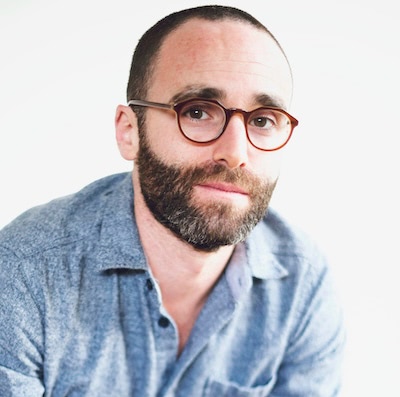
CEO, Unreasonable Group
About This Episode
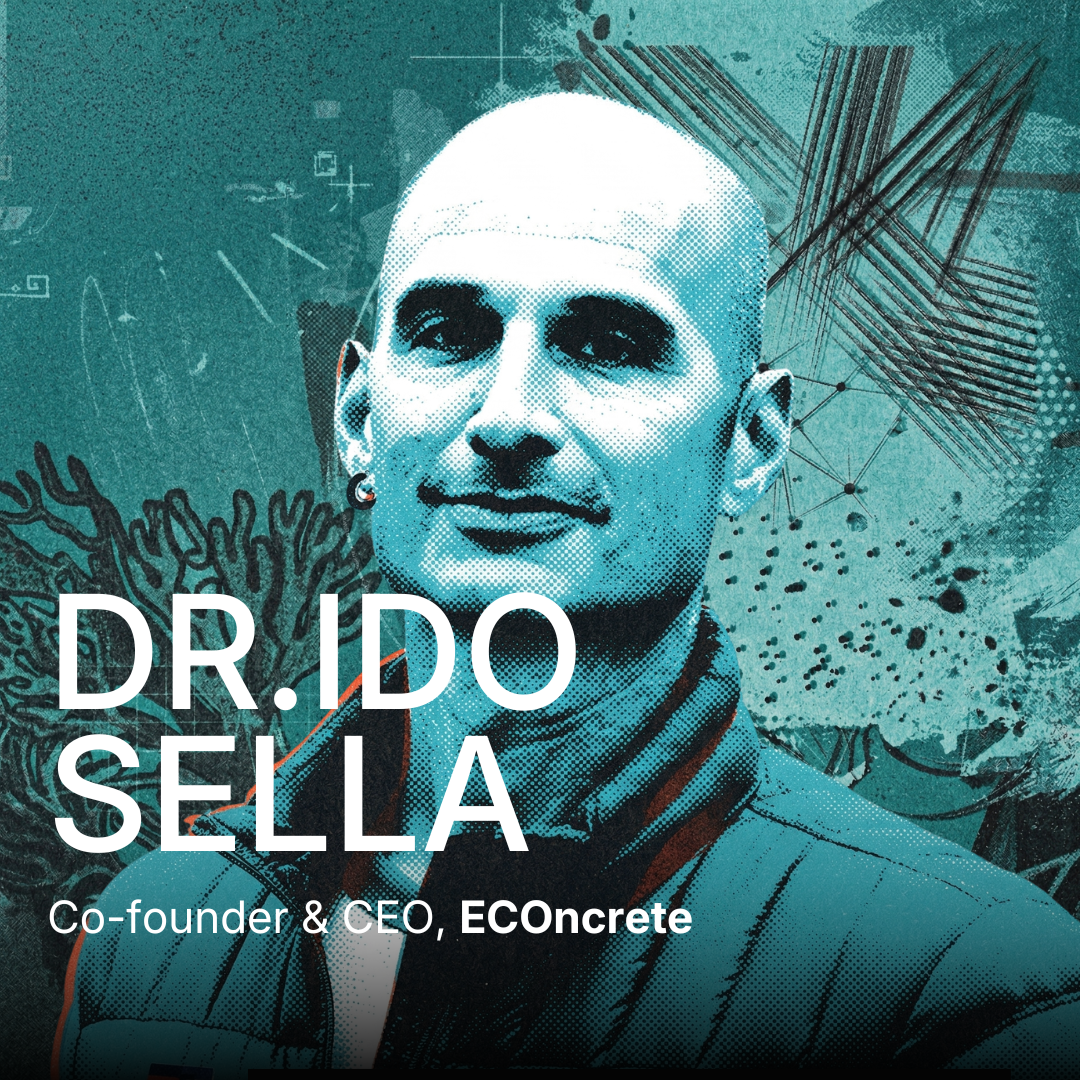
Featured Guest
Dr. Ido Sella
Co-founder & CEO of ECOncreteDr. Ido Sella is a marine biologist and the co-founder and CEO of ECOncrete, a company that has changed how marine infrastructure interacts with ocean ecosystems. Co-founded in 2012 with Dr. Shimrit Perkol-Finkel, ECOncrete has deployed its technology across 50+ projects in more than 30 countries and 10 seas, producing 7x more carbon sequestration than standard concrete. The company was recognized by Time Magazine in 2019 as one of the top 100 inventions in the world. Ido joined the Unreasonable Fellowship through the Unreasonable Impact program, run in partnership with Barclays.
Key Takeaways
ECOncrete's technology makes marine concrete support local biodiversity instead of invasive species. It's not artificial reef, it's fixing the infrastructure itself. Their motto: "If you build it, build it right."
Standard concrete gives wrong signals to marine larvae. ECOncrete tweaks the composition so native species can settle and grow. The discovery came from noticing one sea wall section behaving differently on an underwater survey.
Infrastructure treated with ECOncrete produces 7x more carbon sequestration per square foot than standard marine concrete. The biology that grows on it also protects the structure from chloride penetration, extending its lifespan.
Ido lost his co-founder Shimrit in 2021, one month before their Series A close. Every investor, without coordinating, said the same thing: "If you're going forward, we're investing."
The company operates in 10 seas, 30+ countries, with 50+ projects, all with a team of just 40 people. Ido believes they've changed more underwater surface area than all university artificial reef programs combined.
Barclays committed immediately after Shimrit's passing and stayed through every round. They helped land the Tottenville project in Staten Island, where oysters are returning for the first time in decades.
Chapters
Full Transcript
Daniel Epstein (00:00)
Today, I'm going to selfishly enjoy a conversation with one of our Unreasonable Fellows Dr. Ido Sella. I, hope it's a conversation that you, too, also enjoy. We're going to explore large scale infrastructure projects in marine environments and how they can be can be a net positive to the natural world. Increasing biodiversity, sequestering carbon, increasing resilience, providing jobs to the local economy. Dr. Ido Sella is the founder and co founder and CEO of ECOncrete, company, raised tens of millions of dollars, has more than 40 infrastructure projects in nearly a dozen seas around the world, was recognized in 2019 as one of the best inventions in the world by Time magazine. And in a lot of ways they're just getting started. So to expose us to a brighter future and to get to weave in more personal story, we're going to dive into this conversation with Ido. Ido, it is a pleasure and really a privilege of mine to have the chance to, you know, over the next hour or so get to know you and expose to the rest of the world the amazing work that you're leading with ECOncrete. So, thank you for making the time.
Ido Sella (01:15)
Oh no, it's a pleasure.
Daniel Epstein (01:18)
So we're going to go probably in many directions. This is fully, fully off scripted and I'm curious, where it is we dance together in this conversation. But I do want to start with just ECOncrete and what it is. You've been recognized, I think in 2019, Time magazine Top 100 Innovations or Inventions in the world. You're adding biodiversity and biomimicry, to marine infrastructure, a place where sadly it has been largely absent. But can you tell, tell me, and tell the listeners who are tuning in what ECOncrete is?
Ido Sella (01:57)
Sure. In plain words, it's basically a technology that allows construction to be more responsible and to provide us with ecosystem services that in the past we're not getting from those structures. I'm talking about ports and seawalls and revetments and any structure that is associated either with the coastal environment or actually in the offshore environment. If we look at marine infrastructure worldwide, 70% of them are concrete based. And those structures are usually associated with a negative impact on the marine environment. Low biodiversity, dominance of invasive species, negative effect on water quality. And that was our starting point as marine biologists of how can we take this most - It's the second Most common material in the world after water is concrete, which is the best material for built infrastructure, both in terms of resiliency and also in terms of cost and performance, and all that. And how can we make it better support biology and biological communities? And it took us quite a long time to understand what is negatively affecting the concrete to perform as a substrate for those services. And we found a way to tweak it. That's basically what ECOncrete is. We are incorporating our technology to the local batching plan and it's applied by local workforce and allowing them to provide with an, within their own market an infrastructure that is in full compliance with the industry standard but at the same time provide ecosystem services.
Daniel Epstein (03:52)
Yeah, yeah. And if you can speak to the impact of it, the efficacy of it, what differences are you seeing in terms of marine life coming back or revitalization or increase of it? And if you could speak to the carbon sequestration potential of it.
Ido Sella (04:07)
So let's dive into Biology 101. Yes, take us there. I think exactly, I think it's important. So if we look at any substrate that is under the water, if it's a rock, if it's a pier pile, if it's a steel pile, if it's a sheet pile, all of them are exposed to the water column and basically are colonized by different organisms that are coming from the water column and the, and those organisms can basically release. If we look at oysters and barnacles and corals, all of them are releasing their larvae into the water. Most of them are releasing the eggs and the sperm into the water, and there's fertilization in the water column. And there's this little baby, the larvae is swimming in the plankton and the larvae of the coral look like a little worm and it's basically swimming and moving in the water and the currents are pushing it. At a certain point, they interact with the substrate. It can be a seawall, it can be a vessel, it can be a pipe and they sense the surface and they're basically at that point That's the only point in their life cycle that they take a decision to settle. Because this barnacle which can swim around in the water and look like a small crab, once he's settled and colonized and attached himself to the substrate, that will be the last time he'll move in his life. And it's the same with corals and same with barnacles and oysters and all those sessile communities and, and they're sensing the substrate.
Daniel Epstein (05:47)
Yeah.
Ido Sella (05:47)
And if the substrate is not fitting to their requirements, they will keep on drifting until they find something better or they will be eaten or they will be drift, for a long time in the water column. So that's the process. And our target was to make sure that concrete, which usually gives the wrong signals to those organisms, will provide them better signals. And it took us a while to understand what do we need to change in the concrete in order for it to be a better substrate so they will colonize on it. And that's actually the reason why standard concrete is colonized by invasive species. Because invasive species are species that are very tolerant and they're not very specific to the substrate. And what they need are surfaces and enough flask of food and as little competition that they have on the surface, so they can flourish and grow on it. And it's exactly what concrete providing them because other species cannot settle on it. So it took us a while to understand. In the beginning we thought different. You know, we went on really wild different guesses of the pH and other things. And we, we actually got to, the directions of how to work it out completely by accident.
Daniel Epstein (07:13)
Yeah.
Ido Sella (07:14)
We did an underwater survey on large, long sea walls of power plants. And we noticed that one of them is behaving biologically different than the other. And when we looked into basically the spec of those seawall, that portion of the seawall, that it's not different structurally than the other sections. So it's approved. It got the same clearance for construction as the other. It was cast with more or less the same material. But it gave us a hint that maybe it's subtle changes, maybe it's small changes within the concrete that need to happen. Maybe it's a material. maybe it's the different type of sand or cement or understanding the chemical composition of the concrete. We knew nothing about concrete. We're marine biologists. knew nothing about it. So we reach out for support from concrete technologists. And basically the beginning was like we want to publish a paper. We will need your support. Your name will be on the paper. We will publish it and all of that and we are all going to be happy. And that was the starting. That's the main driver when you're in the academy.
Daniel Epstein (08:24)
Because you, you were, you were an ecologist at this time.
Ido Sella (08:27)
I'm a marine biologist. Both of us, myself and Dr. Olsemit Pokhofinko that we founded the company, came from. We did our Master's and PhDs on Marine Biology and later on and, and work all over the world and research on that. So, it was before we started.
Daniel Epstein (08:46)
Yep.
Ido Sella (08:47)
And at a certain point we understand that we need to basically control the leaching out of different components from the concrete out. And how do we do it and how we And we started with, experiments that were in the Red Sea, which is tropical environment, in the Mediterranean, which is a temperate environment. Then, in a collaboration with NOAA, we started to work on federal ports along the East Coast of the US and ran those experiments from Key West, in Savannah, Georgia, and around New York City, up the Hudson and in the Bay, and even the fresh water of the Great Lakes And work out of NOAA labs. And we showed that we can control the performance or can affect the performance of local concrete in different regions and in all of them increase significant biodiversity, increase the, reduce the dominance of invasive species. And connecting with what you asked, if you look at those species of the sessile community that grow on marine infrastructure, a lot of them are secreting calcium carbonate. So I'm talking about the shells of the oysters and the mussels and the barnacles and the bryozoans and the skeleton of the corals. It's all calcium carbonate.
Daniel Epstein (10:05)
Yep.
Ido Sella (10:06)
So increasing basically the position of calcium carbonate on the surface, we're creating this biogenic crust. This is making it more resilient on skeleton. Exactly. So it's making the structure more resilient. Wow. But, but if we look at what is calcium carbonate. Calcium carbonate is basically the little larvae, which is a soft tissue. And she knows that now She settled on the structure and it should. They need to protect themselves somehow. And the way is to grow a skeleton. We'll take basically dissolved CO2 from the water. We'll take a calcium ion from the water, and we'll create calcium carbonate. So it's one of the most efficient biological processes of carbon sequestration. By basically increasing the amount volume of this biogen, the more oysters, more barnacles, you increase this crust and, and you create this process that is significantly higher than what we see on standard infrastructure. So for example, now when you compare a standard seawall with a seawall in which we applied our technology, you'll get seven times more carbon sequestration per square foot.
Daniel Epstein (11:12)
Seven times or seven exactly. Seven times.
Ido Sella (11:14)
Yeah, seven times.
Daniel Epstein (11:16)
Yeah.
Ido Sella (11:17)
So which is a significant change. And on top of that, as you mentioned, there is a process of what we call bioprotection.
Daniel Epstein (11:28)
Yeah.
Ido Sella (11:29)
So you create this surface that's protecting the infrastructure. And we're dealing with a very hostile environment. There are chlorides from the seawater that try to penetrate into the concrete, get to the rebar, the steel inside the concrete, and corrode it. And basically the result is it's expanding and blowing up the concrete from the concrete from the inside out, which is one of the major diseases of waterfronts worldwide. If you have a crust of biology covering the surface, you significantly reduce the ability of the chlorides to penetrate. Even the British standard for construction, which is the most high level and respected standard, is calling for not cleaning your infrastructure because this, what they called fouling community is protecting your infrastructure. So you're basically harnessing the power of biodiversity and ecosystem to protect your assets. And at the same time you're doing it without affecting the service life, even increasing the service life of the infrastructure. And allowing it to provide all the services that you're aiming for, if it's protecting a waterfront of a city or a seawall or a quay wall of a port. So that's basically what we do. And we operate globally with that technology.
Daniel Epstein (12:48)
And how many coastlines are you operating on now?
Ido Sella (12:54)
We have more than 50 projects worldwide and I think, I should know the numbers, but ten seas, more than 30, states and countries worldwide where we, corporate technology, Hong Kong, the GCC, Australia, New Zealand, Canada, Alaska, California, New York.
Daniel Epstein (13:25)
Wow. So, if I were to mirror back, so seven times the carbon sequestration. The calcification of the actual walls themselves improves resiliency, significantly of the actual infrastructure. You are drastically reducing invasive species while enhancing the biodiversity of local species and kind of protecting the ecosystem itself. What's the catch? Is it more expensive? Is there any? What's preventing the world from adopting this outright? Or, are they, and you're just trying to keep up with the rate of demand?
Ido Sella (14:08)
So there's two things here. first, yes, it's more expensive because you need to add more materials into the concerete although you're adding really small amounts like a salt and pepper. But you still need to mobilize some materials and add it into your local concrete. So there is a cost associated with that. There's also cost of developing of technology and the IP associated. So there's a cost associated with our technology. It really depends on, I always say that all of our clients want to do good.
Daniel Epstein (14:37)
Yeah.
Ido Sella (14:37)
None of them is willing to pay to do good.
Daniel Epstein (14:39)
Yeah, totally.
Ido Sella (14:40)
So, the only reason we are operating worldwide and we're selling our technology is because we're solving some sub-pains that our clients have. So, and sometimes the pains are not related to biology or directly related to biology. If you increase the biodiversity on a seawall The biology that grow on the seawall, you're immediately going to see an impact on the water column in terms of the species of fish that are going to be associated with the structure.
Daniel Epstein (15:12)
Totally right.
Ido Sella (15:13)
And it's a straightforward, simple thing. There's different types of food so there are more species out there that would like to forge on it. So if you increase this, and we show that in several papers, you increase the surface area, you increase the biology on the surface, you immediately affect the water column. So, sometimes our clients have issues with fishing. They're building an infrastructure in an area which is even more insensitive. It's a fishing ground or other, and we can provide them an efficient tool that can be measurable, that can be assessed and monitored. And because we're being validated by so many third parties, we basically recommend technology in many of the regions that we operate in. So you can utilize that. We have clients that have underwater assets, underwater cables, that couldn't bury them at a certain depth and need to cap them. And because environmental regulations have some restrictions and they can reach out to us. we have clients that was basically needed to cross a super sensitive marine environment, a 2 or 3,000 environment between the Canonic island. And the only way for the regulator because it's an environmentally protectected area, is that if they will show that they did not affect biodiversity and even increase biodiversity, so they reach out to us. We allow them basically to run this project by utilizing our technology to cap their underwater cable. We have clients that are working in area where first nations are a part of the decision making process in the northwest of the US, in Hawaii, in New Zealand. And they have concerns about the ecological performance and the effect on their grounds. And suddenly that's the pain that the client is dealing with because with the data coming, with the data and with the verified technology we can help them. So there's always the pain. And with the pain comes the willingness to pay. We're seeing more and more projects where it's not related to environmental regulations. So sometimes, it's related to funding. Our clients want to tap into blue funds. Our clients need to comply with sustainable development goals in order to get funding from the IDB, from the World Bank, from the European Bank. And we're an effective tool, to show that. So it's really Our business development team is working all the time and the target of the company is to I think one of the things that I'm most proud of is that we're a forty-employee company and if you look at the underwater surfaces that we change and modified and increase biodiversity. I don't think there is a project. There are universities. If you couple all the universities together on the work that they did on artificial reefs and the monitoring that are associated with that or underwater structures, that can compete with us. Which is one of the things that we're most proud of.
Daniel Epstein (18:36)
Yeah. Reminds me of one of my favorite quotes, the anthropologist Margaret Mead. I'm sure you know it. It says never doubt that a small group of citizens can change the world. Indeed it's the only thing that ever has and very much so for the amount of impact that 40 people are unlocking in the world it's remarkable. So now that we have that picture I'd like to just get to know you a little bit more and your journey. You were born in Jerusalem, is that right?
Ido Sella (19:09)
I was born in Jerusalem.
Daniel Epstein (19:12)
Yeah, or after you
Ido Sella (19:13)
Jerusalem is like - in the Israeli standard is really far from the sea.
Daniel Epstein (19:17)
That's what I was going to ask. How did you fall in love with the sea? How did you fall in love with the oceans, being so landlocked from childhood?
Ido Sella (19:25)
Exactly. But well a landlocked in Israel like Jerusalem is basically 45 minutes from the sea, from the Mediterranean. So it can be defined as coastal area in other regions of the world. But it's still. It's on the mountains and, and I'm I'm hiking since I'm really in our family. It started with my parents and where I'm hiking since I'm like three years old. And we're always outside. at a certain point it kind of like connected to me that there's another type of nature and I was like super young when I started to find interest in the sea. And I was already, I don't konw, 11 to bug my parents to go to go to the sea and collect invertebrates and grow them in tanks and in aquariums at home. And that's basically I was the weird guy until I was like 18 or even I'm still the weird guy. So that started at that point and I used to very At that point I started also to sail.
Daniel Epstein (20:32)
Yeah.
Ido Sella (20:32)
So I spent quite a lot of time since then on the sea.
Daniel Epstein (20:37)
Do you know what it is about the sea, about the ocean that you fell in love with, that really pulls at your heart?
Ido Sella (20:47)
First of all, I think for a lot of regions of the world, this is the most accessible wilderness we can get to.
Daniel Epstein (20:57)
Well said.
Ido Sella (20:58)
I think so. So specifically in, in areas where, you know, highly populated or, let's say, restricted in terms of geography and your ability to travel to get to areas that are remote. So it's really amazing that you can in the Mediterranean, you can - people think the Mediterranean is like a small body of water. It's the most, one of the most aggressive body of water I ever experienced in my life. And you can go five hours after you left shores and you're completely out there and you're experiencing life and freedom that you never experienced before. And saying that when you go out to the Atlantic it's amplified. So I was fascinated. I was lucky enough, to grow up in a place where you have two amazing body of water really accessible. One is Mediterranean, the other one is the Red Sea. The Red Sea is unbelievable. Also what pulled me to do my Ph.D. and and on the Red Sea through research and sailing through the years also connected me to work on the Indian Ocean and on the coast of Africa. And so it's really for me it's the most amazing place in the world. And because a lot of the work as marine biologists we do is diving so it also gives you this serenity and quiet and the ability to disconnect. So yeah, that was my feeling from very early age.
Daniel Epstein (22:43)
Yeah. It's the ability to disconnect, to actually connect in that sense. Outside of going out to the sea in, you know, in your childhood and falling in love with the wildness of it. How did your childhood inform who you've become? I'd love just to your story a little bit more. You can go back to Genesis wherever you want to begin. You know, take us to here today. to
Ido Sella (23:13)
I was. It's a good, it's. I need to think of where to start. But as I said, we're a family that's been camping and hiking since I was young. And so really at an early age, I joined one of the youth groups that are basically it's not a Scouts, it's more of a hiking group.
Daniel Epstein (23:40)
Yep.
Ido Sella (23:41)
And climbing and rock climbing, and then I basically spend most of my years either being a part of it or being a guide within the system until I was 18. That's really what shaped me as a person because that's a place where we learn. It was like my direct interaction with geography, geology, biology, ecology. All those things came from there and actually not from school, or the educational system that I participated in. So it really shaped me, and also shaped the people around me because my friends from that time are still my closest buddies and friends. And there's something about, you know, being 16 and hiking for five, six, seven days alone. And it's amazing. And later on, really when I was 17, I went hiking for a month in Ireland. And then when I was Before I was 18, I did three months in Africa hiking.
Daniel Epstein (24:55)
Incredible.
Ido Sella (24:56)
So backpacking. So, it's actually shaped, you know, in terms of independent, in terms of your ability to, to assess challenges and to see what is important for you. I think it's really shaped me. At the same time I was I was struggling if I'm a mountain person or a sea person. It was very clear that I'm going to be a sea person. But I was like there isn't any. And I'm still at that conflict. When I'm sailing, I want to be in the desert. When I'm in the desert, I want to sail.
Daniel Epstein (25:27)
Yep.
Ido Sella (25:29)
So, it's always a conflict that I'm running with. And as I aged I started to balance it and to understand that it's not going to change. But that's actually what shaped me. Later on I went to the army and when I finished the army, I basically become a first mate of one of the largest research vessels, at the time in the eastern Mediterranean, which was an amazing opportunity because it basically connected my both loves. One is steel and rusted steel and machinery, and the other one is biology. And so it was great. And then when I started my master and my PhD, I always thought I want to work on, artificial reefs because you know, wrecks and you know, that was my dream. But somehow, I went into more coral physiology and aqua farming and other which still had technology and biology together. So it was a nice mix.
Daniel Epstein (26:43)
Spending so much time in the wilderness, whether that's in the desert or the mountains or at sea I oftentimes feel like, at least for me personally, the wilderness is the greatest mirror and teacher and safe place sanctuary that I have. I'm curious, what has this time in wild settings taught you? There may be many lessons, but I'd be really curious to listen.
Ido Sella (27:09)
First, there's something about the quiet. And you get it in the sea. You get it also in the desert. Your ability to suddenly hear your footsteps, to go at night and feel very alert on what's around you and the small noises that are coming from different areas around you, which you probably will never have heard if you were in an urban environment. And you need to understand that you're always such a small piece. We're not basically affecting anything. Those stones are going to be here after us. They've been here way, way before us. And it's true for any drop of water in the ocean as well. We're here for few years visiting. We need to make sure that we're not creating a lot of impact or reduce the impact that we create and make sure that we are leaving the ground hopefully in a better condition. Although that's not going to happen. That's not how I see it at the moment.
Daniel Epstein (28:18)
Yeah.
Ido Sella (28:19)
Then, to our kids and there's something about this wilderness which is that is giving you this feeling. Unfortunately, there's less and less wilderness available. Even if you look at, you know, at one of my favorite places in the world is Baja. And if you're traveling in Baja or if you're traveling about 20 years ago
Daniel Epstein (28:43)
Yeah.
Ido Sella (28:44)
And you travel now, you can see the difference in your ability not to disconnect or not to see the effect of human beings on the area that you that you're hiking through. And it's true all over and in a way, when you're getting into a park and people are asking you, giving you this types of regulations that are required in order to keep this park in good condition, you were given instructions of how to operate your wilderness, which is basically a bit of you know, putting you down from the experience of being out there as opposed to let's say people from 100 years ago. You still can get it in the sea. You can go out and there's no actual, you know, you're even getting to a place that you know when we're working offshore.
Daniel Epstein (29:33)
Yeah.
Ido Sella (29:35)
Even the jurisdiction is very flaky of what are you complying with? Why are you not complying? It's every person to itself need to decide how we, how we behave Because you can do whatever you want there. I still have it in certain area. I mostly have it in the sea. But that's you.
Daniel Epstein (29:52)
What is that solitude or, or that silence, that aloneness, What, has it taught you about yourself?
Ido Sella (29:57)
First of all, it's giving you a perspective of how occupied you are on the day to day. That even if you don't think you're occupied, you're fully occupied. Specifically as an entrepreneur, specifically in the management position. You're always. There's always something to worry about. And there's always a crisis to deal with And you might forget it in two days later, but at that point it seems like the most urgent thing to do and there's a good chance it is. When you're getting out there and you suddenly immediately understand that you can sleep better.
Daniel Epstein (30:32)
Yeah.
Ido Sella (30:33)
That you can eat better, that you can feel better. And it's not because It's not because of any other thing than your surroundings.
Daniel Epstein (30:44)
Um.
Ido Sella (30:45)
How come it's affecting my ability to you know, to have a full night's sleep? How come I'm - It's just amazing when you point it. Ever since I grew up, I'm like every few months, I'm taking four or five days off when I'm hiking.
Daniel Epstein (31:02)
Good man.
Ido Sella (31:04)
And it's basically there's nothing really. It's two parties and we're hiking And either backpacking, or when we're getting older we do day trips and we camp near the car. Because some of them are too fat to walk anymore. Although they will never admit it. And no, I don't need anything else. That's for me to tune down. That's basically the only options for me.
Daniel Epstein (31:33)
That's amazing that you protect that even as a dad, as a CEO of a very, in some ways a very fast-growing, globally-oriented, hard tech company that you still ensure that you're able to get that time. Have there been moments when you haven't or have you been religious about protecting that?
Ido Sella (31:56)
No, I'm religious. Our first round our last round, sorry, I can share an image of that. It's embarrassing, but I share an image.
Daniel Epstein (32:03)
Please do.
Ido Sella (32:04)
And it's my best buddies. It's like really my two best buddies. And we're like planning for this. And we have a date. Every time we close our hike, we open our calendars and we close the dates for the next one on the last day, on the last coffee.
Daniel Epstein (32:22)
Yeah.
Ido Sella (32:23)
We sit and we put the dates and we close the dates and we send our spouses that. So we have a group with all the calendars. So they will know.
Daniel Epstein (32:32)
Yep.
Ido Sella (32:33)
So this date is coming up and of course everything in the round is collapsing and we're, you know, reorganizing everything and that and closing supposed to be on the first night that you're out of the. Where am I out? And I'm like calling my buddies and I said, I don't know what to do because it's going to happen and say, wow, we're going to. Maybe we'll delay one day. At a certain point we understand that if we delay it one day we need to cut off a day.
Daniel Epstein (32:59)
Yeah.
Ido Sella (33:00)
So I said, you know, we're going to do that.
Daniel Epstein (33:04)
Yeah.
Ido Sella (33:05)
And I'll think of, maybe we'll change where we camp so we'll have reception at night or something like that. And then, one of my buddies said, you know what? Let me take care of that. I'll take care of it.
Daniel Epstein (33:15)
Yeah.
Ido Sella (33:16)
And we went hiking in the desert.
Daniel Epstein (33:18)
Yeah.
Ido Sella (33:19)
And he called one of his friends, which is a ranger there, and asked him which hilltop there is a good reception. And then we slept at night. And then in the morning I built this. Basically I built this chair with the canopy and I was sitting alone in this desert. They went hiking. I was with my laptop and with all their chargeable batteries.
Daniel Epstein (33:53)
Yes.
Ido Sella (33:54)
And I put a speaker with Leonard Cohen so I can enjoy Because I needed to hear when the emails are coming in. And if you're connected to a speaker, you just think of the email coming in because they want to
Daniel Epstein (34:07)
Yes.
Ido Sella (34:07)
Sit in front of the computer and wait for the email to come in and then legal sent something. So I heard it and I answered. And that was my entire day. Like 12 hours from sunrise to sunset. We closed around midnight that night. And that was amazing.
Daniel Epstein (34:25)
It's incredible. What desert was that?
Ido Sella (34:27)
It's the Negev Desert in Israel. It's amazing. It's where the craters are. The Ramon crater, which is we were basically within the Ramon crater.
Daniel Epstein (34:37)
Yeah. Not many people have closed a round within the Roman Crater before.
Ido Sella (34:41)
I agree.
Daniel Epstein (34:42)
You might be the first, actually. You probably are. So, you know, I think it's easy in some ways for someone who's listening to your story, to, you know, hear you kind of followed your passion. You always had this love for the natural world. You found work that was really aligned. You started the company's been a long journey. It's been. Has it been 16 years? How long?
Ido Sella (35:11)
We're now going to be on our, 13, 14 years.
Daniel Epstein (35:15)
14 years. So 14 years later into founding the business, you're operating globally. You're having a huge impact with a small team. You're still getting time to go into the mountains or the desert or the ocean every couple months. It doesn't sound that hard. And yet, I know that the story is very different. I'd love to go into the difficulties, the struggles, when maybe, if you've ever felt like this wasn't going to work or you wanted to give up or it seemed almost insurmountable and somehow you all made it through.
Ido Sella (35:52)
So first of all, if there's something that we're good at, it's struggling. I didn't found this company by myself. I founded with Dr. Shimrit Finkel. And Shimrit and I started together in the lab. We were students together. Then, we did our PhD together, then we published together, then we supported each other in a postdoc and in research projects. And it was, at a certain point, it was very natural that we'll take It was either you need to take a decision, either you're staying in the academy and you're applying for, you're looking for a position in one of the universities, or you decide to jump out. I was a little bit fed up from the academy at that point. But Shimrit was brilliant. She was ready for looking for a position and she had a Marie Curie Fellowship and numerous awards and really, she was really an amazing researcher. And she was thinking about it and then she surprised me with saying no, I want to come with you and I want us to open something together and join. So we stepped out of the university together, and for a long period of time what we did is basically the ecological marine consulting. When an exploration drill, offshore exploration drilling process, a project need to be initiated, you need to do ecological surveys in depth which are 3,000ft, 4,000ft. So I had the experience of both of us as biologists. Second, I was first research for years before that So I knew how to group all the equipment, the logistics. And we did that for several years. It was great. We basically did surveys before construction of oil rigs and gas pipes and underwater cables and utility companies and power plants, desalination plants all over the Mediterranean. And then as I said by accident we started to focus on concrete and we basically developed this It was our baby. And for many years as we did the research, it was basically three people. It was both of us and research assistant. Because there was no job, there was no market for ecological sensitive infrastructure. We invented it. So a lot of our work that we did was for a very long year between 2012 when we initiated, when we opened the company until late 2016, it was like just us publishing papers and jumping from one side to the other to do monitoring of concrete tiles that we hung under piers and attached to piles. And then 2016 or so we started to heavily commercialize technology and started to be incorporating it in different infrastructure. And it was really fun because we're like best friends. We were best friends. And it's like working with your buddy. And there's always someone if you're feeling a little bit of down, there's always someone to bring you up and you always share the stress, which is an amazing thing.
Daniel Epstein (39:25)
Yeah. Go both ways.
Ido Sella (39:27)
Exactly. So, which is great. There's someone else in pain with you and there's someone else in happiness And we were always amazed of looking at other CEO that did it alone because we completely share each other - like we had the same computer, almost the same computer connected. So all the emails were either way were cc'd. So we can basically work it out between ourselves when nobody else - it was really And I never experienced something like that before or after. And then things went actually great. We had a crisis with all the rest of the world. We had Covid and we were together and we faced Covid with our team. At the time, the team was not, we were like 15 employees or so. And we went through Covid. We already had representative in the US. We already had some representative in Spain, but wasn't in office yet. It was an active team and all things went well until 2021 when, basically Shimrit, left the office and was run over by a truck, really two minutes from the office, and we lost her in that moment. And it was just this, you know, this understanding that everything's going to change.
Daniel Epstein (40:52)
Yeah.
Ido Sella (40:53)
It's going to be completely. Now. Everything's going to be completely different. We were a month from closing our A round.
Daniel Epstein (41:01)
Wow.
Ido Sella (41:02)
And basically I needed to take a decision. Are we going forward? You know because it's either - we couldn't idle. It's either we're going forward or we stop.
Daniel Epstein (41:14)
Yeah.
Ido Sella (41:15)
It was very, very clear to me that, the driver behind ECOncrete is not, as opposed to other entrepreneurs that wanted to have, you know, run, a technology tried to do it, you know, to commercialize it. If it's not running, they will think about something else. We are not that kind of person. Like, we are marine biologists. That's what we like to do. That's what we want to do. We wanted to make a change and create an impact. And, it's a completely different driver than other entrepreneurs.
Daniel Epstein (41:45)
Yeah.
Ido Sella (41:46)
And it was like crystal clear to me that if at that moment, if it was the other way around and I was the one that evaporated from the world on that horrible afternoon, she will take it forward as well. She won't blink. The benefit was that we practically shared a brain, so nothing was lost because we could immediately take over each other because that's how we played for years. Which kind of, I don't know, we were getting ready for it. I don't know. it's very different than other companies because we shared it to the level that I could I had all, you know, she had all my password and she and I had all her password and And we can work it out. So that not really the day after, like, we were ready with all, everything, is to I, you know, I regrouped the company and then everyone was on the verge of collapsing and it was really a crisis, and we basically decided we go forward. And there's a mission here that we want to achieve this. And now we have also have another driver and it's basically doing it in her name.
Daniel Epstein (43:00)
Her legacy.
Ido Sella (43:02)
That was the process. So I think we closed the A round maybe three weeks after she passed away.
Daniel Epstein (43:09)
Wow. Wow. I can't imagine.
Ido Sella (43:11)
And that's when you see the value of the partners and the value of the investors that are first of all took a huge risk because it's basically investing in a really unbalanced system and taking a kind of a leap of confidence on the leadership which and really it's quite amazing because those investors were in touch with us for months before she passed away. And all of them on the first call said if you're going forward, we're investing.
Daniel Epstein (43:52)
Wow.
Ido Sella (43:52)
And this was really a kind of, for me it was really amazing statement from all of them and they. What was amazing, they didn't I needed immediately to contact so they will hear it from me and not from the media.
Daniel Epstein (44:08)
Totally.
Ido Sella (44:09)
And all of them immediately gave the same answer.
Daniel Epstein (44:14)
Wow. Wow. Not coordinated. It was just where they.
Ido Sella (44:17)
No, no, not at all, which was quite amazing.
Daniel Epstein (44:21)
And through this process which I can't imagine how difficult it was and has been And to go from a mind, sounds like a mind and a heart melt with, you know, with your co-founder, with Shimrit and co-leading the company, and then having her pass. What have you learned about yourself through that process of you know, now going at it of course with the broader team but without your partner.
Ido Sella (44:51)
I can give you one statement.
Daniel Epstein (44:54)
Mm.
Ido Sella (44:55)
It's not a crisis until someone is dying. It's just a pain that you need to deal with.
Daniel Epstein (45:01)
Yeah, as you can, it's just a storm. You can weather it.
Ido Sella (45:04)
Yeah, it's just like it's. Yeah, you weather it out. You go through that. Don't call it a crisis. It's not a crisis. Crisis if I have casualties, it's a crisis before that and it's completely change your perspective. It also allow you to deal with stress completely differently. Like I'm, and we went through You know, we're dealing with a market which is very conservative.
Daniel Epstein (45:28)
Extremely one of the most.
Ido Sella (45:31)
Exactly. Slow to respond. Unflexible.
Daniel Epstein (45:34)
Yes.
Ido Sella (45:35)
All the things. You know, delaying decisions. Right. If you think about how long a large infrastructure is, is in the process before you start, before breaking ground.
Daniel Epstein (45:46)
Yeah.
Ido Sella (45:47)
And so there's a lot of, you know, up and down and you need to get you know, either be patient or deal with some last minute issue that can affect you on the long run for the three years ahead. And it's a kind of And we're always setting now in the management, you know, nobody die. Nobody. It's okay. All of us are going back to our loved ones.
Daniel Epstein (46:08)
Yeah.
Ido Sella (46:09)
This is the pain. We will deal with that. We will figure it out and we'll forget about it. Probably in two weeks or so.
Daniel Epstein (46:15)
Totally. Right. You know, there's a, an expression I've always valued and resonated with and it's this idea that both patience and impatience are virtues. And I wonder, you know, sitting in your position as a marine biologist, as a scientist who knows what's happening with the health of our oceans and the drop in biodiversity and increase in acidification and so on and so forth. But you also have a solution that you're bringing into the world and into the market that increases biodiversity, can sequester carbon, increases resiliency. How do you feel about this balance between patience and impatience?
Ido Sella (46:59)
I can give you an example from down here.
Daniel Epstein (47:01)
Yes, please.
Ido Sella (47:02)
I'm diving in the murky water of New York for the last 10 years.
Daniel Epstein (47:06)
No way. How's that?
Ido Sella (47:09)
And I can different than Baja? It depends. Depends on the day. I can tell you firsthand that I can actually see the change that the clean water act did in my own eyes.
Daniel Epstein (47:24)
Wow.
Ido Sella (47:24)
Because when we started to dive in Brooklyn Bridge Park.
Daniel Epstein (47:28)
That's right.
Ido Sella (47:29)
In 2014, we couldn't see the species that we're seeing now. There was no oyster recruitment. Natural oyster recruitment. Now when we finished a large project in Staten Island which is now covered with oysters.
Daniel Epstein (47:48)
Yeah.
Ido Sella (47:49)
It was just a publication on it in the New Yorker just a week, two weeks ago. We on mid Manhattan, we participated in the project and our technology was used and it's covered with oysters. And you can say, well, it's the magic of ECOncrete. But it's not the magic of ECOncrete. ECOnrete is just a substrate. We just fixed the concrete.
Daniel Epstein (48:13)
Yes.
Ido Sella (48:13)
We're not the reason the oysters are there. The oysters are there because the water column now have larvaes that it couldn't support in the past. And we're just facilitating those larvae to settle on the structure. That's right. But we can actually see the change, and it's amazing. So if it can happen in New York, it can If it can happen
Daniel Epstein (48:37)
The pristine waterways of New York city
Ido Sella (48:39)
the pristine water environment of the Hudson river and the silt in the bottom.
Daniel Epstein (48:45)
Yeah.
Ido Sella (48:46)
Courtesy of General Electric. It can happen everywhere. And it's amazing because if you look in terms of ecological timelines, it's nothing. It's a blip. What is it? 15 years. It's nothing.
Daniel Epstein (49:01)
Yes.
Ido Sella (49:02)
And, this is one thing. The other I think all of us saw it in everyone that is hiking, sailing. An outdoor person saw the impact of COVID.
Daniel Epstein (49:16)
Yes. How much came back?
Ido Sella (49:18)
Immediately. It rebounds immediately. Suddenly, whales went out like most sightings in whales and Jamaica Bay. Then in the last 20 years or so, it happened a month after. So we can make the change. It's all about if we take a decision to do that. On the other hand, as marine biologists, we see the impact. We did a long study on Tanzanian shorelines and the border between Kenya and Tanzania. Those are the most beautiful reef I ever encountered in my life. I ever dived in my life. Most of them are unknown. And one of them was a place that we came back again and again every year. And the last year we visited, we couldn't find it. And it was like, do we have an issue with the GPS? Maybe we didn't mark it well, we need to go back to our notes. And after we verified everything and we understand that we're in the same spot, it was completely demolished by dynamite fishing.
Daniel Epstein (50:24)
Wow.
Ido Sella (50:25)
so this event that probably was an hour, two hours of fishing.
Daniel Epstein (50:31)
Yeah.
Ido Sella (50:33)
Completely collapsed a reef. A small atom can recoup it and it regenerate really quite fast.
Daniel Epstein (50:41)
Yeah.
Ido Sella (50:43)
But it's also very sensitive for impact. So I'm a kind of cautious, optimistic.
Daniel Epstein (50:48)
Yes.
Ido Sella (50:49)
I hope that the world will rebalance because at the moment, if you look at different geopolitical processes all over the world are not going in terms of looking at our environment and understanding the value of the natural assets around us, not in terms of monetizing them. But how could they support us and make us more resilient on the long term? I'm not sure we've invest time in history, but you know, but same time there were sometimes in the past that were better. So they're probably gonna, it's gonna be recycled again. So, I'm cautiously optimistic.
Daniel Epstein (51:31)
Very well said. I heard a story you might be able to validate this as fact or bullshit. I heard a story that in Manhattan 100 years ago or so, the hot dog carts and the pretzel carts that we now have, those used to be oyster carts because of the abundance of oysters in the Hudson itself. And then of course those that evaporated and it's beautiful to see the waters be able to remember you know what they once were. But is that story true?
Ido Sella (52:06)
It's true.
Daniel Epstein (52:07)
It's true. Okay, good.
Ido Sella (52:08)
If you look at the tip of Staten Island.
Daniel Epstein (52:12)
Yeah.
Ido Sella (52:12)
There is a town that's called Tottenville, and Tottenville was severely impacted during Superstorm Sandy.
Daniel Epstein (52:20)
That's right.
Ido Sella (52:20)
And then there was we were part of a group that basically redesigned the waterfront of, tottenville. And the solution that we figured out we, we, and we pushed forward was basically a chain of breakwaters that will increase the width of the sandy beach behind them.
Daniel Epstein (52:40)
Yep.
Ido Sella (52:41)
So basically we induce sediment secretion.
Daniel Epstein (52:44)
Yep.
Ido Sella (52:45)
And by doing that actually create like create basically naturally create a buffer that will protect the city of Tottenville. Down Tottenville there was a loss of life and assets on the waterfront. And this was. We got it after this project got a federal funding in 2014.
Daniel Epstein (53:03)
Yep.
Ido Sella (53:04)
And went into construction 2021. After a very long process of designing and proofing and physical modelings and other. And construction ended this year.
Daniel Epstein (53:17)
Wow.
Ido Sella (53:17)
And it's a chain of breakwater protecting the shorelines that portion of that island.
Daniel Epstein (53:22)
Yep.
Ido Sella (53:23)
And as I said, construction takes time. So the first breakwaters were initiated in late 2021 are already covered with oysters. Now Tottenville was known as the oyster capital of the Northeast.
Daniel Epstein (53:37)
Yep.
Ido Sella (53:38)
And at the moment there's not a single natural oyster bed out there In the water on the waterfront. Or let's say in the shallow water. So we build those structures in a way that will help them get naturally recruited and also they will be able to be seeded with oysters if needed.
Daniel Epstein (54:00)
Incredible.
Ido Sella (54:01)
And it's already in the process. So we're getting into the point now that the water column, the quality of the water is good enough. We know what the factors that are needed to be incorporated in those breakwater in order to support the growth of oysters and living breakwater project. It's one of our projects that we're most proud of. Because we started it so early on. Like the design started really early early 2014. And you can see the result now 10 years later.
Daniel Epstein (54:30)
Beautiful. Beautiful to know it's already underway. And I imagine a future where my wife and I we're both vegans, but we will eat bivalves. I am specifically for the reason, especially if they're farmed or if they're grown on your infrastructure. They're clean in the oceans. And I would love to see a future state where I walk through Manhattan and that hot dog stand that I do not eat is now fresh oysters coming from clean water column. And you know, in a Brazilian.
Ido Sella (55:00)
It will take time. It'll take time. Yeah. Give it 10 years or so.
Daniel Epstein (55:05)
I can wait a decade, Ido. That's not an issue. I have patience on that front. One thing I didn't ask and actually, and I don't know this and I feel like I should know this. I understand the work you're doing around building new infrastructure, but are you also coming in and retrofitting old infrastructure? Does that make economic sense for some of your projects?
Ido Sella (55:27)
It's not the economic sense. It's more of our technology is incorporated into infrastructure. We don't deal with artificial reef. Basically our motto is if you build it, build it right. Yes. If you build it right, you don't need to add additional materials into the water in order to mitigate your impact. You mitigate your impact on your infrastructure with the underwater surfaces that you create. So, one other thing is that we're focusing on where construction is happening. Now in marine construction, because it's such a hostile environment, retrofitting is usually a kind of a temporary solution. So in order to, what you usually will see is that we will guard out a portion and we'll rebuild it. Because there's some technical challenges of waterfront assets. And and you can see that you Those are the areas where you're going to see suddenly the, you know, the screws, the huge screws that are holding the seawall on top of the other starting to sip in rust. And so naturally the engineers will specify not a retrofit, but a replacement.
Daniel Epstein (56:39)
Understood. Yeah. Well, Ido, I want to, respect your time here, but I also I also want to ensure that those who are listening to this conversation, this includes myself that if we want to, we can become a part of the solution or part of the future that it is that you're pulling into the present. I'm curious. How can the world, if they are willing and interested, engage with the work that you and the team at ECOncrete are leading?
Ido Sella (57:10)
Maybe in general, not specifically on our technology. I think that the one thing that is most important in our field is, that everything needs to be evaluated and performance needs to be validated.
Daniel Epstein (57:26)
Yes.
Ido Sella (57:27)
So whatever you do out there with the intentions of supporting biology and biodiversity or target species, you need to make sure that you prove that it's actually working. Because otherwise you might create damage or just a green wash, which is also a type of damage in the long run.
Daniel Epstein (57:48)
Yes.
Ido Sella (57:49)
So not related to ECOncrete, but any solutions out there need to have a solid scientific validation.
Daniel Epstein (57:58)
Um,
Ido Sella (58:00)
And otherwise it's affecting the entire industry. It's really pushing aside and kind of creating a fog screen on what is actually your targets. So whatever you want to do out there to increase biodiversity and it's either in land or in the sea or in different environments, in the jungle or in the desert, you need to build it in a way that you can prove your performance or validate your performance. And we're putting it as our main motto in ECOncrete. Like we have a monitoring plan and we call for third party to monitor technology. And I think a lot of other solution need to do the same. So if you want to push those solutions out there, make sure that you're asking.
Daniel Epstein (58:55)
Yeah.
Ido Sella (58:55)
For validation of performance. And then if you do that if it's related to eelgrass or mangroves or planting trees or oysters or supporting a target specie of a butterfly. uh, uh,
Daniel Epstein (59:13)
Yeah.
Ido Sella (59:14)
Show me that whatever you do there is actually performing instead of just being a claim. And I think if all of the different technologies, provider, researcher will do the same, it will provide a kind of a guidebook and the kind of a menu that we want our decision makers to have in order to quickly take a decision on what to implement and where.
Daniel Epstein (59:39)
I think that's beautifully said. Part of it is about measuring and validating the intended consequences, but the other part is measuring and validating the unintended consequences and having Having very open eyes in that regard because it's easy to get pulled by, you know, the shiny belief when it's narrowly monitored, that this is a this is a great thing in that sense Wait, okay, you deflect. That is is the right response. And there are going to be some people who say okay, I want to be a part of ECOncrete's future. What can that look like for those who either want to work with you or potentially invest or get involved or spread the word? How can they tune in?
Ido Sella (1:00:26)
So, first of all we are always looking for partners that want to build better and build more responsibly. And one of the benefits of ECOncrete technology that can be implemented worldwide using local supply chain by local workforce. We're 40 employees that basically enhance the capabilities of local communities to build better in their environment.
Daniel Epstein (1:00:49)
That's the only way. That's amazing. Yep.
Ido Sella (1:00:52)
And that's why we operate globally because we allow the teams, the local teams in New Zealand and the batching plant of New Zealand to provide an ecologically sensitive solution to a construction project in New Zealand. And the same in Long Island and the same in Staten Island and the same also in Hong Kong. So that's the motto. So basically if you want to implement those types of technologies, just reach out. We will be very happy to work with anyone who is looking to create a pattern for environment around this infrastructure. The second is, we're a growing company. We're a different type of company than other startups. We have a different mode of growth. But I think we're right on where we want to be. And of course we also do rounds and we're just closing a round. So we're always open for them those entities that want to invest in a better future and promote technology that can make better environment. And that's one thing. The second is spreading the word, and I think that's the most important thing. The importance of educating asset owners, regulators, other decision makers that there is a set of technology out there that can be implemented within the budgets or within the, within the local communities. I think locality is the most important because that's the main driver. You want to make sure that the people that are going to benefit from the services that this infrastructure will provide will be the one also going to benefit financially from implementing it, because I think it's super important. It's combining the two. So spreading the word, the word out there and from that point is pointing people toward, looking at the data, looking at the performance.
Daniel Epstein (1:02:51)
Yeah.
Ido Sella (1:02:51)
And take a decision by themselves how they evaluate different technologies or in particular.
Daniel Epstein (1:02:59)
Very well said. And I have, I have a dream now, which is Do you have any projects in Baja right now?
Ido Sella (1:03:08)
No.
Daniel Epstein (1:03:08)
You love Baja.
Ido Sella (1:03:10)
I love Baja.
Daniel Epstein (1:03:11)
Okay. Okay. This is now a personal project - is to get you, in any way we can
Ido Sella (1:03:18)
give you a reason to get there.
Daniel Epstein (1:03:20)
Infrastructure in Baja, without question. Actually, I forgot to ask one thing. So apologies for throwing one more in there, but you came to us and Shimrit came to us through the Unreasonable Impact Fellowship that we run with our partners at Barclays. And I know that they came in and they invested into ECOncrete I'm curious for my own awareness, how have they been as a partner to you all?
Ido Sella (1:03:48)
So you remember when I said it was like those amazing partners that took a decision to invest right after Shimrit passed away, Barclays was one of them. So the team in Barclays is amazing and really supported us and supported specifically me in a time when I needed a lot of support. They have been great partners and also their ability to push us forward not just financially, but also on different platforms. As you just mentioned, getting us to the Unreasonable program. And, in a way it's, it's really amazing to see what they did in the last few years. So basically, I'm - and ECOncrete is working with Barclays for the last four years. It's not the only round that they investment that they invested in the A round. They've been with us through the entire process and we're now in the C round. And even when they didn't invest directly, they pushed the process dramatically forward. So they're one of those investors that you keep very close to your heart because they really perform in a way that some other investors just promise to perform, and and they're actually doing it, which is, which is amazing.
Daniel Epstein (1:05:21)
That's incredible to hear. That shows me, it gives me some hope, this realization that who would have thought a 330 year old kind of stodgy financial institution would pull at your heart and show up not just for you as a financial investment, but as a person. That gives me a lot of hope for where we're at and hopefully where we can head. And I, you know, really appreciate this conversation, Ido. Reflecting on just what I've heard. It's more, it's more a feeling than, than anything, which is this, this balance between patience and impatience, this learning from the natural world, the resilience that's found in it. The resilience that you and your team have since Shimrit's passing. This, just this. You're leaving me with a feeling that, yeah, it's going to be tumultuous and we'll hit storms, but that we got this. And that there There really is a brighter future that's being pulled into the present now by people like yourself. So I just want to say thank you. Thank you for the time the conversation. More importantly, thank you for how you're leading ECOncrete and how you're honoring the legacy of Shimrit and the legacy of this planet. Deeply grateful to you.
Ido Sella (1:06:40)
Thank you, Daniel. It's really been an enjoyable and surprising conversation, which I didn't expect, but, you know, it's been, It's really been interesting.
Daniel Epstein (1:06:53)
Low expectations are also a very good key to living well. Let's end on that note. Appreciate you, brother. Thank you. And Baja is now my mission, so more for me in the future there.
Ido Sella (1:07:08)
Please do. Desert and sea, the most amazing combination on Earth.
Daniel Epstein (1:07:14)
Yes. All right, my friend. I'll be in touch. Thank you again. Ciao.
Daniel Epstein (1:07:20)
Thank you so much for joining us for the second episode of Unreasonable Stories, our podcast at the Unreasonable Group. My name is Daniel Epstein. I am the host of these conversations. And above all else, I'm grateful for the time, that you've taken to listen to Ido's story and that of other individuals who are defining progress in our time. And next week is going to be no exception. I get the chance to share a conversation with another Unreasonable Fellow, that is the entrepreneur and, the brilliant individual named Jane Chen. Jane is the co-founder of a company called Embrace Global. They have literally saved the lives of over a million infants in developing and emerging markets. Over a million babies, a million lives have been saved with their technology. We're going to learn how. We're going to learn why Jane started this business. And we're also going to learn how difficult it can be to be an individual who is trying to define progress in our time, trying to will into existence a solution that has yet to exist, how challenging that can be, how lonely that can be. We're gonna learn from Jane's story, who is now author of a book called "Like a Wave We Break". Learn from her story and the wisdom inherent in it about how we can incorporate into our own lives some different ways of being that lead to far greater levels of happiness and wholeness. I hope you'll join me next week for our interview with Jane Chen. And until then, I'm wishing you a wonderful week and weekend ahead.
Never Miss an Episode
Subscribe to Unreasonable Stories and join thousands of listeners learning from the world's most impactful entrepreneurs.