She Studied Time Travel at MIT. Now She's Making Food from Air.
with Dr. Lisa Dyson
Co-founder & CEO of Air Protein
Hosted by
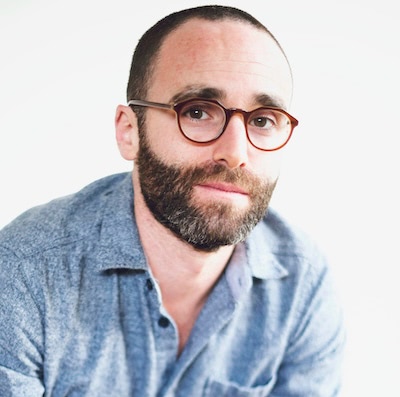
CEO, Unreasonable Group
About This Episode
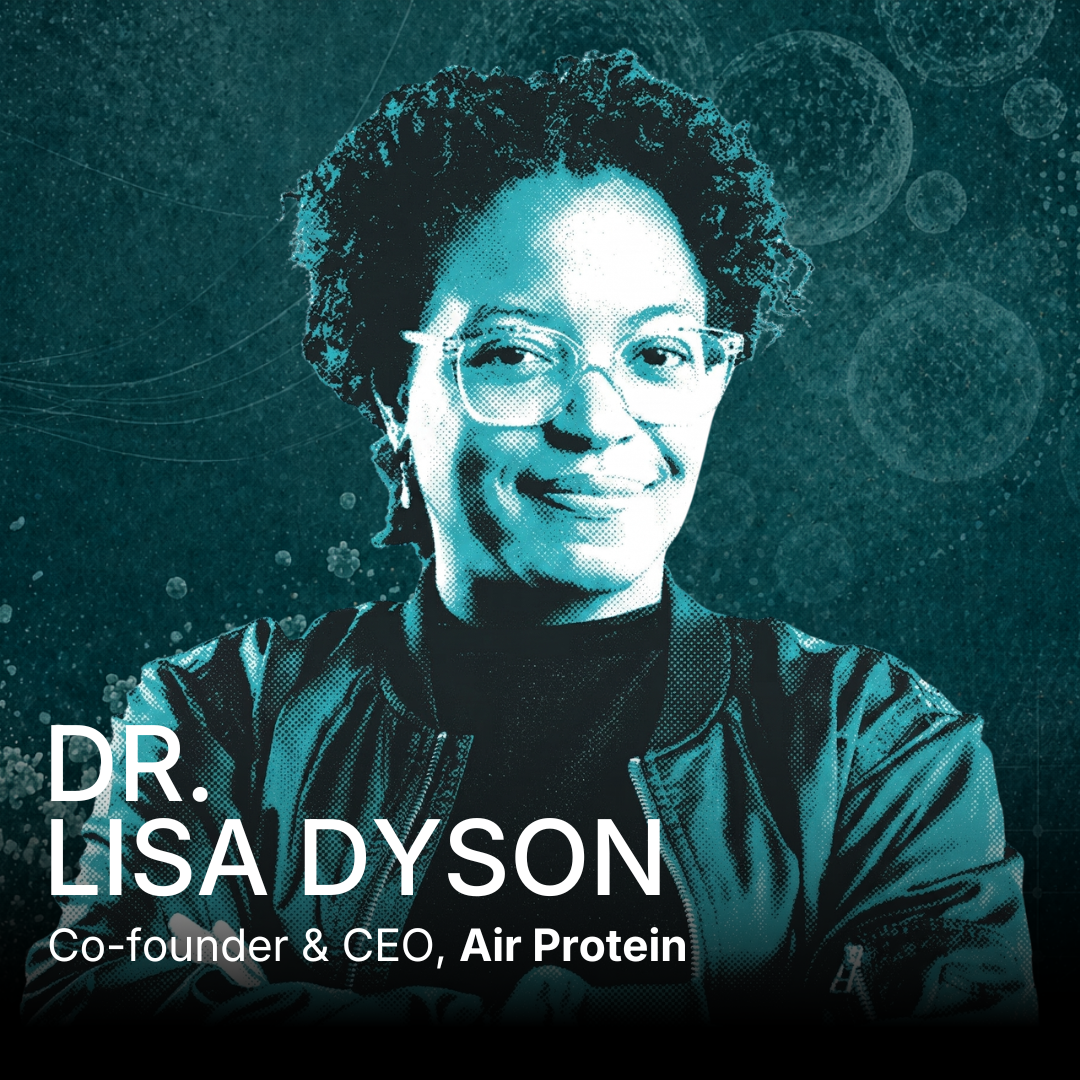
Featured Guest
Dr. Lisa Dyson
Co-founder & CEO of Air ProteinDr. Lisa Dyson is the co-founder and CEO of Air Protein, a company that makes protein and other food ingredients from CO2, water, and energy using technology originally developed by NASA during the Apollo program. Lisa holds a PhD in theoretical physics from MIT, where her thesis covered rotating black holes, cosmology, and time travel. Air Protein is acquiring Kiverdi, combining a portfolio of over 250 patents globally. She joined the Unreasonable Fellowship through the Unreasonable Impact program, run in partnership with Barclays.
Key Takeaways
Air Protein uses cultures similar to yogurt starters. Instead of milk, they feed on CO2, water, and energy. Protein comes out in hours, and the same platform can make ingredients for everything from cereals to personal care.
A soy farm the size of Texas produces the same protein as an Air Protein farm the size of Walt Disney World. No arable land, orders of magnitude less water.
NASA developed this technology during Apollo to feed astronauts, then shelved it. When Lisa called NASA to revive it decades later, the scientist on the other end said he could cry. He had never thought anyone would pick it up.
Lisa's MIT PhD thesis was on rotating black holes, cosmology, and time travel. She applies the same habit of questioning what's assumed to the most mundane part of daily life: what's in a grocery store.
Lisa went to 14 schools by age 14. At her 14th, she woke up at 4 AM to commute across town and stay through graduation. She credits that decision with teaching her how to see a path others can't.
Barclays invested in Air Protein's Series A and is the kind of institution the industry needs to scale. Mass transformation of ingredients means $500 million facilities, and Barclays is an infrastructure financier at that scale.
At Lisa's first Unreasonable Impact Program in 2017, a mentor told her she was carrying the weight of the world and to let her team inspire her instead. She says it changed how she leads.
Chapters
Full Transcript
Daniel Epstein (00:00)
In today's podcast, we're going to get to hear the story of an Unreasonable Impact fellow, Dr. Lisa Dyson. Now, Dr. Lisa Dyson is no ordinary individual. When we think of unreasonable people setting out to define progress in our time, she is the epitome of that type of person. She has a PhD in theoretical physics, diving into her own thesis on time travel, quantum mechanics and black holes. And she's taken that same intellectual rigor and curiosity and applied it to the future of our food systems, to the future of supply chains in the creation of her venture, Air Protein. Full disclosure, Unreasonable has invested into Air Protein. We've had the privilege of being able to do so, myself and the team, we've had the privilege of supporting Lisa ever since she entered the Unreasonable Impact Fellowship in 2017. And it feels like in so many ways she is wielding a technology that is of the science fiction world but is non-fiction in of itself. It is remarkably real and the potential of it is staggering. She can decrease the need for land consumption or use by 99%, significantly drop the need to use water in the production of ingredients, including protein. And she is able to do what would normally take years, she's able to do in hours. She is looking at orders of magnitudes of efficiency that we could only dream of. We're talking 10,000 times more efficient processes for production of protein and novel food ingredients. So in this conversation, we're going to learn a little bit more about Air Protein. We're hopefully going to learn a lot more about Dr. Lisa Dyson and her story, what drives her, what motivates her. And towards the end of the conversation, we're going to find ways that we can engage, ways that we can become a part of the solution with Lisa. So, without further ado, I hope you enjoyed this conversation.
Daniel Epstein (1:57)
I just want to begin by saying thank you for making the time. I know it's your most valuable asset means the world to me and anybody tuning in to get the chance to get to know you a little bit better and to get to know your story.
Lisa Dyson (2:07)
Thank you, Daniel.
Daniel Epstein (2:09)
So with that – of course Lisa. I think we're going to – I'd like to start by demystifying what it is you're doing, especially for those who haven't heard about it. I've had the privilege of working with you and knowing you now for nearly a decade, which is such a gift. And I'm still wrapping my head around the potential of the future that you're pulling into the present with your work at Air Protein and Kiverdi. So I'd love just to start there, which is can you describe to me the problem it is that you're setting out to solve and how you're going about solving it?
Lisa Dyson (2:44)
I can. And Daniel, so wonderful to be here. You are my favorite entrepreneur of them all.
Daniel Epstein (2:51)
Feeling is mutual Lisa.
Lisa Dyson (2:53)
Awesome, thank you. So we make protein from air, but we do more than that. We can make with this transformative technology. Essentially it's an air to X technology and it's based on NASA research where in the 1960s and 70s the they asked the question, how can we feed astronauts on a long space journey if we're going to go to Mars or beyond? And one of the ways of doing it was to leverage the – basically the air that the astronauts were breathing out which is rich in carbon, CO2 and then capturing that and then feeding it to cultures that can consume that carbon, turn it into something of value like a nutrient, eat that nutrient and then breathe out that carbon in the form of carbon dioxide. And so that was a way to make a closed loop culture, carbon cycle to sustain life on a voyage to a distant planet. So it was an interesting idea. They put it on the shelf when the Apollo space program ended. We saw it, we thought it was amazing. How much could you do with this? And we took it off the shelf and we started working on making protein first, but many other things from air.
Daniel Epstein (4:02)
Okay, still sounds like science fiction and not non-fiction. When you say cultures, can you describe what you mean by that? And then, so in essence you're saying from CO2 that is the thing we exhale, so air, you can create almost anything and you started with protein and it's because of how these cultures ingest it. Is that correct? And can you explain what those cultures really are? And then also just a little bit more about what you've done in the space of protein to date.
Lisa Dyson (4:30)
Absolutely. The cultures are very much like your yogurt culture that you may have in your refrigerator. So yogurt that's made out of cultures, cheese that's made out of cultures. In fact there's a lot of foods that we consume that are made from cultures essentially. And so think of something like a yogurt culture and instead of feeding it milk, we feed it air, water and energy and it's able to grow, grow very quickly and create a really nutrient dense ingredient essentially. And then with that ingredient, which is what we make, we make ingredients that are really rich in nutrients. You can make a range of things, everything from bars to pasta to breads to cereals. Essentially, when you go into a grocery store, on the edges you have your fruits and your vegetables and maybe your meat and your seafood in the back. But the bulk of the grocery store are products, mainly foods, but products with ingredients. And if you're a big ingredient manufacturer, then you're looking for – or if you're a big food manufacturer rather, then you're looking for ingredients that can give you the performance that you need. Maybe it needs to foam really well, like you have with an egg white or it needs to hold oil or water so that whatever you bite into is going to be moist and not separate the water and oil needs to hold it. So there's a lot of things that these ingredients do. And it needs to give you the flavors you want or be neutral in flavor so that you can add flavors. Needs to be cost effective and it needs to be good for the planet. And we are commercializing a way to make ingredients that can transform the food industry in that way that meets those criteria.
Daniel Epstein (6:09)
And can you talk a little bit about, comparing this to traditional methods – let's focus on proteins then, with Air Protein, compared to traditional methods of producing proteins that we can eat, how much more efficient is this?
Lisa Dyson (6:23)
We can make protein in a matter of hours. And that's not something that's done typically in our food today. So just air, water and energy and these cultures. And in fact the process itself you start it up within a matter of hours, but then it's continuous. So you're making protein day and night, rain or shine. Most recently, a source of protein ingredients that we have in our industry, eggs. People, companies buy egg whites, egg powders, all those types of things to make baked goods, cereals, pasta, lots of things with. And they saw a huge disruption with avian flu very recently. It's been going on for quite a number of years. It's been going on for many years where there's occasional outbreaks, but hundreds of millions of hens were culled in the process of trying to eradicate this avian flu outbreak most recently. And as a result, the availability, if you think if you're a baker or if you have, you know, certain products that need egg ingredients, you were out of luck, essentially. You had to pay more for the eggs that were available. We had to import eggs and that was passed on to consumers. And so people saw prices go up in the grocery store, not just for the eggs they bought but for the products. The CPG, the Consumer Packaged Goods, they call them. All the products that are in the middle of the grocery store. The bulk of this grocery store, really the prices were going up. That's just one example of many that the supply chain that we have is quite volatile and one of the key paying points for big companies out there that have a lot of products on the shelves of our grocery markets is how can I get ingredients in a way that's more sustainable and sustainably priced, sustainably sourced from a perspective of I can actually buy this when I need it and good for the planet.
Daniel Epstein (8:14)
Yeah, let's talk about the good for the planet a little bit. You know, you mentioned you can stand up new proteins in hours, where if we compare that to protein from an animal, that would of course be years it's life cycle in that sense. But can you talk about the other advantages from an environmental perspective?
Lisa Dyson (8:31)
Yeah, there's a number of good things about this approach because you're able to grow so fast and it's very efficient. You're not growing bone and other things, you know, or in the case of plants, you're not growing leaves, you know, you're just growing the actual nutrient. And so you don't need as much land and you can grow, you can scale this vertically and not just horizontally. You in fact, a significant fraction of the land, it doesn't require any arable land whatsoever. So you can deploy this anywhere on the planet, as long as you have air, water and energy. And it doesn't require that much water. We're talking about orders of magnitude less land, orders of magnitude less water, to produce. And it's very efficiently going directly to the nutrient that you're trying to produce.
Daniel Epstein (9:24)
Is it fair to say, when you say orders of magnitude, is it fair to say 99% less land use, 99% less water consumption? Like what number would you speak to there?
Lisa Dyson (9:35)
Yeah, one of the comparisons we like to give is that it would take a soy farm the size of Texas to produce the same amount of protein that you would get from an Air Protein farm the size of Walt Disney World. So it really is significantly less land.
Daniel Epstein (9:52)
Yeah, okay, now that we have a little bit of a baseline understanding now, Lisa, I'd love to go back into your story because although this technology is incredibly compelling in what you're doing, the potential of the food supply chain and how we even think about food, it's so great. Your own story, I believe, is just as compelling. And I'd love to go back. And we can go back to wherever you want to start. This could be Genesis. This could be childhood. But, just the story of Lisa, and how your upbringing informed who you've become to be able to be leading such a breakthrough business today.
Lisa Dyson (10:28)
Oh, very interesting. Where do I start? What I would say is that my dad was an entrepreneur, and so I did see him have ideas, and he was very creative man and be able to rally people and organize people to make things happen. I saw the highs and lows of entrepreneurship, so that's definitely a part of my story. I'm a scientist by training. I've always loved science, and I always want to understand how the world works and study physics as a result of that and other things as well. That's a part of my background. I partially because of my dad being an entrepreneur, I wanted to understand the business world. So I ultimately went to the Boston Consulting Group, to be a business consultant. And I'll tell you a funny thing there. You know, my very first project, you know, I show up with a, you know, PhD in physics, and they put me on a team to help a company develop its international expansion strategy. And I was like, don't you want to give me a spreadsheet? But what they knew and what they know is that, you know, you can apply the scientific method to anything, including business problems, and really structure, have your hypothesis and test it out and do it in a really rapid way. And if you're outside of the industry, then you can bring different thinking to the problem, to unstick places where people are stuck and to perhaps create opportunities to move faster, go bigger, do things that haven't been done before. So that was an interesting part of being at the Boston Consulting Group. Those are a few things about me.
Daniel Epstein (12:08)
Yeah okay, I want to go deeper on a couple of those because your history in academia is pretty mind blowing. And it's very interesting to me that you've ended up in the space of the future of food. Can you walk us through just what you really studied? You know, what your degrees are in?
Lisa Dyson (12:24)
Well I studied math initially. My first two degrees were math and physics at Brandeis. And then I got a master's degree and the title of the degree was Quantum Fields and Fundamental Forces.
Daniel Epstein (12:36)
Love it.
Lisa Dyson (12:36)
And that was Imperial College, University of London. And then I got my PhD in string theory, at MIT. And that the title of my thesis was, well, my thesis was about rotating black holes, cosmology and time travel.
Daniel Epstein (12:52)
Yes it was, okay we're gonna go there but keep going, but we're gonna go there. And then what?
Lisa Dyson (12:59)
But I actually want to tell a different part of my history just because. Which is that I actually went to 14 schools growing up.
Daniel Epstein (13:06)
You went to 14 schools?
Lisa Dyson (13:08)
I did. I moved a lot. My parents, they were both divorced and then they moved and there was for various reasons, I ended up going to 14 schools. And so early on I had to decide how I was going to navigate that. Was I just going to – And in fact, I entered my 14th school at the age of 14. And when I entered that school, I made a decision. I was like, no matter what happens in my home life, I'm going to figure out how to stay at this school until I graduate. Like that was – I did. I had to wake up at 4 o'clock in the morning to get on a bus to go to the school, to go from, you know, my dad's house that I just moved into to the school that I vowed not to leave. So it was a moment where I learned resilience and I learned how to navigate complexity and how to see a future that might not be obvious because I did move a lot still, from 14 till I graduated, I did move a lot, but I figured out how to make it work. And of course, with a lot of support of others I'd have to say that as well. No one is on this journey alone. And it was support of others that helped me get through that.
Daniel Epstein (14:19)
Yeah okay, so 14 years old, you're in your 14th school, you stay there all the way through high school, you then kind of bounce around through academia, studying potentially the most fascinating things to my heart, which is the very nature and fabric of reality, which I would love to explore with you. But before we go there, I am curious. I mean moving around that much, 14 schools, by the time you're 14 years old, that is uncommon. And I imagine that would really shape you. Do you know how that has shaped you into who you are today?
Lisa Dyson (14:51)
Well, it's the only life I know is what I'll start by saying. And then I can just talk about who I am and how that might be related to that, which is part of that whole story of creating your future, making a decision and then figuring out what to do to make it happen. Including waking up at 4 o'clock in the morning, which most people in high school aren't doing.
Daniel Epstein (15:13)
By choice. Yeah, no one.
Lisa Dyson (15:16)
Yeah by choice. Yeah. They weren't doing it unless they were in some, you know, highly competitive sports maybe, but very different reason. So I think that was one of the things that it definitely created within me and the ability to see a path that isn't the obvious path.
Daniel Epstein (15:31)
That's right.
Lisa Dyson (15:31)
And to think outside the box to – Once you chart that path, figure out who your allies are who can support you, how you can make it happen. And just be determined and don't let anything stand in your way. Be unreasonable.
Daniel Epstein (15:46)
You've certainly done that without question. How, you mentioned earlier that the fundamental technology that's underlying all of this was inspired by technology that NASA had come up with in the Apollo era of the program. How did you even discover this technology?
Lisa Dyson (16:03)
Myself and Dr. John Reed, my co-founder, we were both interested in doing something that was positive in the world that would have an impact. And we were looking at essentially the field of biomanufacturing. One of the things you're doing is you're converting carbon from sugar into other forms of carbon that – whether it's food or it's materials or what have you. We were looking at that, investigating that and we had this idea that if you can use CO2 as a fundamental building block, you can create any organic molecule essentially. And started really investigating who was working on this. And there was only I don't know, maybe two or three companies that had anything remotely related to what we were thinking about, but not working on this exactly. So we looked at what was happening in this space and there wasn't much. So we went to the literature, we went to the research, we went to, you know, he's a PhD in – He has degrees in biology, engineering, material science and math.
Daniel Epstein (17:05)
That's right.
Lisa Dyson (17:06)
So he's kind of all around. And so we were looking at what others had been doing previously and we discovered the NASA work, and this was something that could be transformative if we could make it happen here on Earth.
Daniel Epstein (17:18)
That's right.
Lisa Dyson (17:19)
And that's what we started working on.
Daniel Epstein (17:20)
That's right. And was this while you're at – A lot of people who are tuning into this, they probably have a career and it may look like something like BCG. Most of them possibly want to make a positive dent on the world or on the trajectory of where we're heading. But oftentimes don't know where to start or even how to start. How did you make that leap forward from working at BCG towards saying okay, no, I'm going to start my own thing and it's going to be on the very fringe of what's possible with science and technology. And where did you get the courage to be able to do that?
Lisa Dyson (17:54)
What I would point to there is my dad is seeing my dad have all kind of ideas and the highs and lows of the entrepreneurial journey. He went through all of it. And I think seeing that is something that gives one that he had – he modeled resilience for me, I guess I'll say it that way. He modeled resilience. And then I'd say even that childhood, deciding that I was going to, having navigated 14 schools first of all and then making that decision, that also was important for me to decide that making a jump isn't that big a deal. It's fine. You're going to be fine.
Daniel Epstein (18:35)
Yep.
Lisa Dyson (18:35)
It'll either happen or it won't and that's fine. You'll do the next thing afterwards. So I think I do have that in my background, just not needing the next thing to be the thing. And the final thing, knowing that nothing will happen if you don't take the risk and if the risk is worth it, then jump.
Daniel Epstein (18:54)
Yeah.
Lisa Dyson (18:55)
I think my childhood and seeing my dad taught me that it's okay to jump and take the risk.
Daniel Epstein (19:01)
Yeah well said. Okay, so you make the jump with your co-founder. Did you just reach out to NASA and say, "Hey, can we use this technology? Can we use these cultures?" Did they give you a license? Was it already publicly available? How did that work? And then what did the start of the company actually look like?
Lisa Dyson (19:19)
We did reach out to NASA and it was very interesting. One of the first conversations we had with them, the scientists on the other end said, I could cry. This work – because he had seen this work in his very, very early years at NASA, but then he also saw it stop. And he was excited that somebody was thinking about reviving this. So that was an amazing kind of start to this. But ultimately they didn't complete the mission. They didn't succeed in making food from air using cultures. And they did a lot of great research, a lot of technical research. A lot of you know, things were uncovered, invented, you know, so it was really great. We were able to pick up where they left off and then actually kind of invent some stuff to make it happen. And that's what we did. We picked up where they left off.
Daniel Epstein (20:09)
Brilliant. Okay, and then how did starting the company look and feel? And can you take us back to maybe the first few years.
Lisa Dyson (20:16)
Well I'll start with our initial – so Dr. John Reed and myself, we initially decided to build a company taking CO2 and we weren't looking at food initially. We were looking more broad. And Ori and Shram Sassen, they were our first investors who believed in us. And I really have always appreciated them. They've been through our sides through this whole journey. And what ultimately happened is we were making – We ended up developing a platform, a platform for converting CO2 into a range of molecules, everything from oils to biodegradable polymers to amino acids, and beyond. And Kiverdi ended up being a deep tech platform, developing this carbon transformation platform, this deep tech research firm essentially, that has worked with many companies over the years to demonstrate the efficacy of developing products with CO2 or air, as a fundamental building block.
Daniel Epstein (21:24)
Yep.
Lisa Dyson (21:25)
So that's what Kiverdi has been doing. And then ultimately this – you can think about this tech company that saw this opportunity in meat. And investors came to us and they were very interested in alt-meat specifically. And we created Air Protein to really focus on scaling up one of the Kiverdi innovations to tackle the alt-meat opportunity.
Daniel Epstein (21:48)
Yeah, that's Air Protein, of course.
Lisa Dyson (21:51)
That is Air Protein. Now that was Air Protein because alt-meat has taken a turn.
Daniel Epstein (21:57)
Yes, it has.
Lisa Dyson (21:58)
Yes, and the market was, you know, kind of, it was high growth at the moment. Beyond Meat had just gone public and Impossible, all these companies out there and investors were very interested in that. And so we built that initially. And since then the alt-meat sector has taken a turn for the worse because it's not really ready for primetime essentially. There's still companies out there but it's not ready for the high growth that was envisioned. And happily, Air Protein has been able to leverage the core technology to be that ingredient company that we talked about earlier. So Air Protein is in the process of actually acquiring Kiverdi, merging with Kiverdi to now have that full tech platform, that full tech stack that Kiverdi has been working on all these years. And it's a combined portfolio of over 250 patents globally, about 50 of them granted in the U.S. and beyond. It's an estate that has proven you know, everything. Obviously, Air Protein has been focused on food and in the food space not just, you know, the alt-meat, which is where Air Protein began, but everything from bars to pastas to, you know, what are the many things, cereals, spreads, you know, just many things that you find in the grocery store. So that is improving out. And in fact, we signed our first large – well yeah, when we signed our first large offtake term sheet, that was a celebration moment where you know, if we build it, will they come? The answer is not only are they interested, which we've been working with many customers, they're interested. But now we have these large offtake agreements that we're either signed or we're negotiating now. And so that's primarily in food, but with the full tech stack we'll be able to go into personal care. Kiverdi has worked with large companies that I won't name names, but large actually I will, I'll name all the names that are public. Yeah, Kiverdi's worked with Procter and Gamble, Kiverdi's worked with New Tracho, which is an aquaculture feed company. Kiverdi has worked with a number of other companies to really demonstrate certain that this tech platform can make certain molecules that are of interest in these other industries. So that's going to be incorporated in addition to what Air Protein has been focused on.
Daniel Epstein (24:18)
Okay Lisa, I know we skimmed over this. I also don't believe in coincidences. So I don't believe it was a coincidence that you studied string theory and theoretical physics and black holes and therefore the very nature of reality itself. And now you know, the work that you're leading is really bending our conceptions around what is possible. And you're doing it, you're doing it in real time and in the market and with commercial scale. Now I am curious how you feel the threads of what you studied are woven into what it is you're doing now.
Lisa Dyson (24:55)
That is an interesting question and I love the how you start that you don't believe in coincidences. I think I'm going to try to adopt that in my life and see where it takes that perspective. Well, I would say that questioning when – string theory is not obvious. Anybody can study string theory if they want to. They're not just – not everybody wants.
Daniel Epstein (25:16)
Not everybody wants to.
Lisa Dyson (25:18)
But that was the big secret that I learned but that anybody can literally do it. But when you – But the principles are not things that match our day to day living. And so I think that you start with the problem that you're trying to solve. You can start in many places, but if you start with the problem you're trying to solve, then understanding that there's multiple ways of coming at it is something that both Kiverdi and Air Protein really represent and we were trying to build carbon molecules in a different way. And what if you started with CO2? Carbon is in – We're carbon based life form.
Daniel Epstein (25:56)
Yes.
Lisa Dyson (25:56)
It's carbon all up in our body, up and down our body, right?
Daniel Epstein (26:00)
Yeah.
Lisa Dyson (26:00)
And carbon's in our food. That's how we get our carbon. Carbon's in, you know, many things in my – the fabric here in my house and many things in my house here. And so if we think of, think differently if CO2, carbon, if that's the fundamental building block working, how can we start with CO2? And of course you need energy, but CO2 and energy to make these molecules in a way that, where you can make them anywhere, you're not constrained by whatever limited resource you have available now, where you can do it in a way that is positive for the planet as we continue to consume, reducing consumption that's not my field. That's someone else's department. My department is if we're going to consume, how do we consume better? So I think that, that a theme. If we go back to my. How do I not have to change schools anymore even though I'm going to move, you know, many more times and miles away and with, you know, how do I figure out how to understand how quantum mechanics and general relativity actually come together? And they – There isn't a contradiction that you get within general relativity. There's a lot of contradictions like time travel. That's direct result of the equations. So how do you solve that? You have to think differently. And then now how do you make food in a way that is faster, doesn't require acres and acres of land, new lands, the land we have – I mean I love spinach, so I want to keep eating that. But as I want to eat more, as we have more and more, we're over 8 billion people on the planet. As that number continues to grow, how do we feed more people? How do we do it in a way without clearing more land, how do we be regenerative in our approach? So it's just more taking the problem and then looking at in this case the science that's underneath it and think differently than the standard way of thinking. And it was something that the NASA scientists happened to do in the Apollo space program and we stand on the shoulders of those giants.
Daniel Epstein (28:03)
Well said. You know, I've had one of our mentors in the Unreasonable community refer to you actually as a time traveler not knowing, I don't believe that you actually had a PhD thesis that explored the nature of time travel. But it does feel like in many ways that you've – it's so interesting because this technology comes from the past or the original research at NASA actually comes from the past. But it feels like at the same time you're reaching into the future and you're pulling it into the present. I'm curious what has been most difficult about this journey?
Lisa Dyson (28:41)
Huh?
Daniel Epstein (28:42)
Because this does not sound easy, Dr. Dyson.
Lisa Dyson (28:45)
Yeah well, you know what I've learned and what's obvious is that anytime you're creating something new, like a new industry, then it's not easy, because people don't understand it, it's causes them to have to maybe behave differently. In this case, we would be changing supply chains, disrupting supply chains across the board.
Daniel Epstein (29:07)
You're bringing them to your front door, in essence.
Lisa Dyson (29:09)
That's right. You can manufacture anywhere. And I mean now what companies do is they go to where the resources are, they make a bunch of stuff and they ship them to where they're needed. Whereas with this technology you can make the resources or make things where you need them. You know, just air, water and energy. And that's pretty, that's in most places. So what I've learned is how challenging it is to start a new industry. And I've also discovered the excitement of starting a new industry and seeing others that see, in particular as you find those forward thinking leaders within organizations that can also see the future. They see the problems and they see that there's a unique novel way to solve it in a breakthrough way. It's just so rewarding to be able to partner with those people. It's rewarding to have so many advisors, people who have fantastic careers that they've had and they see this new different thing that's just – that's a building on their experience and their skill set to do something totally new. And just being surrounded by those people, those advisors and mentors to have a team and to so many alumni of our organizations and the current team members that have brought their experience, their passions to come together to be a part of this all that's been amazing. So I'm honored to have been on this journey to date and honored to still be on it.
Daniel Epstein (30:46)
Have you ever, in the duration of this journey wanted to throw the towel in? Felt like this was just too hard or this was not going to work? Or has belief pulled you through from, you know, start to finish?
Lisa Dyson (30:59)
You know, do I want to make a joke now or how do I.
Daniel Epstein (31:01)
No, let's be real Lisa.
Lisa Dyson (31:04)
I mean, I don't know. I mean, maybe there's some entrepreneur. So I definitely wanted to throw in the towel. Of course there's been moments that are hard. You know, there's many moments of thinking, is this the right thing for me to do with my life or with this moment or the next few moments. That's happened many times. And yet I persist.
Daniel Epstein (31:26)
What keeps you persisting? Do you know, do you know what's pulling? I mean, other than the stubbornness.
Lisa Dyson (31:34)
Had to wake up at 4am.
Daniel Epstein (31:36)
And that's there. And that's both in your genes and you were raised through that sounds like with your father. And then what you experienced yourself when you were 14. But do you know, what is it that gives you so much determination? Is it a sense of responsibility? Is a sense of opportunity? Is it something completely different? I'm just curious where the deep "Why" is that gives you the permission to accept this invitation to do something that is so challenging?
Lisa Dyson (32:09)
Yeah, what I would say is that I want my work to have meaning. And once I – at the very beginning of discovering what the NASA scientists were working on, I was amazed by the possibility. And, at that moment I thought, if this could happen, if we could do some of the things that are potentially possible, then it could be very transformative.
Daniel Epstein (32:34)
Yeah.
Lisa Dyson (32:35)
And the reason why I continue is because I believe so much in the technology and this will be commercialized. This will be the thing, that's normal. This will be quite normal sometime from now. And the only question is when. And so I'm excited to be a part of the team making it so.
Daniel Epstein (32:53)
That's right.
Lisa Dyson (32:54)
Being, you know, me and John Reed, being early in telling the world that this is possible and showing that it's possible. And so it's just more a strong belief in being able to make the things that we consume, the things that we have to consume, from food to things we want to consume, beyond food, other things, to make them in a way that's resilient, that is affordable, that meets the performance that people want and are looking for and that is positive for the planet.
Daniel Epstein (33:31)
Do you feel like – and this may be a false dichotomy, but I'm curious the motivation, almost like the feeling tone of it. Does it feel like you're being pushed to make Air Protein and Kiverdi realize the full potential, or does it feel like you're being pulled. And it may be another way to think of it, Is it a sense of opportunity around possibility? Use your language. Around a possible future that we could all live into, or is it a sense of responsibility that the current way that we're going about feeding the planet won't be sustainable? So I have to do something different. Like, dude, I don't know if I'm answering that, asking that question correctly, but I'm curious if that resonates and which one for you feels like the driver or the fuel in the tank for you.
Lisa Dyson (34:13)
What I'd say is it's been a push and a pull throughout this journey. Yeah, and some of it has to do with where I am in life and if I am – I remember one of the first. I remember the first Unreasonable event that I was at, the Unreasonable retreat.
Daniel Epstein (34:30)
What year, was that again? I should know that it was 20. I don't know. I think it's 2017. I think it's. I think it's 2017.
Lisa Dyson (34:40)
All right, we'll find out. One of the mentors said to me, Lisa, it looks like, it feels like you're carrying the weight of the world on your shoulders. It feels like you think that you have to inspire your team in particular. One of that was one of the things he pointed out. He said, let your team inspire you. And I went back after that event and I saw, like, I saw people. I don't want to say for the first time, but I kind of want to say for the first time because I stepped away from the obligation and the thing that was driving me to and went into the appreciation.
Daniel Epstein (35:15)
Well said.
Lisa Dyson (35:16)
And the amazement. And that's really why I'm so, just honored and grateful to have so many people, including you, Daniel, including the Unreasonable family. This Unreasonable hold the whole network, including other advisors, mentors, all the team members, all the investors. So am I resisting or am I going with the flow of things?
Daniel Epstein (35:37)
Amen.
Lisa Dyson (35:38)
This is the journey I'm on, and I'm compelled to be on this journey. And it is a ride when I am in sync with all those around me.
Daniel Epstein (35:48)
Very well said. It's a lot more joyous when instead of fighting the current, you're moving with it. And maybe you're putting your oar in to kind of orient this direction but you're certainly not swimming against the damn thing because that's when it gets really hard.
Lisa Dyson (36:03)
And there's so many wonderful forces like that are just propelling us forward. And when I'm seeing them paying attention and being a part of it and I mean, I'm just amazed with the people that I'm surrounded by.
Daniel Epstein (36:16)
That's right. As you know very well, one of the things we strive to do at Unreasonable is not just support the world's most disruptive bleeding edge entrepreneurs with the most promising solutions to a better future. It's also to align some of the world's largest and oldest institutions with this new reality. And you're one of the very rare people and individuals in the Unreasonable Fellowship who's been both through Unreasonable Impact, which we've done in partnership with Barclays and then Unreasonable Food in partnership with Mars. And I'm curious, what has the working relationship been like for you with these two megalithic organizations? Barclays, over 330 year old financial institution and Mars is one of the largest private companies on Earth.
Lisa Dyson (37:01)
It's been great.
Daniel Epstein (37:03)
But be real, Lisa, tell us more.
Lisa Dyson (37:05)
With Barclays, I'm very honored that they were an investor in Air Protein and in Air Protein Series A. And I get the privilege of working with Matt Bennett, you know, regularly, as a result of that and you know, over at their venture fund.
Daniel Epstein (37:23)
Yep.
Lisa Dyson (37:24)
So that is – Matt is very, very detailed, very specific. We are better for him, having him as he combs through any information we give him and gives us lots of great feedback, makes lots of great connections. And Barclays in general, we're trying to transform or we're, we're in the process, not just trying, we're in the process of transforming the way we make food and the way we make ingredients specifically. And so you know, there's all the scaling steps but when you're doing mass transformations, you're doing $500 million facilities.
Daniel Epstein (37:56)
That's right.
Lisa Dyson (37:57)
And needing that infrastructure financing. And that's exactly the type of thing that Barclays does. So Barclays invests in companies like us because we can be their customers in the future as they're building out this infrastructure and deploying facilities all over the world.
Daniel Epstein (38:12)
That's right.
Lisa Dyson (38:13)
So that's, it's great to be in that network.
Daniel Epstein (38:15)
Yeah.
Lisa Dyson (38:15)
So I'll just start there and then with Mars. I love just what the Mars organization stands for.
Daniel Epstein (38:23)
That's right.
Lisa Dyson (38:24)
And you know, just having a positive impact on the world is something that is embedded in what they want to do. Their concept of mutuality and so bringing mutuality, to the work that they do, the partnerships that they have, the you know, strategies that they developed is something that I've seen that's been amazing and I look forward to what we do together there. I don't know what I can say here about that, but I look forward to. I'm honored that we were one of the Unreasonable Food Fellows that they selected. So I'm honored about that and to have the opportunity to work with them about the problems that they're trying to address as they are trying to bring in new ingredients for tomorrow as they continue to build. And they just had this acquisition. Kellanova so one of the world's, maybe the largest food company in the world. I'm not sure. But, yes. So the largest food company in the world now. And it's one that's committed to unreasonable opportunities to make the food system the best it can be.
Daniel Epstein (39:27)
Yeah, they live by one of my favorite quotes, which is "The future we want starts with how we do business today." And I feel like you are the epicenter of the intention behind that quote. So let's talk just a little bit about the future. We're going to bring it to the present and then we'll wrap this up. If we look forward, Lisa, let's say a decade from now, Air Protein and Kiverdi are realizing the promise and potential of what it is that you have. What does the world look like?
Lisa Dyson (39:54)
One decade from now.
Daniel Epstein (39:56)
We'll time travel.
Lisa Dyson (39:57)
The affordability is an important aspect of what we do. Making ingredients in a way that's cost effective.
Daniel Epstein (40:05)
That's right.
Lisa Dyson (40:06)
Inflation has been a huge issue recently. Consumers are seeing that at the stores. So having a food system that is affordable, less or, you know, just totally removing maybe the supply chain disruptions that we see. With the current way of making food, I don't want to say totally removing because we have those ways of making food. I will continue to eat my apples.
Daniel Epstein (40:33)
That's right.
Lisa Dyson (40:33)
But, as we look at first protein ingredients and then other ingredients in the future, decoupling it from the volatility of ingredient commodities and in that way companies and CFOs will be able to predict their future earnings. Essentially, you know, they can – Here is the price I need to pay for these ingredients. And really products that consumers will be voting with their dollars, their wallets, essentially buying things that are good for the world, that are traceable. Our process is fully traceable and that are, you know, made with pure nutrients in mind. Highly nutritious, highly, you know, all the things that you look for.
Daniel Epstein (41:14)
That's right.
Lisa Dyson (41:15)
Digestibility, whatever things you're looking for, you kind of check those boxes. So consumers having more options that meet their criteria and being able to make those choices at the store, at grocery stores. Yeah, so that'll be a part of the difference. And then, you know, carbon mitigated, land not cleared. In our facility, we call it our air farm.
Daniel Epstein (41:38)
That's right.
Lisa Dyson (41:39)
If you go around to the different rooms, like if you go to a conference room or a different area, like the kitchen, everything has a name. And the team, I mean, I had nothing to do with it. I just, you know, this is something that they did. They developed. Every area is named after a species that is either extinct or endangered because of things like deforestation and climate change and all that. And so hopefully reforestation.
Daniel Epstein (42:04)
Yes.
Lisa Dyson (42:04)
And, you know, reduction in, you know, CO2, in the atmosphere and those things.
Daniel Epstein (42:12)
Yeah. I think most people don't realize that more than half of the world's arable land is dedicated to agriculture. And most of us don't realize that more than a third of all the water that's consumed significantly more is dedicated towards the production of food and the ability to minimize land use by actually significantly more than 99%. And to do so in a way where the input ingredient is therefore carbon negative because it is CO2 itself or air itself, and to do so, being able to use clean energy, it's just, it feels like if any future is possible and you represent, you know, a note to a song that we could all be playing and listening to, it's one of the most beautiful notes that I could certainly imagine. So for those who are tuning in and myself included in this conversation, if we want to become a part of the solution, if there's a way for us to play with Air Protein and Kiverdi and everything that you're building, you know, what are ways that people can get engaged? What are ways that people can help?
Lisa Dyson (43:20)
Awesome. Well, contact someone who knows me to get in touch with me directly.
Daniel Epstein (43:24)
Yep, you can contact me.
Lisa Dyson (43:27)
You can also send, you know, [email protected], [email protected]. Both of those will go to us. As we grow, we'll continue to welcome investors to be a part of our journey. We'll welcome advisors to be a part of our journey. At various points, we have different people that we're bringing onto the team as a part of this journey as well. So just contact us and let us know where you can plug in.
Daniel Epstein (43:51)
I love it, Lisa. Well, I'll say, it's been almost a decade since we've known each other, and to be on this journey, both having you as an Unreasonable Fellow, having the privilege of being able to invest into Air Protein and you and your future and the future you're creating, having the ability to bring you back as a mentor as well, it's been one of the biggest gifts of my career. It's had the blessing of getting to know you more, be able to support your efforts. So thank you, Lisa, Dr. Dyson, for all that you do, and most importantly, for who you are and what you're showing is possible. For anybody who's looking and saying, hey, I want to make a dent on something that's really hard, you're showing them that truly anything is possible just by being a living example yourself. So thank you. I know we're at time. I'll leave you to it, on this beautiful Friday afternoon and I hope you enjoy the rest of the week and the weekend ahead, Lisa.
Lisa Dyson (44:45)
You know, Daniel, I'm going to say thank you so much for that. But I'm also going to add that I want to thank you. Thank you for being an investor, as you said, but also just bigger, for creating the Unreasonable Group and for bringing companies like ours, entrepreneurs like myself, into this network and building such a wonderful network and letting us be a part of your world and your life. Letting me be a part of your world and your life. I really appreciate that.
Daniel Epstein (45:12)
We're a decade in. We're just getting started, Lisa.
Lisa Dyson (45:14)
Awesome.
Daniel Epstein (45:15)
I know we're going to continue to have fun long into the future. And next conversation, I want to talk about black holes and time travel. I can't believe we didn't get to get there. But that is the next one. And until then, sending you all my best, Lisa. Thank you so much.
Lisa Dyson (45:28)
Thank you.
Daniel Epstein (45:29)
Ciao.
Lisa Dyson (45:30)
All right, bye.
Never Miss an Episode
Subscribe to Unreasonable Stories and join thousands of listeners learning from the world's most impactful entrepreneurs.