She Grows Biodegradable Materials Inside Bacteria
with Molly Morse
Founder & CEO of Mango Materials
Hosted by
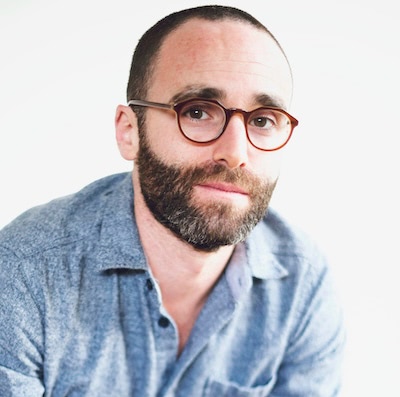
CEO, Unreasonable Group
About This Episode
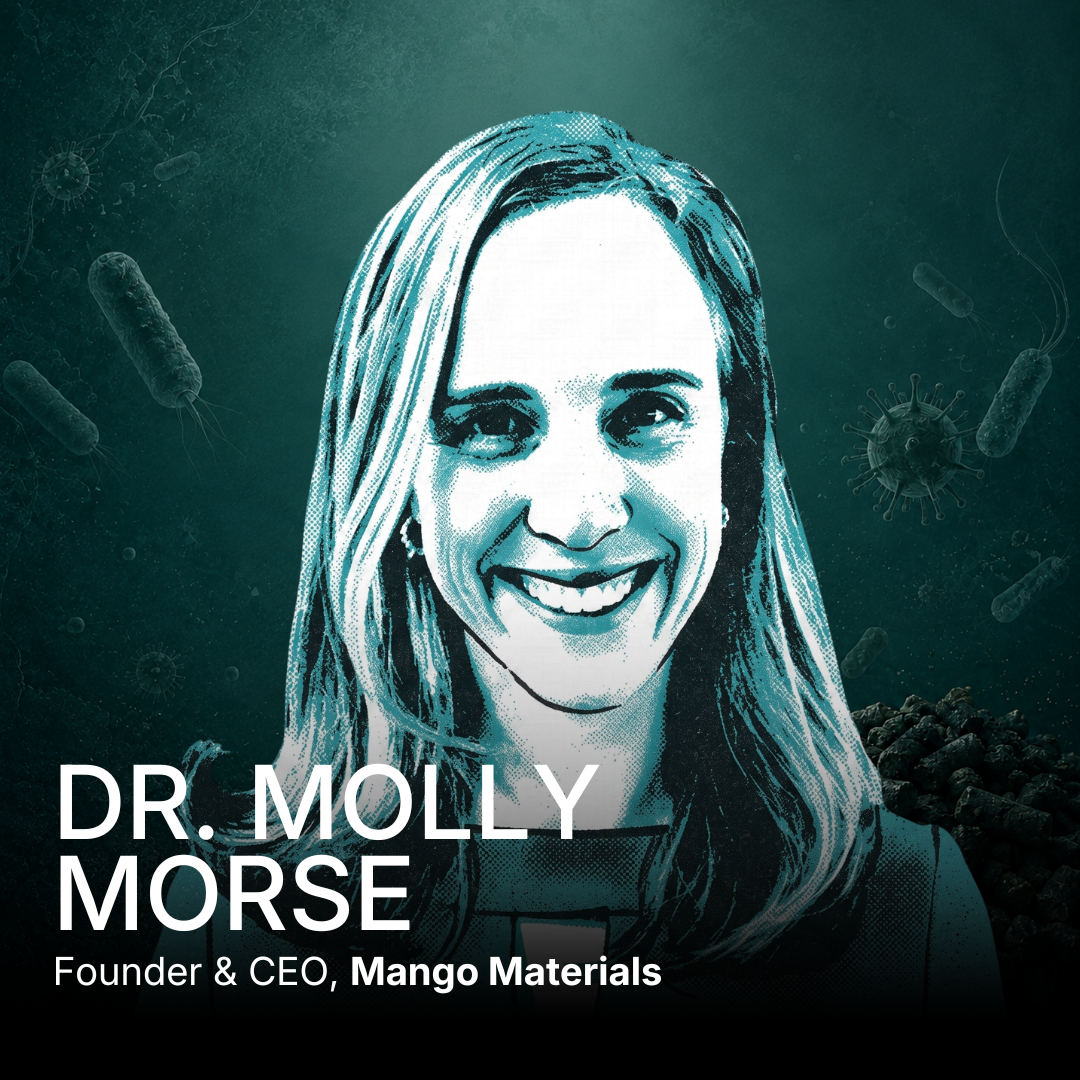
Featured Guest
Molly Morse
Founder & CEO of Mango MaterialsDr. Molly Morse is the CEO and co-founder of Mango Materials, a Bay Area biomanufacturing company that turns methane, a potent greenhouse gas, into a biodegradable plastic alternative called PHA. She earned her PhD in civil and environmental engineering from Stanford, where the company's founding science began, and her degree from Cornell. Molly joined the Unreasonable Fellowship in 2022 through the Unreasonable Impact program, run in partnership with Barclays.
Key Takeaways
Mango Materials feeds methane to bacteria called methanotrophs, which store a natural polymer, PHA, in their cell walls. Harvested into pellets, it performs like conventional plastic but breaks down naturally, even in the body, unlike petrochemical microplastics.
Methane is 20 to 80 times more potent than carbon dioxide as a greenhouse gas. By turning that flared waste from landfills, farms, and wastewater into material, Mango's input is carbon negative and its output is fully biodegradable.
Mango grew out of Stanford, where Molly Morse studied biodegradable building materials. Her co-founder Allison Pieja proved in her PhD that PHA could be made from methane rather than sugar, the discovery the company was built on.
Mango's material already ships in Natura soap dishes and Stella McCartney sunglasses shown at COP. The barrier is scale: Molly says one firm offtake agreement of $300 to $500 million would let Mango build a full plant and approach price parity with petroleum plastic.
Molly Morse came into the Unreasonable Fellowship in 2022 through the Unreasonable Impact Program, run in partnership with Barclays, which backs her push to make a technology long treated as science fiction a commercial reality.
Molly comes from a family of inventors: Samuel Morse of Morse code is a distant relative, and her great-grandfather's company first commercialized the bicycle chain. His patents hung in her childhood hallway, and she vowed to earn her own.
Fewer than 3 percent of venture capital goes to women-led companies. Morse built Mango with two female co-founders and was told directly that being a mother marked her as a risk, a judgment she argues gets motherhood and leadership exactly backward.
Chapters
Full Transcript
Daniel Epstein (0:00)
All right, in today's conversation, I have the privilege of diving a little bit deeper with one of our Unreasonable Impact fellows, Dr. Molly Morse. Molly is the CEO and co-founder of a company called Mango Materials. They're based out of the Bay Area. They've been at this game for well over a decade. They have taken what was originally a doctoral thesis into the lab, into prototypes, into market, into commercialization. And today, they are converting this incredibly abundant waste known as methane into low-cost, high-value, biodegradable materials such as plastic. What that means is they really have a belief that waste facilities are the gold mines of the future, that they can create an economic market of materials that is closer, cradle to cradle, and is able to recycle carbon naturally and sustainably into the environment. So in the future, the glasses that I'm wearing, the headphones that I am using for this conversation, they're made out of plastic, but they can be made out of plastic where the input is methane. They're using natural microbes to create this plastic alternative. And at the end of life, if it ends up in the oceans, it biodegrades. And if the microplastics end up in our bloodstream, they get naturally absorbed into our bloodstream without any risk, like the ones that we currently face. So this is going to be a fun conversation. We'll talk a little bit about the future; it's actually the present. We're going to get to know Molly, go into her past. I hope you enjoy this conversation as much as I know I will. Molly, I am so grateful and so excited to be reconnecting with you and to have the chance to have this conversation. So I just want to start selfishly, on behalf of myself, my own curiosity and admiration for you, by saying thank you for making the time.
Molly Morse (1:50)
Oh, thanks so much for having me. It's great to be here today.
Daniel Epstein (1:53)
And it's been a while since we've actually seen one another. We were just talking right before this. You first came into the Unreasonable Fellowship through Unreasonable Impact program in 2022. So it's been four years, I believe. Three and a half. That's the better number.
Molly Morse (2:11)
Yeah. Three and a half. It's crazy. It's crazy how much has changed.
Daniel Epstein (2:16)
Yeah. And the world's changed a lot. So we'll pull up into modern times. But first, I want to set the context as to also why it is our team at Unreasonable and our partners at Barclays, we're so excited to bring you into the Fellowship because what you're doing, you and your team at Mango Materials, it does sound like science fiction. It sounds like something from a utopian future that is not yet baked into reality. And yet you're doing it right now. And so I'd love for you to describe, in your own words, what Mango Materials is as a company.
Molly Morse (2:54)
Yeah. Well, what we like to say we are, is actually hope for the future, specifically, addressing plastic pollution. So the plastic challenge is so daunting and so devastating. There's plastic all around us. Humans, animals, nature, and people can feel really helpless. But we're working really hard to change the way plastics are used and end-of-life disposal options for plastics where we can still have their benefits without their drawbacks. So creating another alternative, that's our big dream and our big vision.
Daniel Epstein (3:29)
Yeah. And how are you creating another alternative?
Molly Morse (3:32)
Yeah. So I can explain a little bit the technical part, science fiction of what Mango does. So we start with methane gas. And methane is a potent greenhouse gas. It's produced from wastewater treatment plants, from landfills, agricultural facilities. It's a key component in natural gas, too, but it's not—it's often flared, it's often not used. It's also— it can be a potent greenhouse gas. So what we do is we grow bacteria that eat this methane, kind of like how we would eat chocolate. And they take that methane gas and they eat it and they convert it into a naturally occurring polymer that's inside their cell walls, sort of like how if humans eat a lot of chocolate, we might get really fat, these bacteria, if they eat a lot of methane, they accumulate a lot of this biopolymer inside their cell walls, which we then harvest and use as a replacement for conventional plastics. And there is a lot of stuff, technical stuff, that goes on as part of that. But what we ship are these pellets, and that's how plastics are often made. You often have pellets of something you melt down generally to make something. And ours is a different type of polymer, different type of material. So if it accidentally gets disposed of somehow in, like, the ocean, it will not persist indefinitely. It can break down. So we are working to close the loop on materials that way. And it's inspired by nature, using microorganisms. So that's like our factories.
Daniel Epstein (5:06)
Your miniature factories. Where and how did you find these miniature factories, these microorganisms?
Molly Morse (5:13)
So actually, bacteria are some of the most ancient living things on planet Earth. So this pathway, the polymer we make, it's called PHA: Polyhydroxyalkanoate. I don't need to go into the technical details.
Daniel Epstein (5:27)
No, no, let's go.
Molly Morse (5:29)
But it's a process, that's a biochemical process. It's natural in most living things. So when they're just little bacteria on planet Earth, this pathway is how they evolved to store carbon in case of famines coming. So plants, animals, bacteria, humans have the ability to produce or consume small levels of these PHA. And what we've done is enrich these bacteria to have the fastest, fattest PHA producers that we have cultivated as a company that are grown on methane, although other organisms can do this. So like others are looking at, you'll take sugar or some sort of oil and feed it to bacteria. We take methane as our core technology. And so the bacteria are actually all around us. They're naturally occurring. You can get them from the ocean, you can get them from swamps, you can get them from soils. And we enrich them for the best methanotrophs. Methane. Methanotrophs are the type of bacteria that we use.
Daniel Epstein (6:31)
That's a great adjective, methanotrophs. For those who don't know, methane is significantly more potent in terms of greenhouse gas emission. Can you compare it to carbon dioxide as an example?
Molly Morse (6:42)
Yeah. I mean, so depending on the timeframe you're looking at, it could be 20 to 80 times more potent than carbon dioxide. And carbon dioxide gets all the press, but, like, methane's where it's at. Let me tell you.
Daniel Epstein (6:52)
Methane is definitely where it's at. So this begs the question, and I should be calling you Dr. Molly Morse, which is what gave you permission to go after methanotrophs? Did I say that right? Methanotrophs. Yeah. Okay. Okay. Before we get there, I want to make certain that I am fully understanding this. You are using a—as the input ingredient to a plastic alternative, but effectively is plastic. The input is significantly carbon negative because it's methane, using a biological natural process to convert that into, you know, this fat for these microbes, which is, in essence, plastic, you can convert it into plastic pellets, and then that plastic functions just like petrochemical-based plastic does in our daily lives. But at the end of its life cycle, like you said, if it ends up in the oceans, it will naturally break down, and therefore it's carbon negative as an input with full circularity on the output. Is that right?
Molly Morse (7:56)
100% A plus, Daniel.
Daniel Epstein (7:58)
Okay, A plus. Now that I got it, I have to ask, yeah, what gave you permission? How did you come up with this? How did you discover this? How did you know this was possible? And I'd love just a little bit of the backstory of who you are to be able to do this work.
Molly Morse (8:12)
Oh, yeah, sure. I mean, well, we could go way back, but—
Daniel Epstein (8:15)
No, let's actually, you know what? Actually, Molly, let's go way back. You suggested it. You go back to Genesis if you want, but I would love to follow the story and the journey of your story.
Molly Morse (8:25)
I was born in Oakland, California.
Daniel Epstein (8:27)
Yep. That's great.
Molly Morse (8:30)
Oh, I mean, there's so much, but yeah, I was born in Oakland, California. Yeah, I mean, like, I don't know where we start with the Mango, but like, I've been interested in like, the environment and actually like what happens to things when you no longer need them. I've been interested in that since I was like a fairly small child, like elementary school for sure, and concerned about plastic pollution and litter and stuff like that, for sure, since elementary school. So that part goes way back. I took a class in undergrad that we called garbage. It wasn't really called garbage, but it was on solid waste management, where I realized that we're not going to recycle our way out of the plastic pollution problem. I went to grad school and I was planning to just go to grad school for one year to get a one-year master's of science because I have an engineering background and you get paid more as an engineer if you have a master's. But I happened to write a paper related to sustainability and a professor read it and said, "actually I have a— I'm planning to start this whole project on sustainable building materials was the focus. Would you like to stay and get your PhD?" And this was never my plan, but I was like, fully funded PhD from Stanford University, like, sure, I'll say yes. So I was studying materials that could be used for structural applications, like a replacement for the building industry really. And I was studying the biodegradation of them. And there were multiple students and professors as part of this process. So, like, my main professor was Sarah Billington who invited me to stay. But there was a Professor Craig Criddle who happens to be an expert on methanotrophs and just anaerobic processes in general. And so I was looking at cellulose, acetate, soybean oil, like all sorts of different types of material and loved PHAs, polyhydroxyalkanoates, I'm like, oh, wow, they have great properties, physical, mechanical properties, great biodegradability. And so we had this team meeting and two co-founders at Mango, but one of my co-founders, Allison Pieja, was there and Craig Criddle was like, actually, PHAs, theoretically, should be able to be made from methane. Normally they're made from sugar. The type I was using, we were purchasing them at Stanford, were made from other feedstocks. It's like, theoretically this should be used, could be manufactured, like made from methane. And so that was Allison's PhD was, yes, you can use methane. We wouldn't be here without that. She identified the process, the microorganisms, and did all this work at Stanford as part of her PhD. And then after I graduated, I consulted for a bit, actually, because I had a real technical background.
Daniel Epstein (11:11)
Yeah.
Molly Morse (11:12)
But I saw lots of people starting companies and it was very—
Daniel Epstein (11:16)
You were still in the Bay Area and you were out of Stanford?
Molly Morse (11:19)
Yeah, yep, I was in the Bay Area and I saw these people starting companies and I was like, how hard could it be?
Daniel Epstein (11:24)
Not that hard, right?
Molly Morse (11:26)
Yeah. Sometimes I go back and talk to my younger self, but yeah. And so Mango was incorporated based loosely on that inspiration from Stanford, the foundational science. A lot of Mango materials has been like, was early-stage science. So we've been many different types of generations of company from like glorified research project to now commercialization. So I've been on the whole journey and in some ways living the dream of a PhD student to see, you know, your early-stage research carried out.
Daniel Epstein (11:58)
How long has the journey been? When did you first incorporate Mango?
Molly Morse (12:02)
So our first funding was in 2012 from the National Science Foundation.
Daniel Epstein (12:06)
Yeah.
Molly Morse (12:06)
We got 150,000 grant from the SBIR program, Small Business Innovation Research program. We thought we'd won the lottery. We thought—
Daniel Epstein (12:14)
100%. It was like a big deal.
Molly Morse (12:15)
More money than we could possibly imagine. It was for six months worth of work. And yeah. And like the three of us, like, I don't even think we had three chairs. Like, we rotated, like, who uses the chair when we did like science work. And so, like, you know, now that, like, it's been ages since I've actually done like the hardcore science myself, but we have, you know, a team of operators now who carry out the standard operating procedures at our biomanufacturing facilities.
Daniel Epstein (12:40)
That's right. Yeah. How big is the team now?
Molly Morse (12:42)
Oh, that's a tricky question. We fluctuate, but probably around 25 to 30.
Daniel Epstein (12:48)
Okay. Great. And how much capital have you raised to date?
Molly Morse (12:51)
So we've been through somewhere over 55 million. Probably about 25, 26 of that is equity. And so we have a lot—We've had— Like that first funding was from National Science Foundation. That opened up phase two and other grant programs and whatever. So we've actually brought in more and then we have sales, we have joint development agreements. So we've actually brought in more non-dilutive money than equity. But yeah.
Daniel Epstein (13:20)
Which is phenomenal. If you can get free money, it is better. But it's not free. Free's not the right word. Free is not the right word.
Molly Morse (13:29)
Well, it's not on my cap table.
Daniel Epstein (13:31)
Yeah, yeah, yeah, yeah, yeah. So that's incredible. I mean, a team of 25 to 30, obviously you're more than a decade into this journey. You've raised over $50 million. You've gone from a idea which sounded like a light bulb of possibility to validation, to scientific proofing, to manufacturing, to commercialization. Can you tell us about what this looks like in the world right now? Because you've made products. This isn't, once again, this isn't science fiction. yeah, So, I'd love to hear some of those stories of what you're making at Mango Materials.
Molly Morse (14:03)
So what we end up shipping generally is formulated pellets and someone else melts that down to make something like cosmetic or beauty packaging or sunglasses or like a stake for your tree. Like there's plastics all over the place. So we ship pellets and then they get melted down. So we work with a company out of Brazil called Natura. They have a soap dish. So we ship the pellets to someone that melts them down. That company is called Silgen and Silgen molds the soap dishes for Natura. Similarly, we have an emblem in a line of allbird shoes. We ship material— We can ship material to Italy to mold into sunglasses that Stella McCartney displayed at the COP. We also recently have shipped our pellets to a manufacturer who makes sandbox toys, which we then sell ourselves. So that's the only unique situation. Generally, we're shipping pellets.
Daniel Epstein (15:02)
Yeah, yeah. That's amazing. So just to play with that. So my glasses are not Mango Material glasses. But yeah, they're not Stella. But if they were, these frames could be made out of the primary— out of methane. I could once again drop them in the environment and they would biodegrade on their own over time. But would their performance still be as good while I'm wearing them or would they start to melt?
Molly Morse (15:29)
So, PHAs generally need like strong enzymatic attack to break down. If they're in your house, they're not going anywhere. If you put them, if you like buried them in your potted plant and watered your plant and it's warm and moist in your plants, in your bathroom, so it's like warm and moist and whatever, there probably will start to be degradation on your glasses, over—
Daniel Epstein (15:52)
Which is exactly what you want.
Molly Morse (15:53)
Even in your potted plant. Yeah. And then like, if they end up in a controlled modern environment, like anaerobic digester or a modern landfill where you're promoting degradation, it'll biodegrade a lot faster. Yeah, it needs that environment. And it is—like there's many types of polymers, even petroleum-based ones, they all have slightly different performance. But yes, you get the same, essentially the same performance for something like a sunglasses that you would with either resin.
Daniel Epstein (16:22)
Yeah. Okay, so now anyone who's listening to this is then saying, "okay, Molly, what's the catch?" Because if this is carbon negative, it's obviously plastics. And microplastics are a huge issue for human health now. We're finally understanding what they're doing in our bloodstream and everything that's associated with them for ourselves, for our families, there's a lot of newfound awareness around that. There's fear around that. So the world wants this. Why isn't it going—I mean, it is going everywhere, but why isn't it going everywhere faster? What is the catch in terms of where it's currently at?
Molly Morse (16:58)
The big catch is the economics and needing scale. To bring the cost down, you need huge scale. It's like the widely scaled petroleum-based plastics, but they need the scale to get there. So the challenge is how to get that scale. And so that's why those applications that I mentioned, I didn't mention, like thin-film plastic carrier bags, that isn't one of our first applications. And one of the reasons is because you need high volume, you also need the perfect mechanical properties, but you also need really low cost to go in there. And so for certain applications, there's more wiggle room on the margin. And so what we really need is more scale and we need more demand of the material. And then we need to be able to use that to build a much larger facility that will then bring down the cost. And it's not just like Mango Materials, it's not just PHA, it's actually new materials, bio materials. And that's why starting, like, we don't do medical, but like starting in applications that are very high margin, low volume tend to be the place to start. So that's the biggest catch.
Daniel Epstein (18:11)
And they're brand sensitive, like you mentioned. Allbirds. Natura. Who is the sunglasses, I'm sorry?
Molly Morse (18:18)
Stella McCartney.
Daniel Epstein (18:19)
Yeah, of course. Okay. Stella. Yeah.
Molly Morse (18:21)
Like vegan fashion line.
Daniel Epstein (18:22)
Yeah.
Molly Morse (18:23)
Like apparel and yeah.
Daniel Epstein (18:24)
If a company came to you and said, "Molly, I love this, everything about this, I want to do a half billion dollar offtake agreement. I know you need to scale to reach that, but I care about price parity. But I want to go really big."
Molly Morse (18:39)
Yep.
Daniel Epstein (18:40)
Is that an unlock of technologies like this?
Molly Morse (18:42)
100%. Yeah. Especially if that con— the thing is, that contract would need to be decently firm. It couldn't just be like, yay, I want £500 million. Like, it would need to be like, here's the deal, Mango, I will pay X for this performance on these terms over this period of time. And I'd be like, great, let's go. We're building.
Daniel Epstein (18:59)
Then you could go to the bank and you could finance it.
Molly Morse (19:02)
And that's the whole challenge. So, like, yes, my company has been through 55 million and that sounds like a lot of money, but for what we've done, it's really, really not that much money. Like, we have an operating biomanufacturing facility. And like, the whole challenge is the volumes that we're at. Because you need like, people like, oh, you know, like the different ways to get profitable. You need to actually be really creative. You can't do it at the scale we're at just directly on pellet sales because you need scale to get there. And that's actually one of the big challenges with the plastics industry. There's been such successful scaling and such low cost that, you know, if you're going to buy apples at the grocery store and put them in a plastic bag, like you currently can't, the grocery store, like, nowhere can support an extra price point. So—
Daniel Epstein (19:52)
Too close.
Molly Morse (19:52)
Yeah, exactly. You need an incentive for new alternate materials or you need some kind of disincentive for the status quo. And that's really hard.
Daniel Epstein (20:00)
That's hard to do. Yeah, yeah, because the status quo is powerful and has a pretty good lobby, I would say. Yeah. I am curious just the size of this, which is, at what point would you be marginally close if not at this potential of cost parity, in terms of how much Mango Material pellets would need to be bought? And the example I threw out there was somebody says, great, we want to do $500 million offtake agreement. Is that enough to get us there? Does it? Because obviously, yeah.
Molly Morse (20:32)
That's the order or magnitude you need to be on. You know, is it 300 million? But it's something like that.
Daniel Epstein (20:39)
Great.
Molly Morse (20:39)
And like, I mean, we're talking about hundreds of millions of dollars to go into the infrastructure for that and hundreds of millions of dollars of offtake agreements.
Daniel Epstein (20:48)
Yeah.
Molly Morse (20:48)
And then the type of companies on planet Earth who can make those agreements and are at that scale. This is one of the big, like, the details in the like challenge is that they need such, like, they probably need to be testing millions and millions of pounds per year before they do that contract. And that's part of the whole challenge as well.
Daniel Epstein (21:07)
Now I'm talking outside of my lane, which is because I really actually want to know this because these large multinationals, especially those that are privately held, so can, you know, think and act generationally or long term, not bound by quarterly... What is preventing them from coming to you and saying, "look, Molly, if you are able to deliver at this quality, this type of pellet at this volume, at this cost, then we will buy. Assuming that's all validated, that all has to be proven, we will do an offtake agreement for 500 million, let's say." What do you think is preventing them from saying that? Because there's no strings attached to that other than they are saying, "in the future, if you hit all the things we're requiring, then we will have to buy it." But.
Molly Morse (21:53)
Yeah.
Daniel Epstein (21:54)
Why doesn't that happen?
Molly Morse (21:55)
Well, like, you made a good point about the companies being private because I think that's part of it. Because really what it comes down to generally is money and finances.
Daniel Epstein (22:04)
Yeah.
Molly Morse (22:05)
If you're not a private company, like, basically what they're saying is, like, there's just not enough pressure yet for that. Like, we have polypropylene, we have polyethylene. We know it's a problem. And by the way, we know PHA will work for our application. Like, we've tested it to some various degrees and yeah, maybe we'll do some kind of limited campaign, like we'll go to some concert or a stadium sports thing or something and do like, some kind of display to make sure we really know it works great. 100%. We have a solution in our back pocket for the time when like there's an extended producer responsibility, an EPR where like we'll get in trouble if like our packaging is found littered in the ocean or there's some other kind of federal, state, whatever, situation going on that they force us. Okay, we're ready. But there's just like not enough pressure yet. So it's like probably the private companies that aren't under that amount of pressure, the ones who could take a stand. But it's just the scale of the problem and the finances and just what other problems they have that they're dealing with every day. But the thing is, it would only take one. And we are thrilled—
Daniel Epstein (23:11)
The whole industry would follow.
Molly Morse (23:12)
Exactly. We're so thrilled to have the partners that we have. And Natura is a big company.
Daniel Epstein (23:17)
Yeah, they're huge.
Molly Morse (23:18)
But we need way more than just them.
Daniel Epstein (23:21)
Okay, okay. Now there's so many things I want to talk to you about. You mentioned you were, I think you said you were in like middle school and you were really into recycling and then you kind of discovered, hang on, this isn't going to do it. A lot of people think recycling will do it. They'll say, "well, hang on, it's ending up in the oceans because of landfill. I should just recycle this." Can you talk about the positives of recycling but then the myths and the drawbacks?
Molly Morse (23:48)
Yeah, for sure. I mean, sometimes I'm not fun at parties.
Daniel Epstein (23:52)
Yeah, sure.
Molly Morse (23:53)
Like there's a thing in our industry where people go like, "you want to hear a joke? Recycling."
Daniel Epstein (23:59)
Oh no, that's horrible.
Molly Morse (24:01)
But don't get me wrong, like, we should still recycle. I recycle in my house. I recycle personally. There is a lot of wishful recycling. Recycling is just so hard. And if you look back at the numbers, the percentages that have been recycled, even in California or the US or Italy and other countries that have forward-looking recycling programs, like the numbers are dismal, dismal, dismal. They're really low. And for sure recycling technologies and sorting technologies are getting a lot better. But it is this decentralized mess of a problem. Like the different cities are different and the MRFs, the material recovery facilities that are in the business of like taking the recycling, like that's a really, really, really hard business financially to be in as well because at the end of the day, so we produce PHA-based pellets, but you could have recycle-based like polypropylene or polyethylene-based pellets. And so if though it's the same thing. If those are more expensive than your virgin polyethylene-based pellets. Like, you have to have a brand or a consumer or some legislation that you're going to use the recycled ones. So you need demand for the recycled resin-based pellets. And so the whole financial infrastructure for everyone along that supply chain, from the people picking up the garbage or the municipal solid waste, the trash, whatever you want to call it, to the groups that are sorting it, cleaning it, what have you. Like, everyone needs to make money in that supply chain. And there are a lot of technologies that are helping here, but the volumes are just way too small. They're often—they're all a little different. They have different resins and even people like, "oh, well, maybe what we should do is just have polyethylene. We should just have one resin and then we'll just have one material and we can deal with that." But the thing is, you have it in different formats, you have it in different—some's contaminated with this food, some has cleaning products. It's been coated in different things, it's different colors. We should do all of that for sure. And some things are much more likely to be successfully recycled, like milk jugs and laundry detergent bottles. Like, make sure you always recycle that. Like clear water bottles. Like, this is some lower-hanging fruit than other things that are more complicated.
Daniel Epstein (26:11)
Yeah.
Molly Morse (26:12)
But when you look at all the places that plastics are ending up on our planet, in our oceans, on our beaches, in our waterways, in our natural environment, which we, even if we have PHA, we never want that to be the disposal ground for these materials. But at least if ours end up there, it's part of the naturally occurring carbon cycle. It won't persist indefinitely.
Daniel Epstein (26:31)
Yeah, yeah. and how long does it take to break down? So if, if a pair of your Stella McCartney glasses ended up in the Atlantic Ocean, you know, and then compare that to traditional plastics.
Molly Morse (26:44)
Yeah. So it depends on the environment, it depends on the shape, and it depends on like, a couple other things. But if you had a thin film of this material and it ends up in an anaerobic digester mixing 37 degrees Celsius, everything's perfect. Thin film, we're talking probably seven to 14 days.
Daniel Epstein (27:02)
Yeah.
Molly Morse (27:02)
If it is your Stella McCartney sunglasses and they end up in the deep sea Arctic, so this is thicker, like it's injection molded. it's the deep sea Arctic. So things grow, like, even a banana peel there could take years to break down. It's probably going to take years in that kind of environment. If it's thinner, it'll be faster. If it's in a warmer tropic-type environment, it'll be faster.
Daniel Epstein (27:28)
Yeah. On the human health side of things, the difference between your kind of biological little manufacturing factories, these little microbes, and using traditional kind of petrochemical-based plastics, whether they're recycled or not, what is the difference when they enter our bloodstream? Do you know?
Molly Morse (27:48)
Oh, oh yes, we know quite a bit. And it is completely different. A couple of things first. So where a material comes from, like is a material bio-based? Is it from plants? Is it from— or is it from organic plants or non organic plants? Is it from oil, petroleum? And is this material biodegradable? Is it prone to enzymatic attack? Will it break down in my potted plant or break down in my body? Those two things are actually not related. So where something's made from, like if it's made from plants or from rapidly renewable biogas, methane, like, that actually doesn't matter. That doesn't influence what the molecular structure is, which is what influences what happens to it in the natural ecosystem or in your body. So we actually know a lot of—and PHA is a family. There's different types. Our favorite, yeah, I can go way too technical, but we like P3HP, we know a lot about its biological processes, including in your body. So there's other groups like not Mango, that use this for medical applications. And whenever I go to the doctor and talk to them, they're always like, oh, you know, like having like biodegradable sutures or scaffolding for hip or shoulder surgery. Like, if you use our material in your body or like, if you use PHA, it can be like consumed by the body naturally. So then you don't have to go back in and retrieve stuff from inside your body. Yeah. And others actually use, you can use like one form of poly 3 hydroxybutyrate to go into ketosis. Like also like not what we do, but—
Daniel Epstein (29:24)
Got it. Yeah, yeah. Lose some weight. Understood.
Molly Morse (29:26)
It can influence different processes. So. Yeah. So micro— this is completely different than the molecules that are generally being referred to when you hear about microplastics and like accumulation in the human body or other parts of nature. The problem there is the molecular structure of that material that's ending up in your body. And so the benefit of PHAs is inherent to their molecular structure and that's why they break down in your body. It's actually not because they're from plants or whatever.
Daniel Epstein (29:59)
Yeah. So cool. Feels like you found the unicorn. So if we go way back, I would love to hear, because I don't know, I would love to hear how your childhood informed who you've become.
Molly Morse (30:12)
So, yeah, I'm from a very, sort of atypical type family. My mom and dad were, like, super loving, very supportive, from very different backgrounds, my parents, my mom and my dad. And I think that's really influenced who I am. Like, my mom was from, like, a big family. She was the oldest of many kids and kind of like the boss of her family. And she was first-generation college. Got like a scholarship. Like, the first to ever have even like dreamed of going to college. And then I had my, I have my—my dad's still alive. My dad, whose like, parents met in college and, like, his, like, great aunt was one of the first women to get a PhD from some university in Germany. And she actually had to go to Germany because, like, they weren't accepting women into PhD programs in the US. This was a million years ago. Oh, my dad's family is like well-educated, a lot of inventors. So, Samuel F.B. Morse, who developed the Morse code, is, like, many generations back, related to me.
Daniel Epstein (31:17)
That's in your family tree? How cool is that?
Molly Morse (31:19)
Yeah. And then my dad's grandfather, had a company called Morse Chain, which was the first to patent and commercialize the bicycle chain.
Daniel Epstein (31:29)
Very cool.
Molly Morse (31:30)
This was also, like, I don't know, like generations ago from me. But anyway, he had a lot of patents, not just the bicycle chain. And so I actually grew up with his—and people find this funny. I grew up with some of his patents on the wall of our hallway, like outside my bedroom. And so, he had a lot of grand—I guess I'm his great granddaughter, but he had a lot of grandchildren, so they all got divided up. So my family ended up with two but I'm the oldest. I have a brother and sister. We have three kids, and there was two patents on the wall. So it was always kind of a joke over who would get the patents. And from like a very young age, I was like, "hmm, no, you two can have them, because I'm gonna have my own."
Daniel Epstein (32:08)
Love it. By the way, how many patents do you have now? Mango materials?
Molly Morse (32:11)
I'm actually not sure. I mean, not that many. There's one core one on our bioreactor technology but there's a bunch of undergrad in various stages of whatever advancement.
Daniel Epstein (32:21)
Yeah, yeah. Okay. You were raised in a family of very brilliant, high-achieving, academically-credentialed inventors. You also said something really interesting there where you said your mom's dad had to study in Germany for her PhD because—
Molly Morse (32:37)
That was my dad's. My dad's. On my dad's side.
Daniel Epstein (32:40)
Sorry, your dad's. Your dad's mom. Sorry. Yeah. You know it's interesting because you said that was a really long time ago but when we look at today's market like we also know, and you know this far better than I do, that it's still, it's less than 3% of venture capital goes to women-led companies and so you've been swimming against a current of the status quo. You raised over 50 million. Like you said, it's a lot in some ways and in some ways it's just starting. But how has the journey been for you to be in a hard science, deep tech, you know, need to raise a lot of capital because the capex expenditure and being being a women-led company?
Molly Morse (33:18)
Yeah, I mean you know there's so many things about various people's backgrounds that influence them. So yes, I was born female and I did a— whatever and like I also look like—yeah, like there's all different types of people with all different types of backgrounds and it can be really challenging. Like probably everyone has something they're up against and that makes them unique or that makes them memorable. Right? So like yeah, there weren't, I mean there are way more even undergrad women engineering students now and PhDs and founders. But it's still like all those things are very few and far between. And you look at biomanufacturing companies, very few women and actually so my two co-founders are also female. So we—and there's probably somehow an answer to your question in that, in that we band together, this is the world we live in, we support each other in that capacity. That's my day in, day out life. But yes, I generally, the people that we all work with day in, day out are generally older than us and male. Venture capital is very male. The whole venture capital and raising money thing, that's challenging and some, I mean and sometimes, I look back at my investors and I'm like wow, it's like interesting to think of their background and who was there, and what that journey has been like. And you know I have two children and that's part of who I am as well. But that, honestly is still viewed as a risk. And I've been told that directly. And so the one thing about Mango is like, I love to, like, focus on the future and dream of what this could be like. And think like, okay, if we use this greenhouse gas to make materials, and we can do this wherever there's methane present at all these anaerobic digesters all over the world, then we can make PHA and we could change the fate of plastic. It would look so different. I like to spend a lot of time in that hopeful spot. And I also like to think, like, I want a world where mom CEOs can be their full self at work and like also come home and have kids and also know that we will be judged. And I think there is something to be said about female founders being judged in different ways. If there's any kind of struggle or whatever, like, you know, do you come across like a strong, confident leader? Do you come across kind of bitchy? Like that's a real, real thing and a hard line to navigate. But it's something we've been doing since the beginning. And you'd also be surprised how many huge allies we've had out there. And it's not always the women. Like, sometimes it's the old men in the plastics industry who are like, things need to change and the change is going to look different. So we'll support you. So, yeah.
Daniel Epstein (35:56)
Totally right. Thank you for touching that. I also kind of pulled you out, I think a little bit of your story, your background and childhood, in that, you were clearly surrounded by, you know, this innovative, very smart, credentialed environment, I would say with, with a legacy of creating things and building things that are on the walls as you're a kid walking by. But what pulled you into, because you said at the very start of this that you always, like, had a love for the environment. You always wanted to work on waste, like, not most, I think you were saying, you know, seven, eight year olds necessarily are like really concerned about that. Do you know your like, deep why as to not why starting a company, but why you're trying to bring business into right relationship with nature?
Molly Morse (36:48)
So I've been into this for a really long time, and like I don't know the deep why, but it's probably something like I was just somehow born this way. Like, I don't know. But for sure, there was like a couple things that happened in elementary school. Like, there was an activist that came, I think, in second grade to talk about recycling. I didn't know about recycling then, but they talked about recycling and what we should be doing and took it as my mission to make sure everyone recycled. You know, I'd go through the trash everywhere and like pull out the—
Daniel Epstein (37:13)
I could see little Molly really telling people what to do there. So cool.
Molly Morse (37:19)
Put the aluminum can in the trash can. So, yeah. So, like there was something about that that spoke to me. You know, there was a lot of things that I was exposed to, you know, we went on a field trip to the Monterey Bay Aquarium, and there was a lot of things like that that just always stayed with me. And I would say that, like, my dad's family, so my dad's dad was a like, theoretical, like, math—He was a math professor at UC Berkeley, so they were kind of like that. But my mom's family was the one who was kind of, like, practical. Oh, and I don't mean that they're not practical. My mom's family was the one who was, like, very, like, practical. And I think that that's the combination in business of, like, kind of the technical side versus the business side with my mom and my dad, with my mom being like, okay, like, this is what we have. We're gonna make it work. We're gonna figure this out. Like, you know, my mom's ancestors were Irish immigrants, and they had to, like, deal with all of that. And then my dad's family was probably historically kind of yours, maybe a little more stereotypical privileged background. And so that combination in me of being able to solve this problem and be like, oh, well, the bioreactor foamed. We're gonna, like, figure this out.
Daniel Epstein (38:32)
You've been doing this now for 16 plus years with Mango Materials. when. It seems like when challenges hit you, you like, reorient around them. Like, you have a warped perspective. You want to solve them, instead of, you know, get burdened by them potentially. And I might be wrong about that. That's the feeling I have with you. And I'm curious if in 16 years, it's a long time. And now you're into commercialization. Yes. But now you may have another 30 years in front of you till, you know, when this really realizes its full potential. And this is the new way that we go about—there is no other alternative in that sense because this is so much better. Have you ever wanted to give up along that journey? Have there been moments where it was so hard that you were like, you know what? I just can't do this.
Molly Morse (39:23)
Well, you know, the thing is like, if you start, if you had 16 years ago be the inception, that was actually even before Mango was incorporated. So it's like I either consider like the start of my PhD, which would be like over 20 years.
Daniel Epstein (39:38)
Wow.
Molly Morse (39:39)
Mango Materials has had different eras for sure. And probably like anybody anywhere in any kind of job, there's always moments of doubt. And like, I'm the kind of person and it's probably, it's, you know, I don't know if we're gonna go into Enneagram or Working Genius or whatever the heck, but I'm like kind of the person that generally it's good like 99.9% of the time. Oh, and don't get me wrong, there's problems. And one thing I want to mention is that, so like, I'm an engineer by training. So I even do this, like it's almost a problem with friends. It's like, I want to solve your problem. And then sometimes, I have to be like, are you looking for solutions? Are you looking for support? Because—
Daniel Epstein (40:14)
Because you just want to solve it.
Molly Morse (40:15)
Yes, exactly. So I'm gonna be like, okay, problem. Problem is one side of the equation. What are the variables we can use to get rid of that problem? And I love this with anything. Like if you're waiting in line at the grocery store, I need to like, figure out why one line is long. Or if somebody has a personal problem, like, what are we trying to optimize here?
Daniel Epstein (40:33)
That's right.
Molly Morse (40:34)
Same thing at work. So when we have problems, I just get into strategic problem-solving mode. And I'm very comfortable there thinking of this like an engineering problem.
Daniel Epstein (40:42)
Yeah.
Molly Morse (40:43)
But I think there's also something just personality-based that, yeah, like 99.9% of the time I'm super happy. And then 0.1% of the time I'm like, I think maybe, you know, there's actually some genetic things that people have written books about that like maybe entrepreneurs and certain types of people that are like, kind of crazy. There's a book called like the Hip—
Daniel Epstein (41:04)
Hypomanic Edge.
Molly Morse (41:06)
Yes, exactly. I read—
Daniel Epstein (41:07)
Explained myself to myself 15 years ago.
Molly Morse (41:11)
0.1% of the time I'm like, maybe I have a really high functioning, like, disorder that is beneficial most of the time. But here we are.
Daniel Epstein (41:21)
Yep. In those, maybe in any moments of doubt, like, what do you turn to? Is it friends? Is it co-founders? Is it science? Is it sitting alone in nature? Meditate? Like, I'm curious how you get through those.
Molly Morse (41:36)
It's all of that. A couple things you didn't mention is music. So, sometimes I go through a period of time and I'll have certain songs that'll make me feel better and the other thing is I read a lot. I read a lot. So sometimes I'll actually. I'm to the point that, like, Essentialism is one of my favorite books. and I'm to the point now, I've read it so many times, I actually have notes that I've taken on it. So if I'm feeling really overwhelmed, I can go back now and actually just read my notes on the book. I don't even have to read the whole book again. And it makes me, like, feel better, and it makes me feel like I have control. And I can focus on the essential thing that truly matters. Like, what's the next right step I can do? And we were talking a little bit about control before we started filming. And like, there's an element of that in there as well. And so there's a whole bunch of things. And it depends on the problem. And I do think I've gotten better and better and better at this is I've gotten older. And I think that that's kind of the only way to become an expert in managing stress, chaos, uncertainty, and oh, and I'm by no means an expert, but I am a huge connoisseur of things written in this space. I have different, like, you know, do you need a long run? Do you need strength training? Do you need to go sit in nature by yourself? Do you need to go on a hike with all your friends? Do you need to go see a movie? Do you need some kind of, like, project? Like something to put together or something? And actually, interestingly, growing up, my dad's dad, the Berkeley math professor, who I never even really knew, but apparently, he was really into plumbing around the house. Like, he'd like to do his plumbing and he would, like, redo his plumbing so that you could get, like, hot water instantly at, like, any faucet in the whole entire house somehow. I don't know... but apparently he liked to do that when he was working on, like, hard math theorems or something. And so my dad and my mom said that like works a different part of your brain. And so maybe you need a different problem to be thinking about.
Daniel Epstein (43:35)
Yeah, I'm just feeling into this. You know, my wife and I hope to become parents soon. We're not parents yet. And you've mentioned a couple times your mom. You have two kids. There is a certain level of chaos, I imagine, comes from that. I am curious how being a mom has informed how you are a CEO and how being a CEO has informed how you're a mom. You are the same person across both those. And I can see it as you know, you had people say, oh, it's like they want to discount, you know, the company if you're also a mom. And I imagine a reality where actually they compound on top of each other. So I'd love to explore that a little bit.
Molly Morse (44:19)
I don't think I've ever talked about this. It is really interesting, and there's lots of overlap. And like, the concern I was specifically told was that it would be distract—oh and actually, I think I had kids and the investor didn't know, but, like, the concern was that I would be distracted with my kids. That was the concern. I've actually probably historically dealt with that, similar to when we're talking about when you have problems, like compartmentalizing learning. Like, I have certain processes in my life and certain support systems I set up or whatever. That's like, you know, and it is hard. It's still hard. My kids are also a lot older right now, or not a lot older, but, like, they're at a stage where, like, it's actually kind of fun sometimes even to talk about problems at work, because they'll have—
Daniel Epstein (44:54)
Very cool. Oh, they'll have such different opinions, too, I imagine. Like such fresh perspectives.
Molly Morse (44:59)
We talked a little bit about sandbox toys. And I'm super excited about that and can talk more about it. But my older son, he's 14. He does not think this is cool at all. "Mom, 3D printing filament is where it is at, let me tell you. It is a growing market. Your material prints."
Daniel Epstein (45:17)
You already have the pellets. Yeah.
Molly Morse (45:18)
Well, so we've actually, in-house, like, made 3D printing filament. And then I've brought it home, and my son's played with it on the 3D printer and just made stuff. Like, it somehow prints a little differently. It has good adhesion. I don't know, something. Anyway, my son is like, "this is the future. Like, this is the future." "Can you please?" The other day, he, like, I don't know, was convincing me to reach out to 3D printing influencers or something because he's like, "this is your future." So anyway, going back to the whole parent thing, like it's fun now that they're like at that point. My son was telling me something really funny the other day about like, well, you're the boss, so blah, blah, blah. Okay. So it definitely influences how I parent when my—I have boys, but when I was little it would also influence other things related to little girls because I'm very sensitive of like, you know, if a little girl is building or something, or wants to be an astronaut or whatever, making sure that they can be able to identify themselves and that that's encouraged. So I'm very, very sensitive to anything like education-related that could be promoting boys, you know, and it's like, then somehow in our school district, once you get to sixth grade, there's like a more advanced math than a normal math. And they do different ways of kind of encouraging or discouraging people to be in the accelerated math. Oh, let me tell you. Oh, if you're not encouraging the girls and they like math and they want to do it, like girls and boys respond differently and like even my kids do. And so anyway—
Daniel Epstein (46:49)
Maybe the question to articulate is how has being a mom informed who you've become that has impacted how you lead?
Molly Morse (47:00)
For better or for worse. It kind of goes back to the Essentialism book. I think about what's the most important thing right now in the moment that's in. And I think about it for my team members as well, if they have something going on outside of work. And this doesn't mean that a parent can be like that. But like, I'm very much like, what's the most important thing here now? Like, okay, like go home. Go home. Go home. Like, if they have something like that. And I also think there's many ways to be a parent. Like I have biological children, but like you can be a teacher. I love being an auntie. That's the best job ever. One day, my dream would be to be a grandmother.
Daniel Epstein (47:43)
Yeah, yeah. You will be.
Molly Morse (47:45)
I don't know. Sometimes, with my kids I'm like, I don't know if there's any. Anyway, like, there's so many ways to be a parent, so like you don't need to have your own biological children, but to think beyond yourself and to think of the other, like whether—kids are so, when they're little, like they believe anything is possible, right? And that's like normal for them, so to stay in that space and to stay in that, like, I don't know, there's books written about like how you keep play current or whatever. When I read this, I'm like, somehow, I never outgrew that like ever. Like, it's very natural for me. But I think kids can bring that into actually a leadership perspective. And then there's a whole bunch of little detailed things about being like, really clear what you want, very clear guidelines, what's acceptable in this situation for children and for companies of like, what's the goal? What is the plan? How are we going to get there? Make sure we've articulated it. Nobody can read your mind, so be very clear over what you want here. Friends will be like, "okay, CEO Molly" or something, you know, when I'm like, oh, if friends can't make a decision or how we're—they're like, okay, here's the—I'm in a book club and I like made us have a like a procedure over how we choose the next book. Anyway, they're just like, "okay, CEO Molly."
Daniel Epstein (48:58)
Processes matter. We know. You know, what's that quote? You know, "you don't rise to the level of your aspirations. You fall to the level of your systems." Like, yeah, it applies to everything. I imagine you do, which is why it's really good that you're in a industrial, commercialization, factory production-oriented company because you will crush that in terms of getting this to scale. I know we're almost near to the end of the conversation and there's two questions I have, but the first one is just take a minute. You said you love to kind of dwell in, in some ways to see the future clearly and a future that is much brighter than the present or the past. And in regards to Mango Materials, can you paint the picture? This realizes its full potential after this podcast airs, X, Y and Z company reach out to you with a half billion dollar offtake agreement each. Let's go forward, you know, however far you want to go. Five years, 10 years, whatever it is, when this has replaced the incumbent and when Mango Materials is, you know, the replacement for a large scale of the plastic products that we buy. What does it look like?
Molly Morse (50:18)
Oh, well, that half a billion pounds is very much just the infancy, the beginning of the big dreams. So like the vision we have is that you can use methane. I mentioned this a little bit before, but all forms of methane, maybe this makes so much economic sense to use methane to feed to bacteria, to make PHA, to change plastics. We're doing it wherever methane is present. And actually it makes so much sense. We're taking all our organic mass, we're taking all our organic waste, we're taking agricultural waste. Maybe in countries where we don't have so much waste infrastructure, it now makes sense to collect, to put in, like, sanitation projects. Because we want the methane for all the organic waste.
Daniel Epstein (50:59)
Because of the economics of capturing the methane.
Molly Morse (51:01)
Exactly, exactly. We've made methane so valuable, we want to convert all the carbon that we have into methane, and we are—sure we'll use it for electricity, and we'll use it for fuel, and we can use it for other things as well. But we are going to—and nutrition, you can actually do that for three different routes. But we are going to make so much PHA and that we will drastically change the way plastics are used. So like all— and maybe we don't want all plastics on the planet to be PHA, but like anything that's rapidly used, like all single-use materials, we can—and then in this vision, we would take all the food packaging, all the food waste, we'd single stream it into anaerobic digestion to produce more methane to make more materials and electricity and fuel and food. And we could do this regionally and so we could have all these decentralized regions of economic resiliency. And then everything is so smooth running and so great that as we deploy through the galaxy, there's methane. In other solar systems, there's actually methane, on Titan and elsewhere. We use methane as we deploy as the feedstock to make materials wherever we go. And this is the status quo.
Daniel Epstein (52:09)
So cool. So, Molly, I figured you out. You're actually an alchemist because you're taking one of the most potent, prolific wastes of our time and one of the most powerful and potent wastes of our time. And you're converting it into value. But you're converting it into value in a way that is then fully circular and also good for not just our biology, but the biology of our planet. It's fucking incredible, for lack of a better adjective. Anybody who's tuned in, and this includes myself, now we see the future that you're painting. We know you've been working on this. Depends on where you draw that line, 10 to 20 years.
Molly Morse (52:46)
Yeah, sure.
Daniel Epstein (52:47)
We know you're already in market. Like, this works. If we're going to bet on anybody, it's going to be you and your team at Mango. How can we become a part of the solution? How can we become a part of the story that you're writing?
Molly Morse (52:58)
I guess the number one thing is to purchase products made with PHA. Of course I love ours best but like any form of PHA produced by anybody and like new materials in general, it's so hard. So I would say, and to support those endeavors. And it's really, really complicated. We didn't talk about this really, but legislation, single-use plastic bands, this stuff like often it's not written, very forward-thinking and it can actually be an obstacle sometimes. But good policy—
Daniel Epstein (53:24)
Hinder innovation.
Molly Morse (53:25)
Exactly. There's a lot of that going on right now. A lot. But anyway, so but being aware of that actually, just being aware that actually like these problems are really complicated and if we want materials to be compostable versus biodegradable, what does that even mean? And what is the ideal end of life? I mean just being aware. Number one, being aware. Number two, purchasing things with new materials like voting with your wallet. Our material formulated PHA, we've actually branded it as YOPP, Y-O-P-P. It stands for "You Omit Polluting Plastics." So we have a website called madewithyopp.com and it's still being advanced but we have our sandbox toys there. So anybody who's interested in taking, if you do happen to need, you know, to go to a baby shower and you want to bring something, there's sandbox.
Daniel Epstein (54:13)
I can buy your sandbox toys right now. If I have kids, we have a sandbox. I can buy toys that are made out of methane that are good for their health and planet. Where do I buy those?
Molly Morse (54:22)
Madewithyopp.com. Yopp.com. Yeah, you can get to it from mangomaterials.com too.
Daniel Epstein (54:28)
Love it.
Molly Morse (54:28)
And like some of our materials, actually we do purchase plant-based PHA from others. So some of it's methane-based, some of it's plant-based because we're trying to elevate these new materials. Elevate PHA. It's the number one way that could be supported. Although we're always—anyone who's looking for 500 million or a billion pounds of biodegradable materials and wants to do a long-term purchase offtake agreement or help us build that big gas fermentation factory, love to do it.
Daniel Epstein (54:53)
That's very real. And are you—we can't speak to the details, but are you looking for investors? Is that active or is it really customers now?
Molly Morse (55:00)
I mean, we're not in the midst of a priced round right now, but we are always interested in talking to investors who might be a part of this journey in any way, shape, or form, whether it's on the material side or the company side or what have you.
Daniel Epstein (55:12)
So, Molly, I didn't ask—now I'm getting greedy with my questions. Why Mango Materials? Why? Because what does this have to do with mangoes?
Molly Morse (55:21)
Nothing. Nothing. It has nothing to do with mangoes. We love mangoes. They're delicious. We named the company off our favorite fruit.
Daniel Epstein (55:27)
That's it. It was so simple. Okay. I have to say, just in reflection, on this conversation, it's been a huge privilege and a pleasure, and your brilliance shines through. But you just summed it up as well, which is, like, your playfulness does, too. And I can't imagine being able to do this unless you're able to have fun along the way, unless you're able to laugh at, you know, the difficulties and the hardships and going against, like, such a large orthodoxy or, you know, status quo that is so powerful. And I think it feels to me, it's like your humor, it's your levity, it's your clarity of vision that will see you through this to ensure that it really becomes a reality. So thank you for being you, Molly, for being a part of the Fellowship for this conversation, and for pulling a brighter future into the present like this. This really matters, and this has been heartwarming.
Molly Morse (56:21)
Thank you. Thanks for having me.
Never Miss an Episode
Subscribe to Unreasonable Stories and join thousands of listeners learning from the world's most impactful entrepreneurs.