He Flew to Space. Now He's Building a New Space Station.
with Dylan Taylor
Founder & CEO of Voyager Technologies
Hosted by
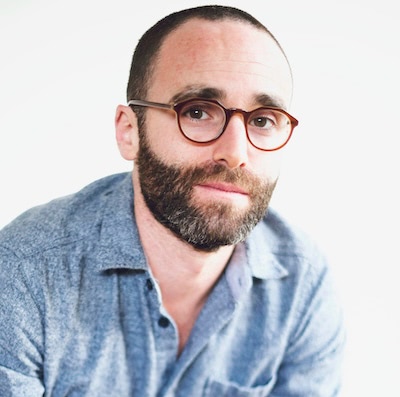
CEO, Unreasonable Group
About This Episode
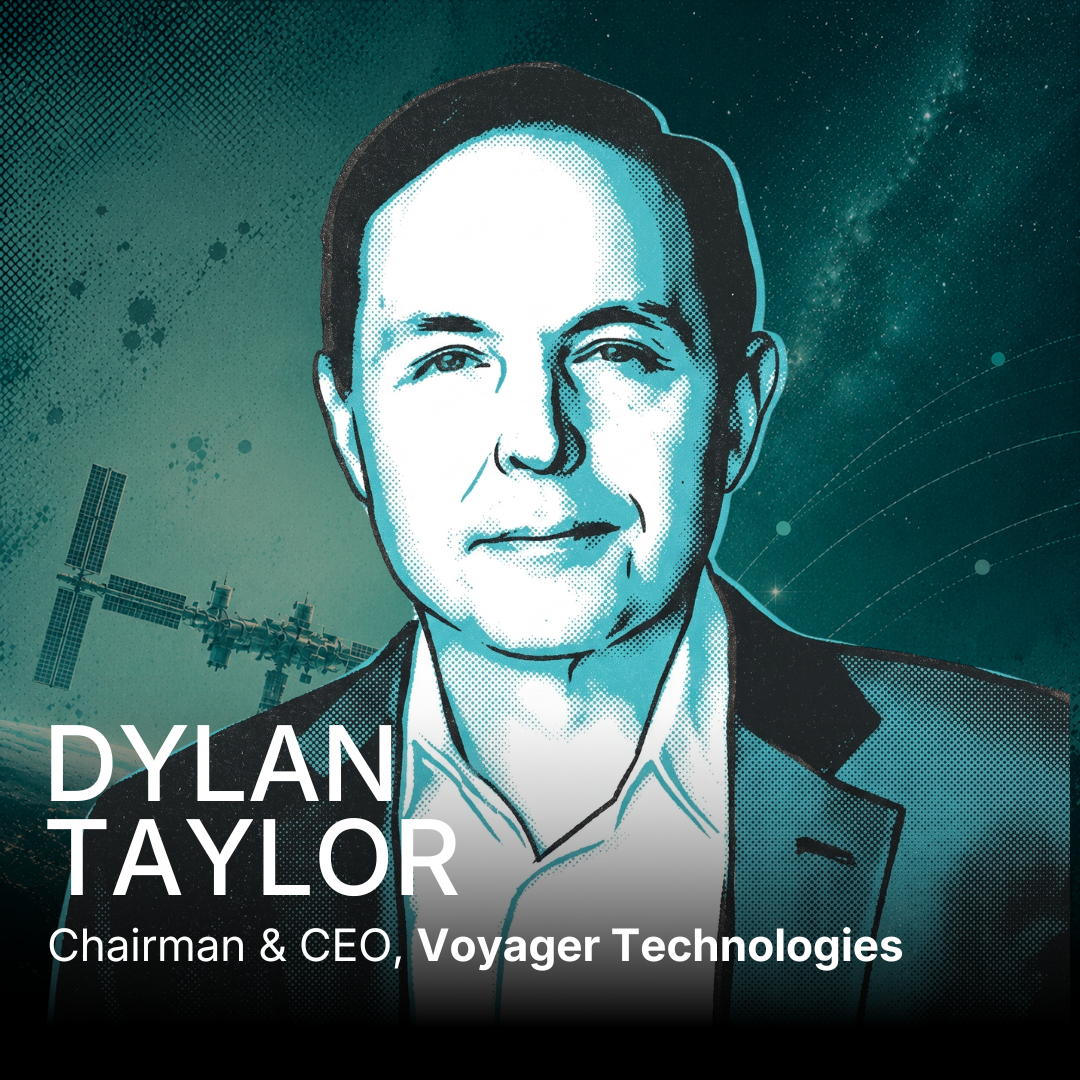
Featured Guest
Dylan Taylor
Founder & CEO of Voyager TechnologiesDylan Taylor is the founder and CEO of Voyager Technologies, a space infrastructure company that went public on the New York Stock Exchange in 2025. Voyager is building Starlab, a commercial successor to the International Space Station, and is the largest commercial user of the ISS today. Dylan joined the Unreasonable Fellowship through the Unreasonable Impact program, run in partnership with Barclays.
Key Takeaways
Voyager Technologies is building Starlab, a commercial replacement for the International Space Station, with partners including Airbus, Palantir, and Hilton. The aim is to have it in orbit before the ISS is retired around 2030.
Taylor flew to space aboard Blue Origin in 2021 and describes the overview effect as a single new emotion built from three: deep connection to everything he has ever known, terror at how thin Earth's atmosphere is, and anger that more people cannot see it.
Through his nonprofit Space for Humanity, Taylor sponsors everyday citizens to fly to space. The first was Katya Echazarreta, a Mexican-born engineer who once worked at McDonald's, later reached NASA's Jet Propulsion Laboratory, and went on to a Vogue cover and a Mattel Barbie.
Microgravity lets researchers do things that are impossible under Earth's gravity. Experiments on the International Space Station informed the cancer drug Keytruda, and scientists have printed human tissue in orbit that the body will not reject because it is grown from a person's own cells.
Taylor first came into Unreasonable through the Unreasonable Impact program, run in partnership with Barclays. Barclays banker Rob Brass helped shape Voyager's market narrative ahead of its IPO, and the bank stayed on through a later convertible offering and the company's credit facility.
Taylor credits mentorship with accelerating everything he has built and now uses a written mentor agreement with one rule: every person he mentors must commit to mentoring three more. He names his father, who was twenty when Dylan was born, as his greatest mentor.
Taylor fell in love with space at age three, watching Star Trek with his father in a rough part of West Denver. At thirty-eight, successful but unfulfilled, he redirected his ambition away from personal glory and toward building infrastructure for humanity in space.
Chapters
Full Transcript
Daniel Epstein (0:01)
Welcome to the Unreasonable Stories podcast, the place where we get to hear about the untold stories of individuals who are looking to help define progress in our time today. There's no exception, uh, to that pursuit. I get the privilege of sharing a conversation with Dylan. Dylan is the, uh, founder and CEO of Voyager Space Technologies. They went public last year. Before that, they raised over $450 million. Dylan is one of the most prolific private investors in, in the space economy. And today, Voyager is setting out to become the premier space infrastructure company, really, of the 21st century. We're going to get to explore not just the cosmos in our conversation with Dylan today, but also how his work, having helped lead over 1400 experiments on the International Space Station, now, uh, looking to win the bid to rebuild the next version of, of the International Space Station called Star Lab. How, how his work is on not just the frontier of imagination, but also the frontier of human and planetary health. He's going to explain that to us. Uh, we're going to go, yes, into the stars, but we're also going to go into the personal story that Dylan has been on his life's journey, what he's learned from being a parent, what he believes mentorship really is, and how mentors have played a role in shaping who he's become today. So, without further ad, I hope you enjoy this conversation as it unfolds with Dylan. Dylan, welcome to our Unreasonable Stories podcast. Uh, just to begin, first time we've done this in person. I think the most important thing is just to thank you for your time, because I know you have a lot going on right now, and it's just, it's a gift for me, selfishly, even if nobody watches this, to have the chance to sit down to talk about you, your life, and also talk about space, where it is now and where we're moving. So that. Thank you, brother, for the time.
Dylan Taylor (2:00)
My pleasure. Great to be with you, Daniel.
Daniel Epstein (2:02)
So, Dylan, So Space Technologies, you founded the business when.
Dylan Taylor (2:07)
Uh, we founded voyager, August of 19. So we're going to be seven years old in about five months.
Daniel Epstein (2:14)
Okay, seven years old in five months. And in that time, and you can correct me if I'm wrong on these numbers, you raised over half a billion dollars in the private market, is that correct?
Dylan Taylor (2:22)
Right.
Daniel Epstein (2:23)
And then 2025. So just last year, recently, you went public.
Dylan Taylor (2:26)
Right.
Daniel Epstein (2:27)
And for those of you who don't know who are tuning into this, can you explain Voyager Technologies? Because it's a platform play that is really pulling together where space is moving. But I think for a Lot of people. It looks like so many things. So can you tell a little bit just about what the company is doing? Then we'll go into why.
Dylan Taylor (2:43)
Yeah, yeah, for sure. So, uh, Space Infrastructure company is probably the best way to think about it. So we do national security applications and uh, space infrastructure. So a couple of key things that we're involved in that people might be interested in. One is we're building a successor to the International Space Station that's uh, very cool. A commercial space station called Star Lab, uh, which is fantastic. We have partners on that like Palantir, Airbus, Mitsubishi, Uh, we're also the largest commercial user of the International Space Station today. So a lot of the missions and experiments that happen on the International Space Station today are our company running those missions.
Daniel Epstein (3:19)
Yeah. Amazing.
Dylan Taylor (3:19)
We've done 1400 missions. 1400, uh, to the ISS in just
Daniel Epstein (3:24)
the last seven years.
Dylan Taylor (3:25)
Well, the company we acquired actually was founded prior to that, so call it last 15 years we've been doing that. Uh, so those are some of our major applications. We also do a lot of picks and shovels type work. So when we talk about what's happening in space, there's a lot of applications that require things like communication, um, which is typically done with lasers or um, how do you identify where you are in space? Right. GPS doesn't work. So there are things like sun setters and star sensors that allow you to position amongst the stars. Uh, so all these different applications. And of course, as you know, and we'll get into it, space is my passion. So this is really, really cool stuff. And to put a finer point on it, I mean, this is a mission driven business. Right. We believe very strongly that space is not only the next big thing for humanity, but it has direct benefits to life here on Earth. And uh, not the least of which is this perspective shift that astronauts get when they see the Earth from space. Yeah.
Daniel Epstein (4:25)
Which you have had the chance to do, which we are totally going to talk about. Uh, this is such a gift to have this conversation. It's actually an important thing. Um, with Voyager Technologies, you talk about space not as an escape valve.
Dylan Taylor (4:37)
Right.
Daniel Epstein (4:38)
But instead as enhancing humanity, but also life, life on this planet more broadly. Can you share? If we go way back in time though, as I just mentioned before we started rolling here, my wife and I are about to have our first son. Congrats and thank you. When I think about space exploration, it takes me back to being like a boy in a field looking up at the stars with this incredible curiosity, wonderment and awe and connection But I'd love to go into. When did you first fall in love with space? Like, when did this love affair begin?
Dylan Taylor (5:08)
Well, I definitely age three.
Daniel Epstein (5:11)
That counts.
Dylan Taylor (5:12)
Literally. That's the punchline. I, uh, definitely have the explorer gene, Daniel. I mean, I'm compelled by what's over the hill, what's possible, uh, whether that's the frontier of the way your mind works or the frontier of a geographic zone or technology. So I'm definitely wired that way. But for me it's a bit cliche. It was honestly, with Star Trek, and I remember watching it with my dad. Uh, and at the time he was in graduate school getting his PhD and we were kind of living in a, I'd say a little bit of a rough situation.
Daniel Epstein (5:43)
Where were you? Where were you living?
Dylan Taylor (5:44)
We were in Denver, actually, in, um, West Denver, in a pretty rough part of town, frankly. And I remember thinking to myself, we've got this utopian world. I wasn't thinking utopia when I'm age 3. But I'm like, look, everyone's getting along. Everyone has plenty of stuff. Every week is a new adventure, a new plan. And I'm like, why? That's different than what I see out my front door. I'm like, what's the disconnect here? And so I was really compelled by not only the sense of adventure, but the sense of social harmony. And that was really, really, really compelling to me, uh, at that age. And I never forgot that.
Daniel Epstein (6:20)
And was space always then pulling you, or did you have tangents throughout your development in your career?
Dylan Taylor (6:27)
Tons of tangents. So super ambitious, super type A, Super I'm gonna succeed. And if you get in my way, I'll run you over.
Daniel Epstein (6:35)
Do you know where that comes from? That, that ambition?
Dylan Taylor (6:37)
Fear of failure?
Daniel Epstein (6:38)
Yeah.
Dylan Taylor (6:39)
Driven by, I'm sure, my parents, you know, so it took me a long time to kind of wrap my brain around that and understand, you know, it's a fuel source. Right. You shouldn't try to, uh, m. Fix that, but you should try to redirect it for more positive, uh, aims. And so, you know, I reached a point point in my life where, and I think a lot of people could perhaps relate to this is I was successful in quotes, but pretty miserable and feeling like it wasn't a purposeful life, it wasn't mission driven. The people I was working with, I didn't necessarily like or respect, let alone love. Love, right. Yeah. I mean, love wasn't even a construct totally in my mind. Right. And so I went through that whole journey and came, uh, out that side, there's a book I read, super influential, which you've probably read, called the Last Lecture.
Daniel Epstein (7:30)
I haven't read. Oh, yeah, no, I have read.
Dylan Taylor (7:31)
Yeah.
Daniel Epstein (7:32)
But, uh, like many years ago. Yes.
Dylan Taylor (7:33)
Great book. And also incredible. And also a lecture, of course, on YouTube. And that really got me thinking about the punchline there on what the book and lectures say. But it's, uh, follow your childhood dreams and you can have your cake and eat it too. So I reflected on that and how
Daniel Epstein (7:49)
old were you around this time?
Dylan Taylor (7:50)
I was 40. Uh, no, I was younger. 38. Was 38.
Daniel Epstein (7:54)
Yep.
Dylan Taylor (7:55)
And you know, just starting our family and had young kids and things like that. And so really questioning, it's like, okay, what's the purpose? What is my contribution to the world? How do I make the world a better place? What's my legacy?
Daniel Epstein (8:07)
Yeah.
Dylan Taylor (8:08)
And for me, it had always been space. It had always been my passion. Yeah. And I thought to myself, well, look, what do I have to offer the space industry? Well, I have a little bit of business experience, I have a little bit of capital and maybe I can start getting involved initially as an early stage investor and mentor. And that's sort of how I entered the industry originally and then ultimately went into the industry full time. Founded Voyager, Uh, founded a nonprofit called Space for Humanity, which is here in Boulder that sends private citizens to space.
Daniel Epstein (8:38)
So cool.
Dylan Taylor (8:38)
Uh, which we've done six now in exchange for coming back to Earth and doing a fellowship to make the world a better place. Beautiful. Yeah. So, I mean, I feel like this construct that the Japanese have, where you're operating in the sphere of what the world needs, what you're good at, what you can be successful at. Ikitai, I think they call it. I feel like I'm operating there. And of course, if you're operating in that space, you feel quite unstoppable because your fuel source is unlimited, your energy source is unlimited.
Daniel Epstein (9:08)
It's a different thing when your energy sources is love based instead of fear based.
Dylan Taylor (9:13)
That's right.
Daniel Epstein (9:13)
Many people said this before, but I think love is the most regenerative force or energy or fuel in the universe. So you've become, by some accounts one of the largest private investors in, in space and space industry and space exploration. Throughout this journey, you also had the gift of going to space. You fell in love with it watching Star Trek with your dad in West Denver as a little kid, you, you kind of went off course in some ways.
Dylan Taylor (9:39)
Yeah, I did.
Daniel Epstein (9:39)
Um, but then redirected with intention. But then there's this moment when you're actually out there.
Dylan Taylor (9:45)
Yeah.
Daniel Epstein (9:45)
Can you describe what that felt like? What the overview effect really is?
Dylan Taylor (9:49)
Yeah, well, overview effect is the right term. Frank White wrote that book. Rhodes scholar, Harvard professor, great guy. He's become a close friend. He's in his mid-80s now, but yeah, you know, so the first of all, life changing. And to be clear, I was on a suborbital flight. So this is an up and down, uh, on blue origin. I did that in December of 2021. And the money shot is being in zero gravity, which in some respects feels like you're floating in the womb a bit. It feels natural.
Daniel Epstein (10:18)
Takes you back.
Dylan Taylor (10:18)
Yeah, yeah. Which is interesting. Wow.
Daniel Epstein (10:20)
It didn't feel extraordinary. It felt natural.
Dylan Taylor (10:22)
Well, it feels extraordinary, but it also feels familiar.
Daniel Epstein (10:24)
Got it. Yeah.
Dylan Taylor (10:25)
Which is interesting. And seeing the Earth from space, I'll do my best to describe it. So imagine a new emotion.
Daniel Epstein (10:32)
Yeah.
Dylan Taylor (10:32)
Okay. We're talking a lot about love. I also like gratitude and all these. But think about a new emotion. Uh, the first part, we'll call it love, but it's really this deep sense of affection and harmony because everything that you've ever known and everything you've ever loved, and every experience you've ever had is right there in front of you. So it's this deep sense of, uh, connection. Love. Connection, affection. Yeah, that's one part. Second part is fear. And it's not fear of dying or any of this kind of thing. It's the terror of the hostility. Because 99.999% of the universe so far as we know, is cold and, uh, dead and hostile. And you've got this beautiful miracle, fragile and, you know, atmosphere. Uh, if you didn't know the word atmosphere, you wouldn't even describe, describe the Earth as having an atmosphere. It is literally a whisper. It's like the dew on the leaf in the morning. And so you're thinking to yourself, that's what's protecting us from this whole thing.
Daniel Epstein (11:37)
Everything I've ever known and loved and experienced.
Dylan Taylor (11:39)
Right. You're like terrified. You're like, wow. It's like, you know, we're so fragile. And then the third part of the emotion is anger. And the anger is because you feel like you've been whispered the password and the answer to something truly profound. And you are so frustrated that the world doesn't see it. Because when you're up there, what you understand is there is no other place, there is no other people. There's only here and us.
Daniel Epstein (12:05)
It's just us.
Dylan Taylor (12:05)
That's it. Uh, uh, there is no the others. No. That's not the reality of our situation. So imagine those three emotions, fuse them together, multiply by a billion.
Daniel Epstein (12:18)
Yeah.
Dylan Taylor (12:19)
And bury it so deep inside of your spirit that you can't unremember it or unfill it for the rest of your life.
Daniel Epstein (12:26)
Wow.
Dylan Taylor (12:27)
And that's what it's like.
Daniel Epstein (12:28)
Wow.
Dylan Taylor (12:29)
And, you know, just to, uh, validate some of this, I participated in this psychological study with a professor out of Johns Hopkins, Dr. David Yadin. He was at Penn before that, and he was studying awe. You use that word earlier. And I'm a big fan of awe.
Daniel Epstein (12:45)
One of the coolest sensations. Yeah.
Dylan Taylor (12:47)
Right. I mean, we're all kind of chasing that, right? Um, and so he was looking at everything. He was looking at the awe from nature. He was looking at psychedelics, he was looking at meditation. And what he found is space flight is literally off the charts.
Daniel Epstein (13:03)
Really.
Dylan Taylor (13:03)
It's like a four standard deviation event.
Daniel Epstein (13:07)
So you're not exaggerating when you're talking about this feeling?
Dylan Taylor (13:10)
No, it's literally off the charts. And I'll even go so far as to say, I don't think you can go to space and not be impacted, because I've had the privilege of meeting, you know, I'll make a number up, but it's directionally correct. 50 astronauts, male, female, you know, Russian, Korean, Japanese, American, atheists, Muslim, Christian, hardcore, uh, fighter pilots, artists. And to a person, they have been impacted.
Daniel Epstein (13:38)
Every single one.
Dylan Taylor (13:39)
Yeah. So, yeah, I mean, we could talk the entire podcast about this. Daniel. I want to. To me, this is like, if I can, I'll just talk briefly about space for humanity.
Daniel Epstein (13:49)
Of course.
Dylan Taylor (13:49)
When I found a space for humanity, I was in, um, an Aspen Institute fellowship.
Daniel Epstein (13:54)
This is Henry Crown.
Dylan Taylor (13:55)
Henry Crown. And you have to do a venture, a project. And I'm sitting in this room. There's 20 of us in this fellowship. And it's one of these things, you know, that hundreds of people are nominated and, you know, they clearly, they make mistakes. Every once, they make mistakes, as exemplified by my selection. But I'm sitting in this room and it's Rhodes Scholars and whatever, the elite, smartest, most successful people in the world, supposedly. And everyone's lamenting, uh, the fact that the world's broken and they don't know how to fix it. And I'm thinking to myself, if people in this room don't feel like they can make an impact on the world, I'm like, something is wrong.
Daniel Epstein (14:37)
Ah.
Dylan Taylor (14:38)
And what I concluded was the issue is not enough. Ideas or enough resources. The issue is we lack perspective.
Daniel Epstein (14:47)
That's right.
Dylan Taylor (14:48)
That's what I concluded. And we're too parochial, we're too myopic. And when you zoom out, you're the fish who gets out of the fishbowl and realizes that you were in water the whole time, that that's when you can actually impact some of these more intractable issues. So that was my conclusion. So if you believe that to be true, then the question is, well, how do you shift people's perspective? I know spaceflight works. So then I thought to myself, okay, it doesn't scale particularly well.
Daniel Epstein (15:15)
Not yet.
Dylan Taylor (15:15)
Not yet. But if we can get 5 or 10 or 15 or 20 citizen astronauts to space that come from different communities that haven't had a chance to go to space, and then it's not me talking about this power, uh, of transformation and space as a tool for transformation. It's those people who win. And so, for example, the first person that we sent for space for community was Katja, who is a Mexican born female who had crossed into California with her mother undocumented. Uh, she's got a great story. She was working at McDonald's, barely spoke English. She has a dream. She wants to work for NASA. That's her dream. Learns English, gets herself into community college, crushes it. Gets herself into UCLA engineering school, uh, crushes it, and gets an internship with jpl. So we selected her and she ended up going and changed her life. She ended up becoming a celebrity and, you know, cover of Vogue and her own Barbie doll and her flight suit for space for humanities in the Smithsonian Institute.
Daniel Epstein (16:18)
No way.
Dylan Taylor (16:19)
And the president of Mexico, she, uh, influenced Mexico to actually build a STEM education center for young women and girls in Mexico named after her. So these are examples of that little seed of change and perspective shift had that impact.
Daniel Epstein (16:39)
One of our mentors describes this, I think, really well. It's like an acupuncture needle for Earth.
Dylan Taylor (16:43)
Yes.
Daniel Epstein (16:43)
Like if you can get those, uh, specific individuals and then it sounds like, give them this embodied experience, uh, then maybe that's actually what we need. Even though it's not so many people to your point. But the ripples of the impact can really echo.
Dylan Taylor (16:57)
That's a genius way to explain it. Uh, I like the acupuncture analogy, but yeah, that's the thinking. And if we could send a thousand people, that'd be better. Of course, that's, uh, really my passion. And so tying back to Voyager, the idea is again, how do you build the infrastructure? We need places to go commercial space station. One dream would be, maybe we have a G20 meeting on a commercial space station in orbit. Maybe you get a different outcome. Maybe people have a different point of view, you know, and I, I get a lot of. This is Pollyannish, Daniel. I get it. But I think directionally, yeah, if we want to inspire people for what's possible. And this is what I love about space. Right. It's a blank canvas.
Daniel Epstein (17:40)
Yes.
Dylan Taylor (17:41)
And, uh, we've got a lot of co, uh, creation that we can, we can do and we can help shape this.
Daniel Epstein (17:46)
That's right. That's right. So many questions for you, Dylan. But I, I want to go a little bit back in time again, because there are so many people who at such a young age and throughout life have been pulled, you know, by the cosmos, like, at the level that runs, you know, as deep as it can go. But there are very few who then actually launch a space company, go into orbit, send others into orbit, become one of the largest private investors in the entire space, for lack of a better word. Um, and you've done that. What gave you, I don't know, quite the right answer, but permission, courage, support, the ability, the tenacity to not just dream, but realize, hang, um, on. I can actually play a role here.
Dylan Taylor (18:32)
Yeah. I think it starts with ambition, trying to make my parents happy. Right. You're the little boy trying to get love and affection from your parents. I think that's where it starts. So I don't think you take that out of your system. I think you're wired that way, probably. I think it starts with ambition. But I think where I've been able to shape it a bit is rather than personal ambition. You know, I had a mentor one time who called it reflected glory. And he said, dylan, when your pleasure in seeing glory that you bring to others exceeds your desire for personal glory, you'll truly be a leader. Yeah, I've never forgotten that. So, expanding the aperture. How do I impact the world? How do I make a difference in the world? And then if you believe all that and you're driven that way, and I know you're wired this way too, I then ask myself, what are the impediments? Like, I work backwards from, uh, here's the end state. What are the impediments? And my philosophy is I'll do anything within that value chain that needs to be done. You know, proverbial sweep, uh, the floors. So, for example, with the early stage investing in space, it wasn't that I envisioned myself as a great investor, but when I looked at the industry at that time, there wasn't enough early capital. I thought to myself, okay, well companies at the time were saying, well we need more public company exits and we need more venture capital investors. And I said, well yes, but you're never going to get that until you gestate the companies. Right. So you got to focus on the first part and create the flywheel. Uh, so that's why we then started on basically angel part of the capital stack. So again, it wasn't that I thought this was going to be a great investment necessarily, or that I was a great investor, but it was a need that the industry, there was a gap
Daniel Epstein (20:16)
and you could fill it.
Dylan Taylor (20:17)
That's right. And it ended up being ironically a home run investor wise. But that's not how I was thinking about it. And now the way we're thinking about it is what does the industry need? The industry needs the next base layer of infrastructure, commercial space stations, lunar bases, communications, power. And so that's why we're really focused on building that layer.
Daniel Epstein (20:39)
Now you mentioned that, uh, International Space Station retiring, ah, at some stage here and then Space Lab, this, you know, commercial substitute in a way come into play. But can you describe for those who don't know what's happening to the ISS and how this has come to be for you to be working on literally building the next version of the space station?
Dylan Taylor (20:59)
Right, yeah. So the International Space Station, probably the best thing humans have done honestly. It's been up there 25 plus years. It's the most complicated machine we've ever built. 400 plus billion dollars. Uh, it's a consortium between the Europeans, ourselves, Japan, Canada and Russia. Russia's still on the International Space Station and being a good partner by all accounts. So I think space is kind of this grand unifier in many respects. But the station is aging. Yeah. And it's got some cracks, they say air leaks. Well, these are small. But the point is it's not going to last forever. And so, um, currently Congress is proposing extending it from 2030 to 2032, but I don't think it'll extend much.
Daniel Epstein (21:43)
Probably not going to go beyond that.
Dylan Taylor (21:44)
I wouldn't think so. NASA then put out procurements on building successors. That's right. Ah, and they want a commercial model. We were fortunate to be one of the winners of that phase one competition. And then our project, Star Lab is. Star Lab, sorry, is this consortium with Airbus, uh, Mitsubishi, Palantir, Hilton, uh, hotels, North Hilton hotels. Well, Hilton's involved, you know, because we were trying to Reimagine human habitation on orbit. And Hilton was a partner to that. And they're great designers as well. So we've been working on that for the past, uh, almost four years.
Daniel Epstein (22:18)
Is STAR Lab.
Dylan Taylor (22:18)
So STAR Lab. And there'll be a. And we've passed. I think it's now 28 milestones with NASA. So that's all going well. We've had our design review back in December and then NASA will have a phase two competition. They'll probably select two final successors. Those will then be constructed and then launched. Ours should be in orbit in 2029. Wow. Yeah.
Daniel Epstein (22:40)
So exciting.
Dylan Taylor (22:41)
I know, it's exciting. It's right around the corner.
Daniel Epstein (22:43)
It feels like the space industry itself, the space economy is just at such an inflection point.
Dylan Taylor (22:51)
Yeah.
Daniel Epstein (22:52)
You know, some of these things that I imagine you've been thinking about, dreaming about investing into supporting. You can maybe see that future clearly.
Dylan Taylor (22:59)
Oh, yeah.
Daniel Epstein (23:00)
Now the public markets are recognizing. I mean, you, you went public when last year. Was it November? June. Sorry, June. You went public in June. And actually. And just to tie that story in, because you first came into unreasonable as part of the reasonable fellowship through reasonable impact that we run with Barclays. And I know they were a part of the IPO offering itself.
Dylan Taylor (23:21)
They were.
Daniel Epstein (23:21)
I'd just love to hear what was it like to take this platform, take this company into the public markets. How was it received? What were some of the learnings throughout that journey? Because you're one of the earlier space companies to do this.
Dylan Taylor (23:32)
That's right.
Daniel Epstein (23:33)
Many are about to.
Dylan Taylor (23:34)
That's right. Many are about to. And we. And it was a pretty narrow window last summer. There were a lot of companies that went. We were purpose built to be a public company. So from the first day we founded the company. Because I had run public companies my whole career and I had done several IPOs in my career. And so I knew that the industry needed a public company platform. So we had purpose built it to take it public. Uh, you know, we didn't anticipate Covid. We didn't anticipate the Ukraine, Russian conflict. So my original plan was to get it public in about four years.
Daniel Epstein (24:06)
That's right.
Dylan Taylor (24:06)
Which was aggressive. And it ended up being six years, which.
Daniel Epstein (24:10)
Still kind of aggressive. It was well done.
Dylan Taylor (24:12)
Still kind of aggressive. Uh, super happy with it. It was very well received. It did really well. And it's traded reasonably well since then. So I think, you know, what I really wanted to do. We were getting a lot of pressure. Well, consider a SPAC and all These things. And I told my team at the time, I said, look, getting public in some respects is the easy part. Hard part is being a high quality public company. And I want to provide leadership to the industry. I want to Show a proper S1 IPO process. Uh, and provide. That's right. Do it well. Yeah, do it well and do it professional. Do it with a great banking team, you know, with proper analyst coverage, institutional investors and all that. So I'm very proud of what we have done and I think to your point, a lot of space, uh, companies are now in vogue. We've got the SpaceX IO coming up and um, I anticipate several companies getting public this year.
Daniel Epstein (25:05)
Yeah, they'll probably follow the pull of that offering.
Dylan Taylor (25:10)
That's right.
Daniel Epstein (25:10)
Part of what we're trying to do within the unreasonable fellowship is bridge these unlikely relationships, uh, between very disruptive, fast growing, science based, technology based solutions that can pull a brighter future into the present and the world's largest institutions and this case Barclays, over 330-year-old financial institution. What was it like to be working with, with their banking team with such an edge case technology?
Dylan Taylor (25:38)
Yeah, they were fantastic.
Daniel Epstein (25:40)
Yeah.
Dylan Taylor (25:40)
Uh, Rob Brass was our banker there. And Rob.
Daniel Epstein (25:43)
And uh, Rob's amazing.
Dylan Taylor (25:44)
Yeah, Rob is fantastic. And Rob, I, I have to credit Rob.
Daniel Epstein (25:47)
Yeah.
Dylan Taylor (25:48)
I think he helped us shape our narrative in a way that we hadn't totally seen from the outside or from the inside. So he was super instrumental in helping us craft, I would say our go to street messaging. Uh, so Rob's been great, Barclays has been great. We had other banks on the deal of course. Um, but yeah, no, they've been great partners. And we worked with Barclays also on a follow on offering. We did a convertible offering. They were on that deal as well. And um, they're part of our banking syndicate.
Daniel Epstein (26:22)
Yeah.
Dylan Taylor (26:22)
For our credit facility. So they're great partners. Yeah.
Daniel Epstein (26:26)
So you guys are cooking together?
Dylan Taylor (26:27)
We are, yeah, yeah, yeah. And I saw Rob, uh, we were in Miami at a conference, uh, not too long ago and he had me on stage. So. Yeah, he's a great guy.
Daniel Epstein (26:35)
Yeah, yeah, love it. You mentioned a little bit earlier, uh, talking about, talking about the future and, and what's possible. The, the industry is moving so quickly. I'm curious if you look forward 10 years from now, what is it that Voyager Technologies and you are really working towards and if this realizes its potential.
Dylan Taylor (26:55)
Yeah.
Daniel Epstein (26:56)
What's different in the world?
Dylan Taylor (26:58)
Yeah, I love this question. So we think of the three Ls Leo, which is low earth orbit, Yep. Lunar and Lagrangian.
Daniel Epstein (27:09)
What is that?
Dylan Taylor (27:10)
Which I'll get to.
Daniel Epstein (27:11)
It sounds cool.
Dylan Taylor (27:12)
It sounds quite a. So, uh, well, we'll start with Lagrangian. So Lagrangian are. There are five Lagrangian points which are these stable orbits. Think of an orbit between the Moon, the Earth and the Sun. Yeah. And think of it as getting tugged by all three of those bodies equally. So you kind of sit in a
Daniel Epstein (27:32)
place, you're in a good, good spot
Dylan Taylor (27:34)
and you don't basically need energy to maintain that orbit.
Daniel Epstein (27:37)
Got it.
Dylan Taylor (27:38)
Think of it as almost like a permanent orbit. So there's five of these. The most interesting ones are L1 and L2. L2 is about a million miles from Earth. Uh, that's where the James Webb telescope sits, which is super interesting and great piece of technology that humanity has built. But the idea was there was a professor at Princeton, uh, Gerard K. O'. Neill. Went by Jerry o' Neill actually. Mhm. Had a media company that made a film about Jerry because he wrote a book called the High Frontier, which was instrumental with Jeff Bezos. When Jeff Bezos gave his high school valedictorian speech, he talked about reading this book, how it changed his life, how uh, he was going to go make a bunch of money and then build space colonies based upon this book.
Daniel Epstein (28:21)
Wow. No way. That was his plan from high school.
Dylan Taylor (28:24)
It was his plan from high school. And so Jeff is an o'. Neillian. I would consider myself an o'. Neillian. But one of the things they worked out was to build these, he called them colonies. But think of them as gigantic space stations that would have thousands of people at these Lagrangian points. Wow. Uh, um, L5 being where he envisioned it.
Daniel Epstein (28:45)
Very Star Trek like.
Dylan Taylor (28:46)
Very Star Trek like. And I could talk a lot more about that. But the idea is these Lagrangian points, think of that as like a deep space strategy.
Daniel Epstein (28:53)
That's right.
Dylan Taylor (28:54)
Because you can prove technologies there that would be relevant to Mars, be relevant to the asteroid belt and other um, strategies like that. So we've got a strategy around Lagrangian working our way back. You've got lunar. And so we've got a big push into ah, a lunar initiative. We call it Project Prevail is what we refer to it as. And it's really three parts. One is um, designing around lunar dust. We've got some key technology that allows you to mitigate the dust, um, uh, coating technology that uh, because one of the design parameters on the moon is the dust gets in everything Got it. And think of it as like little shards of glass. So that's a key part. The other is generating usable oxygen from moon regolith. We've got key technology.
Daniel Epstein (29:41)
What is moon?
Dylan Taylor (29:41)
A regolith soil, basically. Got it. Okay. Yeah. They call it regolith because it's essentially. Think of it as crushed up rock.
Daniel Epstein (29:48)
Got it.
Dylan Taylor (29:49)
So extracting usable oxygen from that. And then the third part is building lunar habitation. Yep. We invested in a company called Max Space, which does, uh, expandable, inflatable, uh, soft shelled, if you will, habitation. And we think that's the right solution
Daniel Epstein (30:06)
for, for the moon.
Dylan Taylor (30:08)
Exactly. So that's lunar and then low, uh, Earth orbit. We talked about that earlier. But that's where the commercial space station will go and all that. So those are the different strategies. So what would our impact be? Our impact would be having infrastructure in leo, doing experimentation in leo, which we can talk more about. This magic of microgravity because you can print organs, Daniel. Uh, uh, you can do perfect crystal growth in microgravity and a lot of other really cool things. So think of this as a flying laboratory with really innovative science to benefit life here on Earth. So that's the commercial space station platform. And then for the moon. So why the moon? Well, first of all, if you're a believer in fusion, which I think most people are, we're running out of helium on Earth. They've got a ton, literally and figuratively of Helium 3 on the Moon. So that's a reason to go. There are lots of rare earths, minerals on our own, which as we know aren't that rare here on Earth, but they're controlled primarily by China is the biggest issue.
Daniel Epstein (31:12)
Yeah.
Dylan Taylor (31:13)
Uh, so we have all those. You can generate unlimited power in space. We're talking about putting compute in space because there's a big nimby, not in my backyard, with data centers because of power and water.
Daniel Epstein (31:27)
And you have infinite cooling and solar energy.
Dylan Taylor (31:31)
Yeah. Although the cooling, believe it or not, it's counterintuitive. The cooling is actually tricky really, because actually it's, it's easier on the moon, but it's tricky because you can only radiate heat away. Um, because on Earth you have three different kinds of cooling. You've got radiative, you've got convective, and you've got conductive. When you touch something that's colder in space, you don't have the ladder too. There's no convection because there's no medium to exchange heat. Yeah. And there's no conduction because you're not touching anything either. So it's only radiative. So you need a pretty large radiator to radiate away the heat. Um, it's all solvable, but it's counterintuitive.
Daniel Epstein (32:17)
Totally. Right.
Dylan Taylor (32:18)
And that's why I think, you know, Elon's talking about building these data centers in space. I think the form factor would be like a dorm size fridge. Yeah. Um, and do a mesh network. Got it. As opposed to let's say a school based school bus sized data center because then the radiator would have to be you know, 100 yards long. Wow.
Daniel Epstein (32:36)
Okay.
Dylan Taylor (32:37)
To radiate it away.
Daniel Epstein (32:38)
Yep.
Dylan Taylor (32:38)
Yeah.
Daniel Epstein (32:39)
So this is your life. So in, in the last 15 years or so you mentioned, was it over 1200, 1400, 1400 experiments on ISS?
Dylan Taylor (32:47)
Yeah.
Daniel Epstein (32:47)
When you have STAR Lab. Mhm. I'm assuming you're gonna be doing at a higher, higher clipper velocity than that.
Dylan Taylor (32:54)
That's right.
Daniel Epstein (32:54)
But if we go back in time, those, those 1400, what have been some examples of where those experiments have informed our ways of being here that have improved life on Earth.
Dylan Taylor (33:04)
Yeah, there's some great examples. So one is the breakthrough drug uh, Keytruda for lung cancer. Uh, part of the issue with drug efficacy is working out formulation and formulation has a lot to do with um, protein folding, um, ah, crystal growth and how to actually create a molecule that works inside the body. The only way to do that here on Earth, the weight of gravity is to put it in a human or put it in an animal.
Daniel Epstein (33:32)
Yep.
Dylan Taylor (33:32)
When you put it in space, you take away that compression and you can actually see how molecules behave biologically even though you're not inside a biological vehicle.
Daniel Epstein (33:44)
That's wild.
Dylan Taylor (33:45)
Yeah, yeah, totally. So that's one example. Think of all these drug formulations. Uh, but Keytruda is kind of the poster child of that. The other is printing organelles. So humans, humanity have printed a meniscus on the International Space Station and brought it down to Earth and shown that you can actually put that in uh, to a human. So you ask yourself why can't we 3D print tissue on the Earth? And the answer is because the gravity is such that you can't put a surface layer in place waiting for the next uh, layer without it getting crushed under its own weight.
Daniel Epstein (34:24)
Got it.
Dylan Taylor (34:25)
But you can actually print an organelle in microgravity, let it congeal and set up and then return back. So imagine your stem cells uh, being utilized to print a kidney on orbit that matches you, comes back perfectly, perfectly it won't be rejected because it's your.
Daniel Epstein (34:43)
It's you.
Dylan Taylor (34:43)
It's you. Oh, that's trippy. Um, so that's a whole other thing. And then the third is perfect crystal growth. So you can actually grow a perfect crystal in space. The beautiful thing with perfect crystals is you can bring them back to Earth and grow a larger perfect crystal around it.
Daniel Epstein (34:57)
Got it.
Dylan Taylor (34:57)
Because once you have the seed, it just goes. It just goes. So there's lots and lots and lots of applications for that. Semiconductor, wafers, optical fiber. I mean, anything that requires, um, pretty pristine materials. Uh, and there's lots of applications of that. Those seeds can be grown in space and brought down to Earth. Dylan, what would you say?
Daniel Epstein (35:19)
Because there's. There's so many challenges, problems, therefore solutions that, that you're working on, working towards, but if you really got to like, the deepest layer of it, and maybe it's tied to that emotional feeling that you described earlier. But what is the deep why behind Voyager technology Sphere?
Dylan Taylor (35:38)
It's to shift perspective and to inspire people to reimagine what's possible for humanity and for how we treat each other. So it really is that get the fish out of the fishbowl and have them understand that, uh, they were in water, and there's a different perspective. So that's the greater why. So one of the things I like to ask people is it's a thought experiment, which is. And here's how I frame it. The future of humanity in space will be defined by the answer to a question. That question is what will happen first? The first human born in space or the first combat fatality in space.
Daniel Epstein (36:17)
Totally right.
Dylan Taylor (36:19)
And I think the answer to that question is going to define very much now. We live in a world, we project, uh, those dangers in other domains. And space is a domain, and we have a space force, and China's got a. And by the way, we did that in reaction to what our adversaries were doing. So that's the world we live in. And so a lot of people would say, look, humans are humans, and we're going to everything we are here, we're going to be out there. I reject that. I reject that because I think that assumes that you can't shape it, you can't influence it, you can't imagine a better outcome. Yeah. So I just, I completely reject that.
Daniel Epstein (36:58)
Do you. You use the word earlier that. Although it was novel, that experience, you know, being on the limits of Earth and zero gravity, but it also felt really familiar.
Dylan Taylor (37:08)
Yeah.
Daniel Epstein (37:09)
Is this about remembering, like, who we really are, and how we can be in relationship with one another, or is this about, like, stepping into a new future? Like, I don't quite know how to frame that question.
Dylan Taylor (37:21)
I think it's a genius question, Daniel, because. And I know, uh, you know the answer to the question. I can tell, because it's embedded in the question that you're asking. I think it's remembering, because I think. Yeah, it's kind of that third part of the emotion that I was mentioning earlier, where it's like, you're so frustrated because it's so obvious. Yeah. It's so silent, so clear. It's so clear. Yeah.
Daniel Epstein (37:44)
You've always known it. It just brought it to the surface.
Dylan Taylor (37:46)
You've always known it. And it's like. It's so frustrating. I think it was Edgar Mitchell, one of the astronauts on Apollo. It was like, you want to grab them by the lapels and say, take a look at this usob. I, uh, think he was talking about politicians. But that's how you feel, because you do feel like there's this deep sense of connection that exists. And I think it's so much clearer when you're up there. So to answer your question, I think it is a remembering, um, and by the way, I don't think you need to go to space to know that there's lots of people, you know, that you haven't been to space, and you know that. So I think there are other ways to discover that. But I think once you're up there, it's very obvious what did you.
Daniel Epstein (38:30)
Taking it personal, what did you remember about yourself through that experience? Not in terms of what you're doing. That's different in the. The world, but maybe how you're relating to life or work.
Dylan Taylor (38:42)
Well, when I came back, I don't think too much changed in terms of what my motivations were, but I just had a deeper sense of urgency. I felt like, okay, I'm absolutely on the right track. I'm focusing on the right issues, and I need to get to work. And every morning I just bounce out of bed because I feel like I'm doing the most important work I can be doing. So that's kind of how I felt. What's interesting about the spaceflight experience is, is it's very much not a personal. It doesn't feel like a personal experience. It feels deeper than that. Uh, and it goes back to people say, well, were you afraid? And I told people ahead of the space flight, I'm like, I'm going to be terrified. I'm like, how can you not be? It's like you're strapped to an explosion. I'm like, when you get to T minus 10, I'm going to be trembling because I'm not particularly brave. And the reality was, I was not nervous at all. At all. I think my heart rate was 52 on launch. Uh, I was not nervous at all. Now, part of it's the training because you rehearse everything over and over and over again. The second thing is, I think it's just this deep sense of like, okay, well, this is the way I go. It's like I'm living my dream. And it's really counterintuitive. Um, the only thing I was nervous about was getting scrubbed because we had some weather that delayed the launch.
Daniel Epstein (39:58)
Yeah.
Dylan Taylor (39:58)
And I'm like, oh, what if they cancel? And then what if we don't go tomorrow? And then what if I never go? But, yeah. And by the way, our whole crew was just very chill.
Daniel Epstein (40:07)
Yeah. Everybody was. Yeah, everybody was calm.
Dylan Taylor (40:10)
Everyone was calm. Yeah.
Daniel Epstein (40:11)
Being strapped to an explosion.
Dylan Taylor (40:12)
Yeah. Right. Free cremation, if you.
Daniel Epstein (40:16)
If you look at it that way.
Dylan Taylor (40:17)
Yeah. Right.
Daniel Epstein (40:17)
Uh, yeah.
Dylan Taylor (40:19)
Something goes wrong.
Daniel Epstein (40:20)
Now, I. I'm curious because as. As you mentioned before, this isn't your first public company.
Dylan Taylor (40:26)
Right.
Daniel Epstein (40:26)
You've been leading public companies for a lot of your career.
Dylan Taylor (40:29)
Right.
Daniel Epstein (40:29)
For a lot of people, that is the last thing that they want to do. Right. Uh, and you're choosing to do it again and again and again. From your perspective as a CEO of a public company, what maybe are the misconceptions? Right. And. And what have you learned about doing it?
Dylan Taylor (40:46)
Well, I'm still learning. You know, I think there's new discoveries all the time and the market changes, of course. But what I would say is I love running public companies, and people think I'm crazy. And I've had mentors, actually, you know, early days in Voyager, they're like, dylan, you're an idiot. Do not take Voyager public. Why would you do that to yourself? I like the degree of difficulty. I like having a high standard. I like being held accountable. I like the transparency. I like the talent that you can recruit into a platform like that. Uh, I like having a scoreboard in the sense that you know how you're doing, your investors are going to tell you how you're doing. So I like all of that. A lot of people don't like the pressure. They don't like the have to dos. But I still control the company. I've got super majority voting share, so there's things that you can do. We have a great board of directors. It's the same directors that we had when we founded the company.
Daniel Epstein (41:42)
Amazing.
Dylan Taylor (41:43)
We have a great.
Daniel Epstein (41:43)
Says a lot.
Dylan Taylor (41:44)
I think it does. And, um, they're all top notch and we've got a great group of investors. And so I feel like it is a public company and we have accountability to our investors. But I also think there's enough trust in the system to allow us to run it for the long term because I still effectively control the company with the voting shares.
Daniel Epstein (42:04)
Yeah, that's a big difference.
Dylan Taylor (42:06)
It is. Yeah, it is.
Daniel Epstein (42:07)
Clearly that was intentional.
Dylan Taylor (42:08)
It was intentional. We designed it that way. And again, I mean, the investors have to agree to that.
Daniel Epstein (42:12)
Yeah. They have to be on board.
Dylan Taylor (42:14)
Yeah, yeah.
Daniel Epstein (42:14)
Because in essence now you can, to the best of your ability, make the right decision for the right reasons in the right ways.
Dylan Taylor (42:20)
That's right.
Daniel Epstein (42:21)
Come what may. Because you're actually able to look at the longevity of it instead of the quarterly. Yeah, yeah, yeah. I'm curious. You've mentioned mentors now a couple times.
Dylan Taylor (42:30)
Yeah.
Daniel Epstein (42:31)
You look back through your life, who's been your greatest mentor?
Dylan Taylor (42:34)
Oh, I think my dad, probably for sure. I've had, I've been very blessed with that, Daniel and I. You know, people ask me for advice and, uh, they're like, what's the best thing I can do for my career? It's like, should I go to business school? Should I do this? My answer is always, find. Find a mentor.
Daniel Epstein (42:49)
Yeah.
Dylan Taylor (42:49)
And of course the next question is, how do I find a mentor? But I think mentorship is really, and by the way, unreasonable group, has been fantastic. All the fellowships that I personally involved in, um, have impacted me very positively. But I am a big believer in that because mentors, if they love you, which typically if someone agrees to mentor you, they see something in you, otherwise they wouldn't do it. I think if they love you, they're going to tell you the truth. They're going to tell you things that maybe you don't want to hear. And I think you get really good input. Yeah, I'm very blessed. I've had some great mentors and I've had some not so good mentors as well. Of course, actually fun fact. So I, I do a lot of mentorship.
Daniel Epstein (43:31)
Yep.
Dylan Taylor (43:31)
I came up with this mentor agreement, uh, which is a little hokey. Yeah. But basically what I, what I put in the agreement, first of all, it's like, here's what you're going to do, here's what I'm Going to do.
Daniel Epstein (43:40)
Yeah.
Dylan Taylor (43:40)
Here's our expectations of each other.
Daniel Epstein (43:42)
That's right.
Dylan Taylor (43:43)
Here are the ground rules. But in there, I said by the time you turn. Turn 40 years old, but hopefully sooner, you will enter into a mentor mentee agreement with at least three other individuals. Uh, you will have a mentor agreement put in place that's identical. Or I'm sorry, that's free form with the exception of this clause, which must be included in your mentee. So the idea is, look, I'll mentor you, but you're committing to mentor three people, and you're committing in those mentor agreements that they're going to. So the idea is, like, you can kind of, you know, propagate. Uh, so that was my thinking.
Daniel Epstein (44:24)
Love that.
Dylan Taylor (44:25)
So for anyone listening, if they're thinking about how do I actually set up a. By the way, you have to have a mentor mentee agreement.
Daniel Epstein (44:31)
Yes.
Dylan Taylor (44:31)
In my opinion.
Daniel Epstein (44:32)
Huh.
Dylan Taylor (44:32)
Because that forces some conversations. Ah. That you need to have about what is this all about?
Daniel Epstein (44:39)
What are we really doing here? Yeah. But you didn't have an agreement with your dad.
Dylan Taylor (44:42)
I didn't, yeah. No.
Daniel Epstein (44:44)
So I'm curious just on. On this topic of mentorship. So you mentioned a couple components. One was love. So they. They genuinely care about you.
Dylan Taylor (44:53)
Yeah.
Daniel Epstein (44:53)
The second one was, in essence, truthfulness.
Dylan Taylor (44:55)
Yeah.
Daniel Epstein (44:55)
Like, they'll speak truth to you. Truth with love.
Dylan Taylor (44:57)
Yeah.
Daniel Epstein (44:58)
Um, but they will really maybe shine a light where you have shadows, where others, you know, may not make visible to you. What else would you say it means to be a mentor?
Dylan Taylor (45:08)
I think it's really important to understand what the objectives of the mentor and the mentee are. Like, what is it that you expect from this relationship? So I think very clear articulation of the goals. I think that's important. And then also, I think some ground rules, like, how often are we going to interact? If I call you, do you commit that you'll get back to me in 48 hours? Yeah. Or less.
Daniel Epstein (45:32)
Yeah.
Dylan Taylor (45:33)
Right. Like, things like that. Um, really basic things. But I also think it, uh, it forces the conversation.
Daniel Epstein (45:39)
Yeah.
Dylan Taylor (45:40)
And, you know, my wife and I met in business school at University of Chicago, so very kind of rigorous program. And I remember we sat down and, like, had, like, a group set of goals that we put together before we got married. And people were like, well, that seems. That seems a bit excessive. And I'm like, it's not about the goals, it's about the conversation.
Daniel Epstein (45:58)
Yeah, it's about the conversation.
Dylan Taylor (45:59)
That's the key thing.
Daniel Epstein (46:00)
Yeah.
Dylan Taylor (46:01)
Yeah.
Daniel Epstein (46:01)
It's really about the space between the two of you, to make it really clear.
Dylan Taylor (46:04)
That's right. So it's a forcing function to have the conversation.
Daniel Epstein (46:07)
Yeah. What came through that conversation with your now wife back at University of Chicago?
Dylan Taylor (46:13)
Well, moving to Colorado.
Daniel Epstein (46:14)
Yes.
Dylan Taylor (46:15)
Yeah, I mean, that was, you know, good decision at that time. We were, you know, we didn't know where we want to raise our family.
Daniel Epstein (46:20)
That's right.
Dylan Taylor (46:21)
I really want to move to Colorado. She's like, well, what do you. I want to move to South Carolina. What are you. What are you talking about? I didn't know you liked. So, honestly, I think there are a lot of relationships that end up that way because they just didn't never have that conversation.
Daniel Epstein (46:33)
Yeah. Some maybe was scared to, uh, voice something that they didn't know if it would land well or whatnot.
Dylan Taylor (46:38)
But it's fundamental. But it's fundamental to whether that marriage is going to be a happy marriage or not.
Daniel Epstein (46:43)
Totally. Right. So going back to your dad because you. You answered that question with no hesitation.
Dylan Taylor (46:48)
Yeah.
Daniel Epstein (46:48)
I said greatest mentor. You've had so many mentors. I feel like, how did your dad mentor you, and why did that show up so quickly for you?
Dylan Taylor (46:58)
We were pretty close in age. My dad was 20 when they had me. My, uh, mom was 19, um, and he was young at Hearts. We spent a lot of time together. I always knew that no matter what I needed, my dad would be there for me. He was kind of dad. Never missed a baseball game. Never missed him practice.
Daniel Epstein (47:18)
Wow.
Dylan Taylor (47:19)
Um, yeah, like, he just was always.
Daniel Epstein (47:21)
He would always show up.
Dylan Taylor (47:22)
He was always there, and he was always just deeply in my view and still to this day, very wise man. A few words, but when he spoke, it's like, okay, well, there's absolute clarity, but also wisdom in what he's saying. So I think. And he's just a super intelligent, uh, person. You know, there's very few people. You interact with people like this all the time. I'm fortunate. I do, too. But, uh, if you look at the world, the number of people that you could have a conversation about 10 different topics and have them be insightful on all 10, that's not everybody. And so my dad was kind of like the universal source that I could go to on any topic and he could provide some wisdom on it. Yeah.
Daniel Epstein (48:04)
And you trusted that he would be sharing his truth and it'd be from a place of love.
Dylan Taylor (48:09)
Yeah. 100%. 100%. I never got the sense that he was trying to manage me, manipulate me, or to. You know, sometimes I think when you have a Conversation with someone, it's like, okay, is this conversation about me or about you? And I never got that sentence with my dad, ever.
Daniel Epstein (48:23)
I think, at least for me, that's a big part of mentorship. It gets back to your love idea, which is they just want to see you realize your potential, whatever that means, in the most sincere way. It doesn't matter if it comes back. But what I love about what you're doing as a mentor to others, as you're saying, it doesn't matter if it comes back to you, but pay it forward.
Dylan Taylor (48:43)
Pay it forward.
Daniel Epstein (48:43)
Because this is a sacred gift. It's something to be passed on.
Dylan Taylor (48:46)
Yeah. Yeah, for sure. And I think if you look at successful people, whatever that word means, I don't think there are exceptions to this. I think they all had good mentorship, and it could be parent. Parents as mentors or siblings or anybody. But, uh, this notion that you're, you know, I've made it on my own.
Daniel Epstein (49:03)
Yeah.
Dylan Taylor (49:04)
I'm sure there are exceptions, but I would be doubtful that there are many exceptions to that rule.
Daniel Epstein (49:09)
Yeah, I haven't met one yet.
Dylan Taylor (49:11)
I haven't met one yet either.
Daniel Epstein (49:12)
I'm sure.
Dylan Taylor (49:13)
And the people who claim that they did it on the.
Daniel Epstein (49:16)
When you really dig in.
Dylan Taylor (49:17)
No. Yeah, yeah. It definitely takes, I think, uh, well, especially if you do things at velocity. I think one of the things mentorship really helps is it accelerates, uh, things dramatically because you can anticipate issues that. Or blind spots that you didn't see coming your way.
Daniel Epstein (49:33)
I have, like, two or three more questions.
Dylan Taylor (49:35)
Yeah.
Daniel Epstein (49:35)
But one I have to ask.
Dylan Taylor (49:36)
Yeah.
Daniel Epstein (49:36)
I don't know if you get this all the time, if this is a silly question. If.
Dylan Taylor (49:39)
Yeah.
Daniel Epstein (49:40)
If you don't get asked it.
Dylan Taylor (49:41)
Yeah.
Daniel Epstein (49:41)
Talked about switching topics with your dad. You could talk about anything.
Dylan Taylor (49:44)
Yeah.
Daniel Epstein (49:44)
Uh, we're talking about space.
Dylan Taylor (49:46)
Yeah.
Daniel Epstein (49:46)
What is your view on extraterrestrial life?
Dylan Taylor (49:49)
Oh, yeah. I'm skeptical. Uh, first of all, in the universe, is there life? Yes, of course. Yeah.
Daniel Epstein (49:55)
The universe is pretty fast.
Dylan Taylor (49:57)
Yeah. So I think in things, in terms of probability, I would say that's, you know, 99 point, you know, lots of nines afterwards. Um, it's not 100% because we don't know, but I would highly likely. Are intelligent beings buzzing our control towers and things like that. Clearly something's going on. Carl Sagan said it. Extraordinary claims require extraordinary evidence. I have seen no extraordinary evidence. Uh, if it exists, I'd love to see it.
Daniel Epstein (50:27)
Yeah.
Dylan Taylor (50:28)
But what I've seen are a couple of grainy Pictures.
Daniel Epstein (50:31)
Yeah.
Dylan Taylor (50:31)
And a bunch of grainy videos. Grainy videos. And. And people saying that they were told something.
Daniel Epstein (50:38)
Yeah.
Dylan Taylor (50:38)
I. That doesn't meet my standard. Yeah. Now.
Daniel Epstein (50:41)
Yeah.
Dylan Taylor (50:42)
Am I open minded on it 100.
Daniel Epstein (50:43)
Of course.
Dylan Taylor (50:44)
Can I say, am I in the camp that's like, there is no way this is happening? Absolutely not. Absolutely not. I would give it, you know, back to probabilities. You know, there's a 20% chance. It's not zero. I don't think it's likely, but it's possible.
Daniel Epstein (51:00)
Yeah. Yeah. You haven't seen them yet.
Dylan Taylor (51:03)
Haven't seen them yet. And I would think I would. I think I would be in a position to know more about this and. Totally.
Daniel Epstein (51:09)
Right.
Dylan Taylor (51:09)
Yeah.
Daniel Epstein (51:10)
I'm going to keep asking you every time we have a reunion.
Dylan Taylor (51:13)
Yeah. And, uh, by the way, in many respects, I hope it would be true because I think it'd be cool. But I just, uh. I'm skeptical. I want to believe, but I'm skeptical.
Daniel Epstein (51:22)
Yeah. I feel the same way.
Dylan Taylor (51:23)
Yeah.
Daniel Epstein (51:24)
As someone who's about to become a father, this is a selfish question.
Dylan Taylor (51:27)
Yeah.
Daniel Epstein (51:28)
I'm curious. You have two girls.
Dylan Taylor (51:30)
Yeah.
Daniel Epstein (51:30)
They're now grown up. Uh, you were saying Fullers. They're in university now. What did you learn about yourself through being a father that has informed how you show up in work?
Dylan Taylor (51:44)
Yeah, it's a great question. I think it's all about them. Right. And I think, you know, a lot of times this is back to the mentor conversation. You want to project your unfulfilled wishes and desires on your kids. Right. A lot of people do that. And I got some great advice, especially on father daughter. I know you're having a son, but father daughter relationships. But I think this would apply to your relationship with your son as well. And the advice I got from a mentor was every weekend, uh, have a father Daughter day.
Daniel Epstein (52:16)
Yeah.
Dylan Taylor (52:16)
Or time. And have the agenda or the activity be set by your daughter. So if they like to hike, you go hiking. If they want to go see a Barbie movie, you go see a Barbie movie. Whatever the case. M may be. And that was some of the best advice I ever got.
Daniel Epstein (52:31)
Great perspective. Ah, yeah.
Dylan Taylor (52:33)
Because not only do you kind of discover what their interests are, but they feel like they, you know, have an invitation to explore their interests and things like that, uh, and get some high quality time. And of course, that's when you bond and that's when you have these conversations. So I think. I think a lot of it's just, you know, human connection. The mistakes I see with parents are not holding their kids accountable, you know, not letting their kids fail, not letting their kids suffer pain from the consequences of their decisions. I see that. Yeah, that's a trap. And so I think if you want kids that are self sufficient and confident, uh, and can navigate the world, that I think you need to let them, you know, guide them. But if they make a mistake, they need to suffer the consequences of mistake.
Daniel Epstein (53:19)
Yeah. And have you taken some of those postures into the work world as well? In terms of. I think it's an interesting one, is as a parent, you may think you know best to your point, but it was such a gift to give them space to actually dictate what it was you were gonna do. Are you bringing that same level of almost humility or curiosity into work? Have you found ways to do that as a CEO?
Dylan Taylor (53:44)
I think so. I give my team a lot of latitude and I think I encourage them to, uh, do things differently, Think differently. I also like, for example, direct reports will say, well, what's your format like? Do you want to have a weekly one on one? Do you want to. And my question is, what works to you? Because I'm totally flexible on that because, uh, it's really more about them getting communication time as opposed to me. Like, tell me what you're working on. If I felt the need to say, tell me what you're working on, then they wouldn't have my confidence.
Daniel Epstein (54:18)
This wasn't the right thing.
Dylan Taylor (54:19)
So it's just not my style. And then the other precept, which kind of goes back to the parenting thing, which is, you know, think of, think of a, you know, a teeter totter. It's accountability and autonomy, right? Yeah. It's like, I'm going to give you complete autonomy, but then you're completely accountable 100%. If you want me to be accountable, then you have no autonomy. Yeah, right. So. But what you can't have is autonomy and no accountability.
Daniel Epstein (54:46)
Well said. Yeah, that feels very true. So anyone who's tuning into this now, they know Dylan a little bit more as the person, not just the CEO. There's hopefully a new familiarity with Voyager technologies. What you're working towards, the vision of what it is you're creating, let's say they want to become a part of that reality, a part of that solution. How can people participate? How can people join you on this journey?
Dylan Taylor (55:10)
Well, we'd love to hear from them. I mean, um, obviously we're publicly traded, so if you're interested in that, then there's plenty of resources to check it out. We're hiring like crazy.
Daniel Epstein (55:20)
Yeah.
Dylan Taylor (55:20)
So I think we've got a couple hundred open recs right now.
Daniel Epstein (55:23)
You have a couple hundred roles.
Dylan Taylor (55:26)
Yeah. So we're hiring, and we're hiring all over the country, uh, including here in Colorado, so. So, yeah, we'd love to do that. We have a pretty extensive advisory board, so for people who are maybe later in their careers, if you want to, um, reach out on that, I'd love to hear from them. You know, we've got a merch store. You know, people can, you know, wear the T shirt, wear the hat. Um, that's right. Follow us on social media. And, you know, and it's not only that I would encourage them to check out Space for Humanity as well. Yeah. Because that's also, I think, you know, if you're excited about what's happening in space, I think that's also a really cool organization to check out. It's got an amazing executive director, amazing board. Yep.
Daniel Epstein (56:02)
And it's here.
Dylan Taylor (56:03)
It's based in Boulder. Yeah.
Daniel Epstein (56:05)
Very cool. Very cool.
Dylan Taylor (56:06)
Yeah.
Daniel Epstein (56:06)
I love the title of it. Space for Humanity.
Dylan Taylor (56:09)
Yeah.
Daniel Epstein (56:09)
And in this conversation, I can't help help but feel like everything you're doing with your work with. With Space for Humanity, but also Voyager Technologies is really about space for humanity.
Dylan Taylor (56:20)
It is.
Daniel Epstein (56:21)
That really gets to the heart of it.
Dylan Taylor (56:22)
Yeah, I totally agree. Yeah.
Daniel Epstein (56:24)
It's been a gift, Dylan, to get to explore the cosmos with you a little bit, but also get to know you a little bit better. And it's such a privilege to have you in the Unreasonable Impact Fellowship. It's been brilliant to witness just how quickly, like, the velocity at which you have grown this company, just take it public. But even a couple hundred openings right now in this present moment speaks so much to the, you know, tenacity, but also the clarity of vision that it is you and the team are working towards.
Dylan Taylor (56:53)
So thank you.
Daniel Epstein (56:54)
Thank you, thank you. It's been a gift.
Dylan Taylor (56:56)
Thanks for your contribution to this journey. The Unreasonable group and the fellowship had a big impact, so I appreciate it. And it's been a great conversation. You're a great conversationalist, and you, I think, bring out the best in these conversations. So thank you.
Daniel Epstein (57:10)
Well. And you're a very unreasonable man, so it makes it easy. Dylan. Thank you.
Dylan Taylor (57:15)
you. Uh, thank you.
Never Miss an Episode
Subscribe to Unreasonable Stories and join thousands of listeners learning from the world's most impactful entrepreneurs.