She turned London’s retired fire hoses into a luxury brand
with Kresse Wesling
Co-Founder of Elvis & Kresse
Hosted by
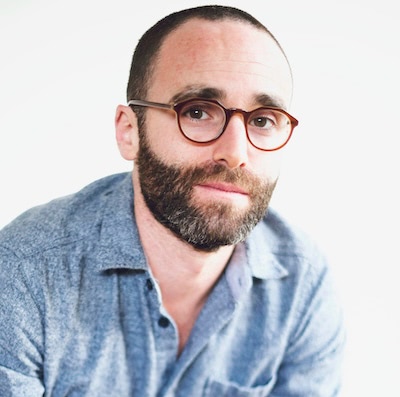
CEO, Unreasonable Group
About This Episode
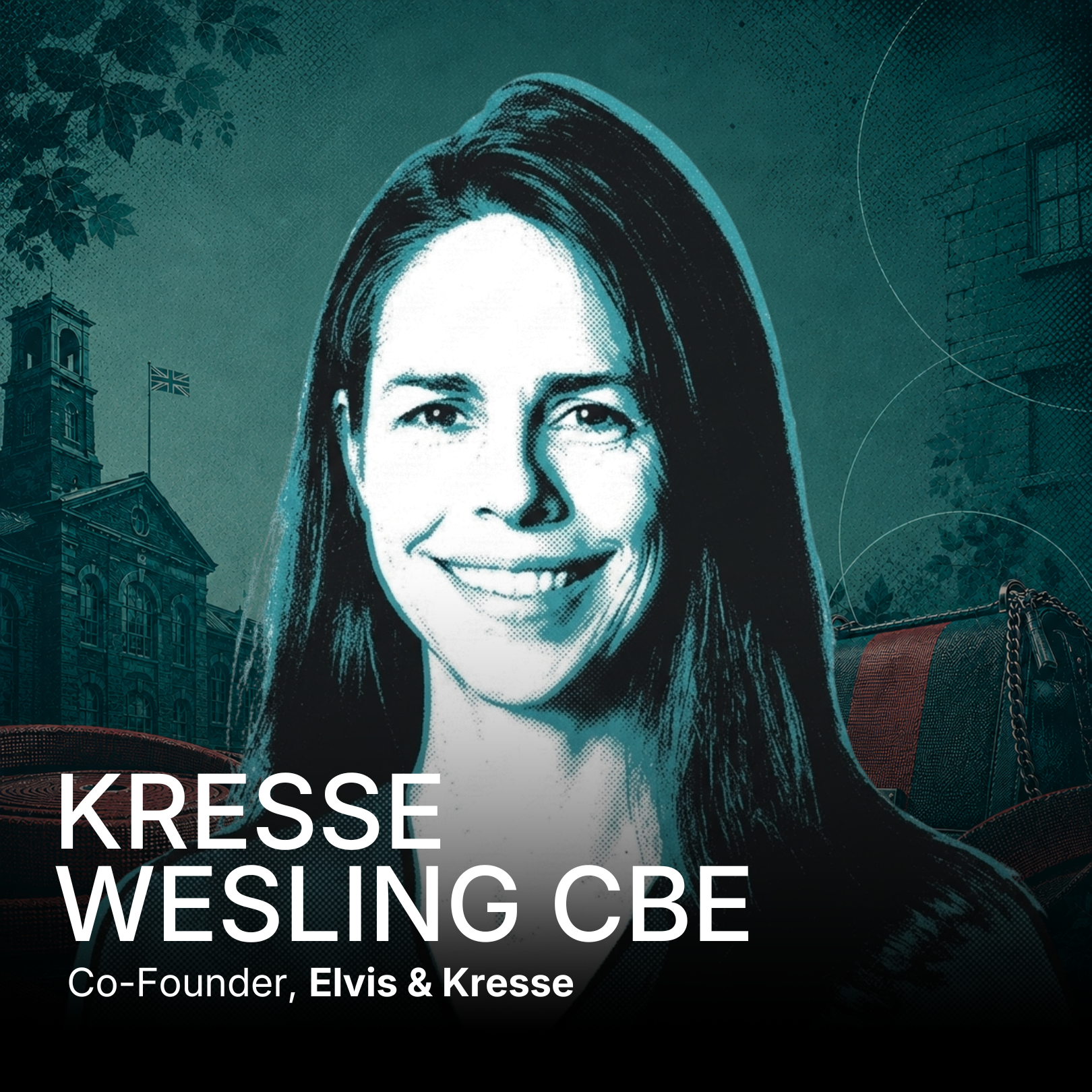
Featured Guest
Kresse Wesling
Co-Founder of Elvis & KresseKresse Wesling CBE is the co-founder of Elvis & Kresse, the British company that has rescued decommissioned London fire hose from landfill since 2005 and turns it into luxury bags and belts, giving 50% of the profits from the range to the Firefighters Charity. Appointed MBE in 2013 and CBE in 2021, she now runs a regenerative farm and vineyard in Kent with her husband and co-founder Elvis. Kresse joined the Unreasonable Fellowship in 2016 in the very first cohort of the Unreasonable Impact program, run in partnership with Barclays.
Key Takeaways
Elvis & Kresse has been rescuing decommissioned London fire hose since 2005 and gives half its profits to the Firefighters Charity. The first year that came to £134. Two decades on it is approaching half a million pounds.
Those donations have funded more than 29,000 therapy sessions for firefighters. Kresse learned the number only when the charity's chief executive announced it from the stage at their 75th anniversary last year.
She found the material by apprenticing problems: a day in the sewers, a day at waste transfer stations, then landfill sites. On a Croydon rooftop she saw piles of red hose and told firefighters she was taking it.
At 12 her grandmother told her, matter-of-factly, that if you are capable you are responsible, then moved on to something else. Kresse has treated it as a debt she will never repay ever since.
Their workshop in Kent is built from stacked straw bales, 40 metres long and 11 metres wide. It locks carbon into its walls and timber frame and cut power consumption by 94.7 percent at four times the volume.
Regeneration at Elvis & Kresse is a specific test: clean more water than you use, generate more renewables than you consume, sequester more carbon than you emit. They bought degraded pasture and planted 11,867 vines by hand.
Kresse was in the first Unreasonable Impact cohort in 2016, run in partnership with Barclays. A decade later she is in conversation with Barclays about retaining the precious molecules inside their buildings as they are redeveloped.
Chapters
Full Transcript
Daniel Epstein (0:00)
Welcome, welcome, welcome to the Unreasonable Stories podcast. My name is Daniel Epstein. I have the gift of being your host as we explore the largely untold stories of individuals who are looking to define progress in our time. Today's conversation is not only not an exception to that theme, but it's a case-in-point case study. You're gonna get the chance to hear the story of Kresse, of the company Elvis and Kresse. I first got to know Kresse when we launched Unreasonable Impact in partnership with Barclays back in 2016. She was in the very first cohort. Now, a little bit more than a decade later, it has been really marvelous to watch what her and her team at Elvis and Kresse have achieved. They have moved from being one of the premier fashion companies in the world that is pushing 100% circular products and partnering with some of the most prestigious brands towards regeneration. What does it look like to move from circularity to a regenerative economic future? Hidden in the story of Kresse is really a story of love and wonder and curiosity. So now is our chance to get to know not just her work, but the person behind the work. Without further ado, I hope you enjoy. All right, Kresse. What a gift it is to be here with you and to get to use this next hour or so to not just dig into the nature of your work around circularity and regeneration at Elvis and Kresse, but also just to better get to know you and your story. Thank you for making the time.
Kresse Wesling (1:47)
No, no, this is exciting. I'm gonna enjoy it.
Daniel Epstein (1:49)
It's exciting. You don't even know where we're gonna go, Kresse.
Kresse Wesling (1:52)
Nope. But I love to chat.
Daniel Epstein (1:54)
Let's go there. Actually, Kresse, I did look this up. Sorry, I did a tiny bit of homework before because I know that your work around circularity and regeneration has been recognized. I'm actually going to read this because I had to look it up. So you were recognized as MBE in 2013 and then a CBE in 2021, which we're going to talk about. You're named Young Global Leader by the World Economic Forum, and last year you won the Impact Award for Cartier's Women's Initiative, for your long-term commitment around preserving the planet. So that's all amazing. I had no idea what CBE stood for. I looked it up. You are a Commander of the Order of the British Empire. Tell me a little bit about that. How did that feel to be recognized, as a Commander?
Kresse Wesling (2:40)
Well, I think it's quite fun that now some of my friends call me Commander Kresse.
Daniel Epstein (2:44)
I think that's it.
Kresse Wesling (2:46)
Clearly they think this is where things were going the whole time. But that was—well, first the MBE, I think was a bit crazy because—
Daniel Epstein (2:54)
What is MBE?
Kresse Wesling (2:55)
That was—so that's a member. So it's not as exciting a term. But I didn't know anything about these orders and these recognitions and, you know, I guess every country has things like this.
Daniel Epstein (3:06)
Yes.
Kresse Wesling (3:06)
And the one in 2013, we were in the process of moving the workshop and moving ourselves. So we had mixed up addresses and apparently they need to get in touch with you, they need to ask you if you're going to accept this award. And they couldn't reach me. So I finally got this rather exasperated phone call from the Cabinet Office saying, you know, "we would like for you to become a member of the, you know, and, and, but would you accept it?" And I said—
Daniel Epstein (3:36)
Of the Order of the British Empire?
Kresse Wesling (3:38)
Yeah. And I said, "Can I call you back?" "Because I—Can I call you back?" Because I had no idea what they're talking about. Then I called Elvis, who wasn't in the workshop at the time, and I said, "What's an MBE, and should I accept it?" And he said, "If you don't, my mom will never speak to you again because it definitely involves going to Buckingham Palace." And I was like, "Okay, I'll call back and accept it." And actually we went and we took Elvis' parents with us and I met the Queen and met World War II code breakers and Olympic athletes. And that was a mind-blowing day. And the Queen actually sort of made me cry a little bit because she is well researched. You know, people give her a lot of information. And when she met me, she said, "So what were we doing with the fire hoses before?" And I said, "Well, they were going to landfill, ma'am. And she said, "To landfill?" And I said, "Yes." And I said, "But don't worry, since 2005 we've been taking them."
Daniel Epstein (4:38)
That's right.
Kresse Wesling (4:39)
And she said, "Well, I can't thank you enough for that." And I just thought, "Gosh, I don't need thanks." And I just was on the verge of tears. And then she sort of, you know, indicates that she's got to move on to the next person and you have to do this backwards curtsy. And I was like, "Please do this properly. Don't cry, curtsy. Don't cry, curtsy." Yeah, it was an overwhelming day. We've got great photographs. This is the first time I ever wore a hat, that sort of thing. It was cool. Very, very cool.
Daniel Epstein (5:05)
So good. That was 2013. You and I first met when we had the privilege of welcoming you into the Unreasonable Fellowship. I think it was 2016. So it's Unreasonable Impact UK program that we run with Barclays. That was actually the first Unreasonable Impact program. So we've been on this journey for 10 years, but you just said 2005, which means you've been on this journey for more than 20 years.
Kresse Wesling (5:28)
Yes.
Daniel Epstein (5:29)
You mentioned the fire hoses, but can you take us back to somebody who isn't familiar with Elvis and Kresse? Just the founding story, what the genesis was and why you were talking about fire hoses.
Kresse Wesling (5:41)
Yes. So I suppose I've had a really fascinating life. You know, the long story is that I grew up in Western Canada and, you know, incredible family and lots of support and a wonderful education. And I got—when I was 16, I got a scholarship to finish high school in Hong Kong, so, which was a thrill for me because I suddenly left home and went to this completely different place. But when I got there, I realized that not everywhere in the world was like Western Canada.
Daniel Epstein (6:08)
Yeah.
Kresse Wesling (6:09)
And I did a lot of traveling in South China and it was a very Dickensian time there. You know, a lot of the world's production was happening in Guangdong Province and it was coal powered, so the air was black. And if I wasn't already an environmentalist, which I'm pretty sure I was because I read Silent Spring when I was 13 years old, then that just rammed it home to me. And I thought, I was always trying to think, what can I do? What can I do? I did a politics degree because I thought politics would be the route to changing things. And because I'm maybe a bit too dictatorial for politics, I was a bit—I was very nervous when I came to the end of my degree thinking, what am I going to do next? And I got hired back in Hong Kong and I had this wonderful opportunity to work for a small VC. And the thrill of that opportunity was just getting to go all over the world doing due diligence on the technologies. They were investing in hard tech, so machines. And through that process I set up my first company. So I worked for them for two years. And then I set up my first company which was a biodegradable packaging business, which was one of—sort of came out of one of the investees and the first shipment of biodegradable packaging that I shipped to the UK biodegraded on the way to the UK.
Daniel Epstein (7:27)
It's very biodegradable.
Kresse Wesling (7:28)
Yes. So of the two things that had to be biodegradable or packaging, it was one of those things. But when I—So I was effectively then in the UK with a company that was way too ahead of its time, so it wasn't going to work, and thought, what am I going to do next? But by this time I had already been programmed to think that business can change the world because just like you can design a product, you can design a business to do awesome things. And there's no limit to how awesome you can be. You know that's— It's not— Awesomeness is not pie. You know, there's no small, there's no allocation of pieces.
Daniel Epstein (8:05)
Yes.
Kresse Wesling (8:05)
And then I started hunting around for problems because I thought, I'm new to this country, I don't know the landscape, I don't know what its particular issues are. I've got to apprentice some problems. And I spent the first day in the sewers, the second day in some waste transfer stations, the third day at a material recovery facility, something like that. And then I started going to landfill sites and I saw a fire hose and I thought—and then I had a completely ridiculously chance meeting with people from the London Fire Brigade and I said, "Hey, why do you throw away fire hoses?" And they said, "Well, after 25 years, it becomes too damaged to repair or if it goes into a big fire, you've got this 22 meter fire hose and if the—you know, there's a tear at say at meter 11 and we can't patch it, then it's not a fire hose anymore and you can come to Croydon and see it." So I ran to Croydon and it was a beautiful sunny day and there was these stunning red hoses piled on a rooftop. And I thought, "This is love, you know, this is a heroic material and it can't die this way." And I said to these two firefighters that were there, I said, "Look, I'm taking it, I'm fixing it." And they're like, "What are you talking about?" And I said, "I don't have a plan, but I'm going to take it and if anything comes of it, I'll give you half." That was sort of a very spur of the moment decision.
Daniel Epstein (9:25)
Half the profits.
Kresse Wesling (9:26)
Yeah. And I remember our subsequent conversations, they're like, "You know, we're a public sector organization, you can't give us money. That's not how it works. But there is this national—like we have a charity that supports firefighters and their families and you could give money to that." And that was basically the start of the DNA of Elvis and Kresse. You know, we rescue materials and 50% of the profits goes to charity. And even though in the first year that was £134, it's now almost half a million pounds. And we have funded, I think we've funded over 29,000 therapy sessions for firefighters, which to me is—I didn't, we didn't. We weren't even aware of that figure. And then the firefighters charity had their 75th anniversary last year and invited us and just shared that. The CEO shared it from the stage and I thought, 29,000. You know, these ideas start really small and it doesn't— The smallness means nothing. It's the intention, because if you build that intention in, it's going to take you somewhere really magical. And we still have. Probably every week, we will get an email or a story from a firefighter or from a firefighting family about when they've needed the charity. And some of these stories are pretty mind blowing. Like, without the charity, my partner would never have realized that actually he had PTSD. He would never have sought treatment, but he was able to access it because it was with his colleagues and designed for someone who had a career like himself. And it's a journey and a process that the charity has helped him to seek all of the support that he needs to not just get him back to work, but also to be a real partner in their family. And well, I know you and you and I are both the kind of person that would cry at that. So to me it's like, is this a job? Is this a job that we do? Or was finding that fire hose and meeting those firefighters and going to Croydon just the most miraculous thing that ever happened? Yeah, that's Elvis and Kresse. That's what we do.
Daniel Epstein (11:38)
I love, love, love what you shared. Maybe I would echo it back with different words, but the seed of an idea, the feeling, tone that is germinated with matters much more than where you think it's going to grow and what you believe it's going to become into the future. And it feels like you use the word love with this fire hose that was on the roof of the station. Like, what caused you to have that pull, to have that emotional resonance and say, "We can do this differently"?
Kresse Wesling (12:09)
I think I have a resonance with a lot of things. I think that I very often get confused with the tip of my finger and the rest of the universe.
Daniel Epstein (12:18)
Well said.
Kresse Wesling (12:19)
So I sort of think I'm a fungus. I am tapped into the mycelium network, right? So I feel things deeply a lot. So maybe, you know, it was red. It was a beautiful day.
Daniel Epstein (12:33)
Yeah.
Kresse Wesling (12:34)
I was meeting this group of 10 semi-retired firefighters whose whole job is to keep all of the equipment up and running and keep everybody safe. So their stories had already impacted me. And then the challenge after that day was actually how do we really honor this material? Because I just love it. I'll take it home and stack it up. But that was when the real journey began, was working out, okay, how can I help other people to love it the way I do? How can we transform it into something really beautiful and magical so that the story kind of tells itself and then creates value, which is what leads to the donation? So that—yeah, the reason we make luxury goods is because we researched fire hose and we discovered that luxury companies have been using a similar material for a long time. And we just thought, "Oh, why not reinvent luxury as well?" You know, we'll reinvent the material, but we'll also challenge the industry. And when you're making something like the belt that people keep on their jeans or the bag they've carried, you know, we have some customers that have our first ever bag and they say, "Look, you can never go out of business because I'm never buying another bag. And occasionally my rabbit gets a hold of the handles and they will need some kind of repair. Yeah, it's just a great circle. And it's not just a circle in terms of materials, but it's a circle in terms of capital and of goodness as well.
Daniel Epstein (13:55)
Yeah, yeah. The landing on luxury goods as the circular use of the material. What I love about it, I hadn't thought about this, Kresse, from your work, is that was a way to give it, in essence, the most dignified kind of reimagine next life cycle. Something that people would cherish and hold with them for 20 years to your point. And if their rabbit chews on it, repair it because it means so much to them.
Kresse Wesling (14:21)
Yeah.
Daniel Epstein (14:22)
What would you say—well, circularity, just as a topic is thrown out there all the time.
Kresse Wesling (14:29)
Mhm.
Daniel Epstein (14:29)
As a word. What does circularity mean to you?
Kresse Wesling (14:34)
Circularity means to me the end of all stress. Because if the entire world actually operated like the dream of a circular economy, which means every single molecule can be reused forever, whether it's composted and nutrient cycled, or whether it's recycled or upcycled, which is what we do. And also everything is powered by renewable energy. And then 50% of profits are also recycled. And then really all of the things that cause all of us problems are gone. Because if everything was powered by renewable energy, we wouldn't have climate change. And if everything was recycled perpetually, we wouldn't be doing things like extractive mining or digging for fossil fuels, or exploiting the seas in the way that we do or exploiting the soil in the way that we do. So yeah, I sort of think of it as, "Oh, I'd be able to really chill then, wouldn't I, if we achieved circularity?"
Daniel Epstein (15:34)
That's true. But you love your work. But, yeah, I know, exactly. I love how you framed that. In essence, stress could evaporate because we'd be in abundance. We'd have everything.
Kresse Wesling (15:43)
Yes.
Daniel Epstein (15:44)
And we'd be in like a longitudinal relationship with it, similar to people. So it isn't just called Kresse and Co. Your business is called Elvis and Kresse. Tell us about Elvis. Who is Elvis? How did you all meet? And then when was the moment where you decided, we're gonna, you know, create a luxury fashion, upcycled, circular business together?
Kresse Wesling (16:05)
Okay, so Elvis is, he's a miracle. And definitely without him there is no business. We met when we were 24 years old. We were on a boat in Hong Kong at a superheroes party and— Yeah, a superheroes party. And Superman walked in and everyone said, "Oh, Elvis is here." And I just remember thinking, "Well, that's it then. You know, this is a really easy decision to make in life. That's clearly a fascinating person." I think we had one date and we had one argument about a book. We met in an alleyway and had an argument about a book which was very random. And then we had one sort of date and then we moved in together, and we were living together for about six months. And I remember my dad saying, you know, "Is his real name Elvis? Nobody's called Elvis." He's like, "Nobody's called Jesus. Nobody's called Elvis." Right. And I said, "Well, dad, you know, half of South America is. There are places where Jesus is very popular." But yeah, we had a really great connection from really early on and obviously we had separate jobs. His company, he was working for a British company there and it's when I was doing the biodegradable packaging and he moved back to the UK and it was terrible. I mean, it was absolutely awful to be not in the same place. So that entire— there was about a year where we didn't live in the same place. And we were constantly trying to work out how we could make it back to each other. And then I finally was able to kind of restructure things so I could come to the UK and then the business, I started it, you know, and this is often, let's say I create a mess and he restructures it into something interesting. He will always say, with respect to the business, that I am the social and he is the enterprise, if we're a social enterprise. But also, you know, I will say, "I think we could turn these fire hoses into, you know, I found this report that Louis Vuitton uses nitrile rubber, so why can't we be a luxury goods company?" And he's like, "Because we don't know how to make anything." And then he learned to sew. So that's the dynamic is that he will then go, "Okay, well, it's not going to magically become amazing no matter how good your chat is." And he will sort of take on that discipline. So he's kind of—you know, we have a Cambridge professor that we sort of—that's a really good friend and kind of advisor, collaborator, and he thinks that my actual job title should be the Chief Fantasy Officer.
Daniel Epstein (18:26)
But it's real.
Kresse Wesling (18:27)
And that Elvis should have all the other roles.
Daniel Epstein (18:31)
You know. Yeah. And yet it's real. Yeah.
Kresse Wesling (18:34)
Yeah, it is real. Every once in a while, someone will arrive here and say, "I can't believe this. I can't believe this was— came from a belt. I just— This doesn't make any sense." But it—you're like, "Yeah, but 20 years gives you time." It just shows you that if you have a real commitment and focus, you can build something really amazing. And it never has to end or become static or become boring as the world changes. As you see more interesting challenges, you can just fold those in. You can just take those on as well. I sort of think, especially when we talk about, like, let's sort of, bring up regeneration. In 2015, Elvis and I started thinking we're not doing enough about climate change or biodiversity. These are the existential threats of our time. What do we do about it? Meanwhile, like, we have this company we run that takes all our time, and we just started to redesign Elvis and Kresse so that it could be that as well. And all it takes to be regenerative is conversations and decisions and action. So, which leads me to believe that every single company could do it because now these two crazy kids have just sort of delivered it. And that's our—you know, our big mission now is bringing people down here to say like, "Yeah, I get, not every company's gonna buy a farm and do all the things that we've done. But you can be regenerative in your way. You just have to find your way to this world. You have to make those decisions and take those actions and what's stopping you?" So I guess we're trying to make, in the same way that we've been trying to make these under-loved materials irresistible to people, we're now trying to make the idea of a sustainable future irresistible to people. Like, it doesn't have to be— everybody thinks about this world where we've solved for climate, solved for biodiversity and solved for circularity. They think of it as being, you know, "Oh, I'm going to have to, yeah, I'm going to have to have less." And actually it, to me it just means, yeah, A, less stress and B, so much more abundance of all the things we love, you know, like community and healthy food and a functioning food system, functioning ecosystem, time in nature.
Daniel Epstein (20:53)
Everything's better. You're just showing people a possibility of a different dream that they can easily dream into this waking world as you all have. It reminds me of—there's a story that I was told a long time ago that really resonated. It's allegedly Elijah Muhammad, who is Malcolm X's mentor. He's with him in a moment and in the movement that Malcolm X is leading is starting to lose some of its traction. Whereas Martin Luther King Jr. is taking up the national podium in the United States. And at some point, allegedly Malcolm X gets frustrated and asks his mentor Elijah Muhammad, like, "What's happening? Why isn't this working?" And as the story goes, he takes out two glasses of water and he pours some dirt into one of them. And he says, "The challenge is that you're telling people that they're drinking dirty water." And then he pushes forward the clean glass of water and he says, "if you just show them what a clean glass of water looks and feels like, they'll drink from it." In essence, his argument was that's what MLK was doing. He was showing this future that was brighter that we could all live into. But I think there's— I think you need both. You need the Malcolm X who says, "This isn't working, this is wrong, this is failing", the militant kind of energy. But then you need The clean glass of water say, "Hey, but look at how beautiful this is, how much better this is, how much better you feel when you drink from this glass. And I think it's amazing that you all, are doing that with your farm and with the workshop itself. Can you talk a little bit about— We talked about circularity, but regeneration? Because that's also—it's a buzzword. I throw it around sometimes without a clear definition. And I'm really curious what your definition is.
Kresse Wesling (22:29)
For us, it is actually super specific. You have to be exponentially more good than bad. And there are—you can set up whatever metrics you want. For us, we were already, I would say, exponentially good when it came to community and materials, but not in terms of energy, carbon sequestration or water. And we thought, okay, how do we redesign Elvis and Kresse so that we clean more water than we use, so that we generate more renewables than we consume, and then we sequester more carbon than we emit? And we then drew up a lot of plans to work out what would achieve that. And at the same time, we were starting to learn about regenerative agriculture, and thought, "Okay, that's how you sequester carbon. Great, so we'll definitely have to get involved in that somehow." And we started looking at—I mean, I've been obsessed with sewage treatment probably since I was 16 years old. So I have these—I met a Swedish sewage scientist when I was 21 or 22, and I can remember his entire speech. And the one line from it that always comes back to me is, "What God has separated, let no man bring together", which is the principle of every sewage treatment system, is that the liquids and the solids have to be separate because then it's really easy. So our system starts with a centrifuge to do just that. But so you've got these ideas, how do we do that? And then you start going, "Well, we need a farm." And then everyone's like, "But you're not farmers." And it's like, "Doesn't mean we can't be." Means that we probably just need to start looking at farms and seeing what options we have. And when it comes to energy, I mean, the building that I'm in right now is—one person has told us it's the largest straw bale building in Europe. I don't know where he got that information, but it's effectively straw bales stacked on top of each other to create 40 meters long, 11 meters wide, enormous kind of cathedral. And that carbon is locked in the building and it's a timber frame. So that carbon is again locked in the building. But because it's so heavily insulated, we—four times larger in volume, sort of a building. But we cut our power consumption by 94.7% which made it really easy to then generate more renewables than we consume. And we have solar panels on the roof, we have a wetland system where we treat all of our waste and wastewater. And we do that for our workshop and three dwellings. And then yet we're producing energy here. And then the farm is the longer story because it's about soil health, bringing back biodiversity and abundance and measuring carbon. And we got so lucky. I mean the farm we found was a perfect Elvis and Kresse purchase because it was awful: failed septic system, terrible buildings that all needed either knocking down or reinventing. Asbestos roofs and grade three degraded pastures. So somebody had literally sold soil from here. And we thought if we can bring this particular site back to a state of abundance, especially in a time where we've owned it for five years. We were in our second drought for five years right now, then we are really proving something. And yeah, so for us, we don't—we didn't want to talk about regeneration, we wanted to do regeneration. And also make it very obvious for anyone who came here because we can show you our sewage system, we can show you the batteries and the solar panels. You're in the building made of straw bales, you can touch and feel all of it. You know, we—so we would have also—we bought the farm agnostically. If we'd bought a farm and it's—and the soil people had told us, "You can only grow carrots here", we'd be carrot farmers. The soil people told us maybe grapes. So we planted 11,867 vines and we planted them by hand so that we wouldn't destroy what was left of the pasture. We've never used any synthetic chemicals, any pesticide. If it's a -cide or an -iser, it's not here. We make compost from waste, you know, cow manure, food waste from a farm shop, seaweed from the local beach where we're scooping it off of the water skiing platforms. And that's what we used to make the compost. And then we make compost tea and spray that on the land. So we're healing the land with biology rather than chemistry. And it's a longer term play. But man, you go out into this, even we're in a drought-stricken environment right now. And if you go out into anywhere in the vineyard right now that's just covered in butterflies, covered in the buzz of insects, covered in mycelium. So, you know, you walk around barefoot with your son. I can walk around barefoot on this farm. And you can feel it vibrating in a way that you can't if it's conventional agriculture and it's been sprayed to death to a moonscape. And when people come here, they feel that. They can feel that.
Daniel Epstein (27:26)
Yeah, yeah. It's embodied.
Kresse Wesling (27:27)
Feel it, smell it, touch it, hear it.
Daniel Epstein (27:29)
Drink it.
Kresse Wesling (27:31)
Yeah, yeah. The grape, the wine is excellent.
Daniel Epstein (27:32)
Is it Elvis and Kresse wine? Okay.
Kresse Wesling (27:37)
Of course it is. I'm not coming up with a separate brand. I'm not coming up with a separate brand.
Daniel Epstein (27:40)
Did you ever think you would get into luxury goods and fashion and a vineyard?
Kresse Wesling (27:44)
Luxury goods and fashion? Absolutely not. But I had this weird thing when I was 20 where I thought, "I'm going to make wine one day." And I read all these books on biodynamic winemaking and then was like, "But you live in Hong Kong." That's never going to happen. So I put those books away. But my—some of my university friends, when I've been posting on LinkedIn of us doing the first harvest and crush and everything, they're just like, "You used to talk about this late night at McGill, going, 'I'm going to do this.' And you are. You are doing it." I didn't necessarily think it would happen. And I think the fact that we've done it according to the same philosophy that runs the business. You know, our bottles, we don't have new glass bottles. We've rescued them from local pubs and people all around us. The labels are made from waste materials. The cork is reconstituted cork instead of being a new material. 50% of the carbon of wine is a bottle and we've just eliminated that through reuse. And then the wine. Yeah, and also sulfites. No. So it's like everything is just—it's a great wine, it's clean. I know I can't sell it as a health food because it's an alcohol, but—
Daniel Epstein (28:55)
But it kind of. It's good for well-being. It's good for well-being.
Kresse Wesling (28:58)
It is. It's good for your soul, it's good for community, it's good for celebration.
Daniel Epstein (29:03)
Do you know where Kresse— because you said you read Silent Spring when you're 13. I think when you're 16, you were obsessed with sewage. When you were 20, you wanted to get into biodynamic, you know, vineyard, winemaking. Do you know where or when you first fell in love with nature?
Kresse Wesling (29:22)
There is a moment that always sticks out in my brain. And yeah, I mean, I had this privilege of growing up in Western Canada and we used to go camping a lot as a family. We had this green bell tent and we just, yeah, have tent. We'll camp. And I remember hiking once with my dad, and I was walking about four steps ahead of him, and he just put his hands on my shoulders because he could, at his height, 6'1" or whatever, he could see something that I couldn't, which was the mother moose on one side of the path ahead of us and a baby on the other. And he just lifted me up, put me on his shoulders, and then walked backwards to give them their space. But I got this incredible view of these unbelievable creatures and I just couldn't believe I got to see that. I couldn't believe that I was experiencing it. And I probably talked about it for weeks afterwards. It's just etched in my brain and I—yeah, I think maybe that was the, like a standout moment. But, yeah, like swimming in rivers and swimming in lakes. And I remember one. There's one river in B.C. where salmon spawn and you can try and swim up that river as well. And if you do, you get the certificate that says, "I am a salmon." And I've got this. "I'm a salmon." But I just—yeah, I love being in nature. I mean, sure, for sure that was also part of the draw to come to a farm. And the things I'm most proud of here is our newt count and the bird count, and that we've got red list birds having a resurgence here. And once you fall in love with it, it's like the love affair that never ends, right? That you can never get a divorce from or have a breakup with. It's in you. And I wish more people could get that kind of experience because again, yeah, I think that would be transformational for all of us.
Daniel Epstein (31:15)
That type of love that you can never separate from. It actually pulls me to a question that I wanted to ask, which is you've been working with the other love of your life, Elvis, for more than two decades now. What have you learned about, I mean, cofounder dynamics are hard enough, let alone you mix a love affair and a lifelong relationship into that. What have you learned about your relationship as both partners in life, but also in work?
Kresse Wesling (31:44)
So there's so much that is fascinating to me. One, I know a lot of people can't work with their partners or don't get the opportunity, but having had a startup before where I worked with just a group of people, I knew this was the biodegradable packaging thing that didn't work, but I knew how much time it takes. How much, what is the—what do you have to put into this, right? And then once I met Elvis, I knew that I didn't want to spend that much time with someone else. Like, yeah, he's just so cool. I didn't want to divide that time. I knew that pretty fundamentally. So I was always trying something. "Why don't we try this? And why do we do that?" And then when he started working with me on the fire hose really early on, as in, I couldn't have done it myself, we found that actually because our things—so I would be like more marketing, sales, comms, sort of mission. And he's delivery logistics, you know, bills. Very different skill sets. So, yeah. Do they overlap? Yes, through conversation. But I trust him implicitly with what he's doing, and he trusts me implicitly with what I'm doing. So that's great. But the other element that I think we've discovered about our relationship over time is that we are kind of insatiable people. We're so curious. We want to learn. We don't ever want to stop learning. Which is why when we talked— started talking about regeneration, and then we were getting into regenerative agriculture, I mean, all we did through Covid was watch YouTube videos of the best soil scientists just giving a, you know, doing their lectures. And we would sit there and make notes. And then we'd pause, going, "Did you understand that? I didn't understand that." Do you know what quorum sensing means? I don't understand it." And then we'd be Googling and looking things up. And so we're constantly curious and we bring that to the table. I think we have this one shared thing, which is, I feel like, as a partner to him, my goal in life is to make sure he has an awesome life. And that works because he has the same goal. Doesn't mean we don't have disagreements about things or miscommunications occasionally or whatever those things might be. But we are very like, macro on this: Life can be amazing. Let's get that done. And let's make the business as cool as we can, and yeah, irresistibly good. Let's do all of these things because we feel capable of that. And I think I wouldn't feel capable of doing that on my own. It just works.
Daniel Epstein (34:09)
Yeah.
Kresse Wesling (34:09)
And I don't know if I can explain it any better than that, but other than to say I wish everyone could be as lucky to find some—to find their Elvis. Because I understand now at the age of 49.
Daniel Epstein (34:24)
Yeah.
Kresse Wesling (34:24)
How rare what we have is. Yeah, I do understand that.
Daniel Epstein (34:28)
Yeah, yeah, yeah, yeah, yeah. A lot of what we're talking about, the language, beautiful love, you know, miracles. Has this ever gotten really hard over the last 21 years? And can you speak a little bit to some of the challenges that you hit? I don't know if there was ever a moment where you're like, "Wow, we might need to throw in the towel, like, this isn't working." Or when it just got so hard you didn't know how to continue and then somehow, you know, you found a ladder that got you over that wall.
Kresse Wesling (34:55)
I think that kind of difficulty happened so many times, especially in the first three years. And once we got through the first year, you know, because all these stats about business failure, it's like, "Oh, how many businesses survive year one?" And then you get to your first birthday, you're like, "Woohoo!" And then your third, you're like, "Oh my gosh!" And then your fifth and you're like, "Wow!" And then 10, you're like invincible. But actually, the problems just get bigger. So, you know.
Daniel Epstein (35:18)
Yeah, very true.
Kresse Wesling (35:20)
So I think the little problems in the start set you up for being able to solve the bigger challenges that you're going to face in the future. But a couple of good stories. First thing that I thought for sure would kill us was actually a deal we made with Apple. We designed the first third-party iPhone sleeve when they launched iPhone 3 in the UK.
Daniel Epstein (35:41)
iPhone 3.
Kresse Wesling (35:42)
And yeah. I mean, this is a long time ago. And the crazy thing about Apple is that they pay you nine months after they've sold your goods. So this is a consignment, but with a nine-month delay. Yes. Okay. I've worked with Harrods, I've worked with Sainsbury's, I've worked with every other retailer. Apple's terms are the most predatory, shall we say. And their margin is the highest. So not only is there this nine-month problem, but also their margin is the highest. So you're basically doing it for cachet, you know, you're doing it for fame. And then they decided— they bought, I think it was the largest order we'd ever produced. Something like 3,000 iPhone sleeves. And because the UK was behind on launch, then they suddenly brought out iPhone 4 and they just shipped all these iPhone 3s back to us.
Daniel Epstein (36:37)
Wow.
Kresse Wesling (36:38)
And we knew we would, independently, if they're not on the Apple website, never be able to sell this kind of volume. And we genuinely thought this is the end of the business because the cash flow hit was too great. It was unrecoverable.
Daniel Epstein (36:52)
Yeah.
Kresse Wesling (36:53)
And what got us through that, the ladder that got us through, was that iPhone 4 we called this Chinese manufacturer that makes dummies so that people who are making these things can, you know, get ready for the new thing before Apple sends you their version. And we got a dummy from China in about 24 hours, put it into our iPhone 3 case. And although they were very different phones, they were volumetrically the same.
Daniel Epstein (37:19)
Oh, wow. It's just working.
Kresse Wesling (37:21)
I think we got 2,500 cases back. We slapped a new sticker on them and sent them back. And Apple was like, "Oh my gosh, you guys, your turnaround is incredible."
Daniel Epstein (37:30)
You're genius.
Kresse Wesling (37:31)
You're amazing. And then we sold out of those ones really quickly. And then they said, "Now we want you to make a range of 10 items for us." And we said, "No."
Daniel Epstein (37:41)
Yeah, because of how they treated you.
Kresse Wesling (37:42)
We hadn't been able to sleep, we both lost weight. We were like, you know, that sort of guttural panic where you think,
Daniel Epstein (37:49)
That's right.
Kresse Wesling (37:50)
This one project. Of all the projects, is Apple's going to kill us? Apple that just announced 13 billion in profits. They're going to kill us? So, yeah, that was a really hard one. But we miraculously made it through. We had another one where, in order to buy a building which we really had always wanted our own premises, we had sold our flat, given up our commercial lease. And then in the UK, you buy a property in two stages, exchange and complete. So on the day of exchange, and we had had to prepare to exchange, we had done all the legal work, we'd sold our flat, we'd shown proof of funds, we had moved in with friends, and on the day of exchange, the vendor said, "We're not emotionally ready to sell this building anymore."
Daniel Epstein (38:33)
What?
Kresse Wesling (38:33)
And then we had to find a temporary place for the business and a temporary place for us. And that's why we moved to Kent, because we couldn't find another building where we originally were. And that was, again, something that could have just swallowed us whole. And, you know, and then Covid, actually, Covid was great in the end. Covid was great for us. But when it first happened, because Elvis and I in our first—when our relationship was first started in Hong Kong, SARS happened. So we'd been through that. And when there was first this coronavirus, Elvis and I were like, you know what? We're sending everybody home because a virus is more important than a handbag. And we were not doing that. And then Boris Johnson sent everybody home about a week later. We were ahead of the government. We felt very proud to be ahead of the government. But then people just kept ordering bags. And it turns out that because we're a good business, we manufacture all our own goods, our stakeholders, our material suppliers, we have great relationships with. Fire hose was still being used and being wasted. So everything could just keep going. And we actually grew through it. So I think the challenges get bigger. And then now on the farm, I mean, we planted 11,867 or whatever the number of vines is. And then we got a drought promptly thereafter. And vines don't really need watering except for in the first three years.
Daniel Epstein (39:54)
Yeah, yeah, right when you needed it.
Kresse Wesling (39:56)
We were hand watering these babies until midnight every night, which is easy if there's 10 or 400, but not when there's close to 12,000. So, you know, these things are so many things. And probably every entrepreneur I know could talk for 10 hours about the things that could have killed them. But the thing that generally gets you through is all of our eggs are in this basket, you know, so, no, we can't throw in the towel because collectively, Elvis and I have a towel, a shared towel.
Daniel Epstein (40:24)
You share one towel?
Kresse Wesling (40:26)
Yeah, one. One basket of eggs and one towel. So, we can't really do that. And also, it's, like, really fun to do the work that we do.
Daniel Epstein (40:35)
Yeah.
Kresse Wesling (40:36)
I don't know about you, but I have a lot of peers who, you know, same age group as me, who maybe, you know, they're sort of questioning in midlife, like, "Am I in the right job and am I having the most impact and, am I using my skills in the best possible way?" We don't really have those existential thoughts or crises because we do feel like we're using our skills in the best way we can.
Daniel Epstein (40:59)
What has the time on your land taught you? And then away from that what has the land taught you as you've come into relationship with it?
Kresse Wesling (41:08)
Well, I think it's probably a little bit like, I don't—we don't have children, but I think, I imagine it's like that, you know, you really realize that you have no control whatsoever. Nature is this profound gift that you get to live alongside. And if you treat her well and treat like with the respect that she deserves, you can see things and experience things that are so phenomenally beautiful that they're all priceless. And you can experience things like that every day. Like a marbled white butterfly landing on a wild orchid. I mean, it's just crazy. Or coming, getting people— We've had some scientists come to see us, and they'll say, "Stop what you're doing. That's a very rare plant. I haven't seen one of those in 15 years." And because we are treating lands so well, the seed bank wakes up and all these things that are kind of native to this area just pop out. Yeah. And all kinds of rare toads and tadpoles and snakes and kites and buzzards and owls and bats. It keeps coming, and it keeps coming, and it keeps coming. So you keep learning. You realize you have no control. But the gifts are absolutely profound. And the way she recovers as well. I mean, we're in a drought, right? But one night of rain, and this whole valley will be transformed again. And you just think, "How does she do that? How does this land just wait for that moment?" But, yeah, I think, you learn a deep respect for all things. I don't know how people use pesticides. That's one thing I've also learned, because somebody said, "Oh, what if you have to glyphosate here?" I was like, "I will walk into that pond and drown myself." These two things are not happening.
Daniel Epstein (42:55)
It's not happening.
Kresse Wesling (42:56)
There will be no glyphosate here. There will be no—if I'm not drinking it, it's not going on the land.
Daniel Epstein (43:02)
Well said.
Kresse Wesling (43:03)
Yeah. Especially we've had—we've designed the farm to have sheep. And again, I feel like the sheep are the most humanizing thing because they knock you down all the time. I mean, they're big, slightly bigger than me. So they can take me down. They love Elvis and have a lot less respect for me, which is really interesting. But they—a lot of vineyards will spray copper sulfate to get rid of the molds and mildews, but if you spray copper, you can't have sheep in the vineyard for six weeks. And you look at this equation and you go, "Okay, I'm a 56-kilo mammal. She's a 66-kilo mammal. If she can't be in the vineyard for six weeks—"
Daniel Epstein (43:44)
Yeah. What does that mean for us?
Kresse Wesling (43:45)
What does that mean for me? So you just don't do things like that. It wakes you up to all of these realities. Every drop of water is precious. Every insect is something to be curious about. Every wasp's nest is, you know, potentially a pain in the butt. But then the badgers will just come and scoop them out of the ground and eat them. And it's like, "Thank you, badger."
Daniel Epstein (44:10)
Yeah.
Kresse Wesling (44:11)
"You've had breakfast. I don't have to step on a wasp nest." You know, nobody had to kill anything. Like, it's like a circle of life.
Daniel Epstein (44:19)
Yeah.
Kresse Wesling (44:21)
I knew farming was going to be hard and it is. But the difficulty doesn't even remotely come close to the gifts we get from being here.
Daniel Epstein (44:30)
What rewarding thing isn't hard in that sense?
Kresse Wesling (44:33)
Yeah.
Daniel Epstein (44:34)
We've been talking, a good amount about the physics of the work that you do, whether that's materials or that's land or that's no glyphosate or so on and so forth. But I can feel through your language that there's a metaphysics that feels like it is guiding you or pulling you. And I don't know if that's the language you would use, but can you speak a little bit to these unseen currents that it seems like you're swimming in? However you want to interpret that question.
Kresse Wesling (45:03)
I think if I go back and this is something maybe you only get to see in a 21-year span. When we started, we had to explain to so many people what a social enterprise was. We had to explain to so many people what upcycling was. We had to explain why fire hose could be a luxury good. There was just—all of our comms was about, was sort of like Dick and Jane kind of comms.
Daniel Epstein (45:30)
Yeah.
Kresse Wesling (45:31)
We were explaining basic definitions to people because the people were aware of organic food, but not the kind of things we were dreaming up. And genuinely the response that we got was that "These people are kooky and crazy and a little bit out there."
Daniel Epstein (45:46)
Yeah.
Kresse Wesling (45:47)
And the shift that we've seen change is that, yeah, these people now believe that this is what luxury companies do, whether they do or not. You know, a lot of them don't, but this is what people believe they are responsible for. Your average citizen believes that the companies that provide them with goods should be providing them with goods that are healthy for them, healthy for the planet and not extractive or destructive. That's not necessarily true yet, but that's really what people believe and what their expectation is. And that's different. That's a material change. I've seen that shift through time. I've seen also the last few years that get knocked back a little bit because this sort of shifting political global sands. But then I've also seen, especially over a really hot summer when there's forest fires everywhere, that this is the kind of conversation that comes out again. And people used to think if you brought up community and love and merit, yeah, people would think this is ridiculous. But I don't think anyone thinks it's ridiculous anymore. They think it's aspirational. So I see that as pretty profound. I think the idea of regeneration, people would have thought was maybe not the responsibility or wheelhouse of companies. Now they can sort of see that as maybe a bigger goal because, actually one of the reasons I think we wanted to go for something bigger was that just being carbon neutral. Like, why would you do all this work to just sit on a very fine fence at nil, right? Go crazy. Don't just be so-so, be grand, be spectacular. So I think that's kind of a thread that I see. But I also, you know, I'm not immune to rising inequality. I'm not immune to sort of people not being able to have conversations and understand each other and not having a shared truth because people will genuinely say that's not the truth. "The news program I watch is the actual truth." And we don't have these sort of shared things. That's why I really value the BBC because, you know, it's a commercial-free environment. But where do I think that's going? Obviously, as an optimist, I think it is going personally in a direction where people are going to start to either get really connected like I feel I am, or they're going to get so far from that connection that they'll snap back to it. Yes. So we'll have—there's just going to be a bumpy 10 years and we're not always going to agree. You know, I'm not saying that suddenly with the circular utopia, I can just chill because there'll be other problems to solve. But I do think we'll get through this. I think that we're capable of solving for climate and biodiversity and all these wonderful things. We just haven't found how to share those ideas with each other yet.
Daniel Epstein (48:40)
You used a language there. You said, even if we get to circularity it, you'll find other problems to solve.
Kresse Wesling (48:44)
Yeah.
Daniel Epstein (48:45)
Do you know where that desire and maybe felt need to solve problems comes from?
Kresse Wesling (48:53)
Yes.
Daniel Epstein (48:53)
Yeah.
Kresse Wesling (48:54)
Absolutely. I talk about this quite a lot. I was, I think, 12 or 13. This is around the time of reading Silent Spring. I had a phenomenal maternal grandmother. She was one of these—you'd walk down the street with her, and people would come up to you and say to my grandmother, they'd say, "Oh, you saved my life." You know, "You were the best teacher I could have ever had or dreamed of." And it took a while for us to tease out some stories from her about, like, "Why do students say this to you? What have you done?" And then you hear these stories. And she never wasted time, talent, energy, berries, rhubarb, you know, pie-making machine, jam-making machine. You know, really involved in her church. Unbelievable teacher. Wildly incredible grandmother. And everything she said to me was like gospel, right? I would take it. And when I was 12, she said, "If you're capable, you're responsible." And she just said it, like, matter of fact and moved on to something else. And I just kept thinking about that going, "Well, what am I capable of? What am I capable of?" "I've got, oh, my goodness. What? What? Oh, my goodness. This is—Holy Moses. I'm capable of a lot. I have a lot— I've been given a lot of gifts. I have a voice. I can talk. I have a great education. I can learn how to do things. I have skills. I have, you know, talent. I have energy. You know, what am I going to do? How am I—?" So I think I will always be searching for problems to solve, and I'll always be trying to apply, yeah, whatever skills I have and whatever time I have to serving this, I guess this broader mission of not everybody has it so good. So that's your debt, right? That's like, I have debts I will never repay.
Daniel Epstein (50:41)
Yeah.
Kresse Wesling (50:42)
Ever. So my responsibility is to just do my darndest.
Daniel Epstein (50:47)
Yeah. I think what's amazing about it, though, there's yes, and there's a sweetness to this responsibility because you even said at some point in this conversation, you know, work, you know, put in quotations. You're like, we get to do this. We get to be in service to this. So it sounds like both, you know, this, like, same with the farm, like, incredibly hard, almost impossibly hard, and yet unimaginably beautiful at the same time.
Kresse Wesling (51:15)
Yeah. And you have to keep reminding yourself, like, you know, even on the hard day, you just, you look outside. So on a really hard day, actually, this is the easiest trick for us: a really hard day when it gets dark, we shut off, at dusk, we just shut off all the lights in the house. We have this window, we have these water collection ponds, which are low at the moment. But then the bats come out and it's just—we're like, "Yeah, we've got— no matter what, we've got two tickets to the bat show."
Daniel Epstein (51:46)
This show's amazing.
Kresse Wesling (51:48)
It's so good. They're incredible the way they fly. And we're constantly trying to pick out— We have two different species here. So we're like, "Which one is that?" They're so fast we can hardly see them. So I think that's the— There is obviously a balance, but yeah, it's hard work but the privileges are overwhelming.
Daniel Epstein (52:06)
This is a selfish question, Kresse. As I mentioned earlier, in 2016 we first came into relationship when you came into the Unreasonable Fellowship. I'm curious what that experience was like and 10 years later, how has it been? I want you to be honest to be, you know, very real in your response here. You in the same way just to say that, you know, part of your existence, your work is to be in service to these fire hoses and service to this land, in service to these animals and the biodiversity. Our work is to be in service to individuals like yourself who are these kind of acupuncture needles for planet Earth. I'm curious how it's been.
Kresse Wesling (52:43)
So if I think back to the first experience, the thing that was totally wild about it, and this is even before we got there, is that I had met previously, Hugo and Fiona that run Riversimple. And they were in that first cohort as well. And Hugo sent me this email going, "I think this is spam." And it's because the emails that you guys send are so filled with words like enthusiasm, generosity, awesome. And that is—that's not in the British vocabulary. So Hugo was like, "This is spam." And I said, and I just replied to him and I said, "No, they're just Americans."
Daniel Epstein (53:19)
I was also born in Western Canada, border of Vancouver. I'm there with you.
Kresse Wesling (53:24)
So we arrived there and within 24 hours we were a community. And actually by the end of the time there, we were a family. So that's quite a profound experience. You know, it was wonderful. The whole experience was wonderful and informative and I learned a lot and I was challenged a lot and I was poked a lot like, "Why aren't you trying this? And why aren't you trying that?" And by people who I had already gotten a lot of respect for. And I came back to Elvis and I said, "Oh my gosh, we gotta do this and this." And he's like, "Whoa, whoa, whoa, whoa, whoa." But it pushed me into thinking that our small idea didn't have to be a small idea. That actually, even if the business stayed small, the impact could be enormous or the business could grow and the impact could be enormous. You know, these weren't, go-along, come-along necessities. And then over the ensuing period, you know, the business grew and we were, especially in terms of impact and in the ambition and in the scope and the things that we took on. And over time, there were so many stories that kept coming back to me from that Unreasonable week. And I'm just trying to think of the mentor's name. Sell More Flowers. Do you remember the Sell More Flowers story? He's a serial inventor that also has a Grammy and and invented the ticketing. Jeff Hoffman, he's like, "sell more flowers." Because every time—so, I told that story to Elvis. And even still, every time I lose focus, he's like, "Sell more flowers." And I'm like, "Okay, I'll get on it." And then I remember Tom Chi talking about, you know, really cheap prototyping. And we had Elvis. Elvis is like, "Yeah, but I'm pretty sure they had some, you know, pretty high-paid physicists doing this, you know, if you cost in the education. But we've always continued to really prototype, you know, constantly. We don't think about things. We try it and we go for it. And generally it doesn't require that much money to get a new thing off the ground. So that stayed with me. So the community has stayed with me. And also, yeah, some of the phrases, some of the challenges, some of the ways to like, continue to provoke, but also the nature of storytelling. And this is where Alchemy became actually really fascinating to me. So I just, in June went to Alchemy and was asked to present and freaked out because the format—I am very used to, I can present with my eyes closed.
Daniel Epstein (55:43)
Sorry, guys.
Kresse Wesling (55:44)
10 minutes, 2 hours, 5 hours. But then suddenly it was like, you have to have—slides will change. You have no control, you have no clicker. You have to keep talking. And I was just thinking, "This is insane." And the first rehearsal on day one, it was awful. It was completely awful. And I said to, I think I said to Britt, I was like, "I can't fail in front of this community." "I can't do this." And then I had a chat with Ross and a couple of other people, and they were all like, "You won't fail. Let's figure it out." Somebody suggested I go and have a beer, which I did. But it all got—but that really hit me, like, I can't fail in front of this community again. Like, I have a debt to this community because it's such— It's given us a lot and I want to deliver some pretty profound messages back. And, yeah, so I can't fail. And somehow, somehow managed.
Daniel Epstein (56:40)
I can't wait to see the talk. So looking forward to it. We're almost out of time. Thank you for that. And of course, to acknowledge you are still— Because you will always be in the Unreasonable Fellowship. And yes, you are also now an Unreasonable mentor. As a fellow, our job remains the same, which is to do everything we can to help ensure that you can pull a brighter future that you know is possible in your heart into the present, ideally with more ease. And so I'd love to conclude this conversation just with anybody who's tuned into it and says, "I want to be a part of the future that, or that Elvis and Kresse are building." How can people get involved? Where can they find the products? What are the needs or opportunities maybe that you're faced with now?
Kresse Wesling (57:25)
I mean, the products they can find elvisandkresse.com or you can—or like Google Elvis and Firehose. You'll find us. And you can come down here. We love to host workshops, but also we do like, we do projects with big companies now and it's sort of full circle back to Barclays and their commitment to Unreasonable. You know, I caught up with Mark at Alchemy and we were talking about the redevelopment of the Barclays buildings and how we can get involved because actually what they want to do is retain the molecules that are precious to them that are in those buildings and they're like, "How do we do that?" But Elvis and I know how to do that and it's something that we can help with. And we do—we've done projects like that for hotels and interiors companies and architects. So how cool would it be, you know, if we eventually get to do that work with Barclays as well? But yeah, I think there's a lot of ways to engage with us, whether you want to bring your team down and understand what regeneration looks like and have that sort of an experience, or, you know, whether you just really need a fire hose belt. You know, it's all available. And of course, the wine is spectacular. And soon to be available. Soon to be available.
Daniel Epstein (58:33)
Yes, yes, yes. When will it be available?
Kresse Wesling (58:36)
In about two weeks.
Daniel Epstein (58:37)
Oh, no way.
Kresse Wesling (58:38)
Yeah. There will be the first 200 bottles, which were the 2025 harvest we bottled about a month ago. And we're going to release 200 bottles. That's it. So they are going to be very rare and very sought after.
Daniel Epstein (58:50)
Yeah, yeah, yeah,
Kresse Wesling (58:52)
We're excited.
Daniel Epstein (58:52)
Is that also at elvisandkresse.com?
Kresse Wesling (58:55)
Yes. And actually, we have already two institutional—so you can't really buy these bottles. What you're purchasing is you're becoming a friend of the farm, so you're basically becoming a participant and a stakeholder in the farm itself. And we already have two institutional buyers because what they really are after—so they're buying, yes, they're buying a bottle of wine, but what they want is the data on how we're running the farm. They want to know what's in the compost tea. And that is to these two people who buy the 200 bottles. That's what they'll get. Basically, open access to everything about how we run it.
Daniel Epstein (59:32)
Will they drink the bottles of wine?
Kresse Wesling (59:34)
I'm sure they will. If they don't, I'd be very disappointed. This is not for storing somewhere in a cage.
Daniel Epstein (59:39)
This is top shelf. This is good shit.
Kresse Wesling (59:41)
This is it for opening it with your friends or your family and sharing a glass and tasting nature because it's unadulterated, unfiltered grape juice that just happened to ferment and yeah, that's what's available.
Daniel Epstein (59:58)
Sounds like tasting nature, which, at least to me, in my biased belief is synonymous with tasting love, which is the same thing as tasting the universe.
Kresse Wesling (1:00:10)
Yeah.
Daniel Epstein (1:00:10)
What a gift. I look forward to cracking open one of these bottles of wine on your farm with you and Elvis. We're long overdue. And Kresse, I just wanted to wrap up this conversation by saying thank you. Thank you. Thank you. Thank you. Thank you. Yes, for what you do. Even more for how you do it and what that represents. To me, the conversation is a feeling of just remembering. Yes, maybe it's new, but it feels ancient. How you're approaching your relationship to things and people in the natural world. So thank you for that.
Kresse Wesling (1:00:43)
No, thank you. And thank you for designing this community. Yeah, a community that just gives, right? Design it well, and it just gives forever. So we are all very grateful. All of the fellows, all of the mentors. We are all very grateful for that.
Daniel Epstein (1:00:57)
We're both misfits in the same family, and it's a pretty fun one. Thank you, Kresse.
Kresse Wesling (1:01:04)
Thanks.
Never Miss an Episode
Subscribe to Unreasonable Stories and join thousands of listeners learning from the world's most impactful entrepreneurs.